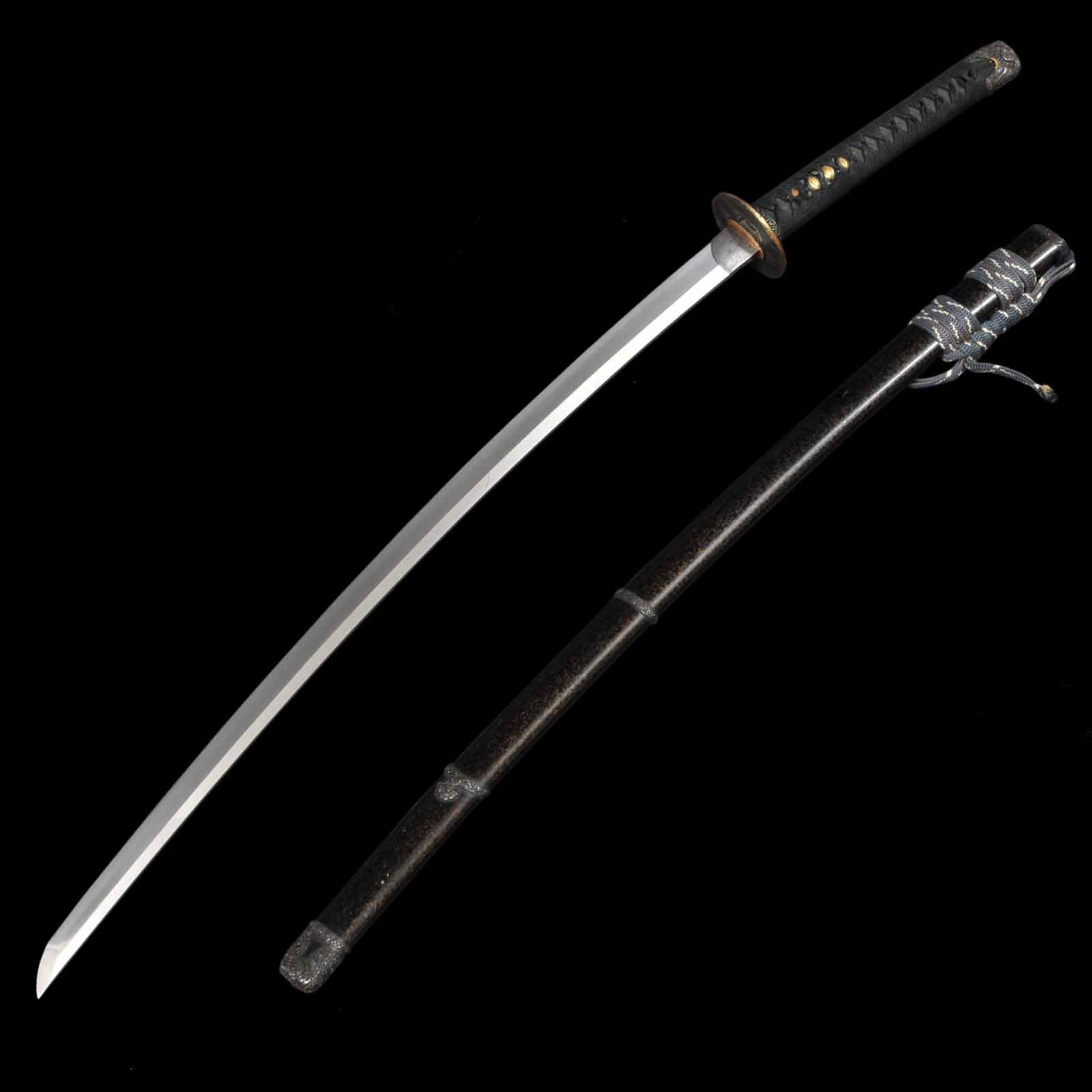
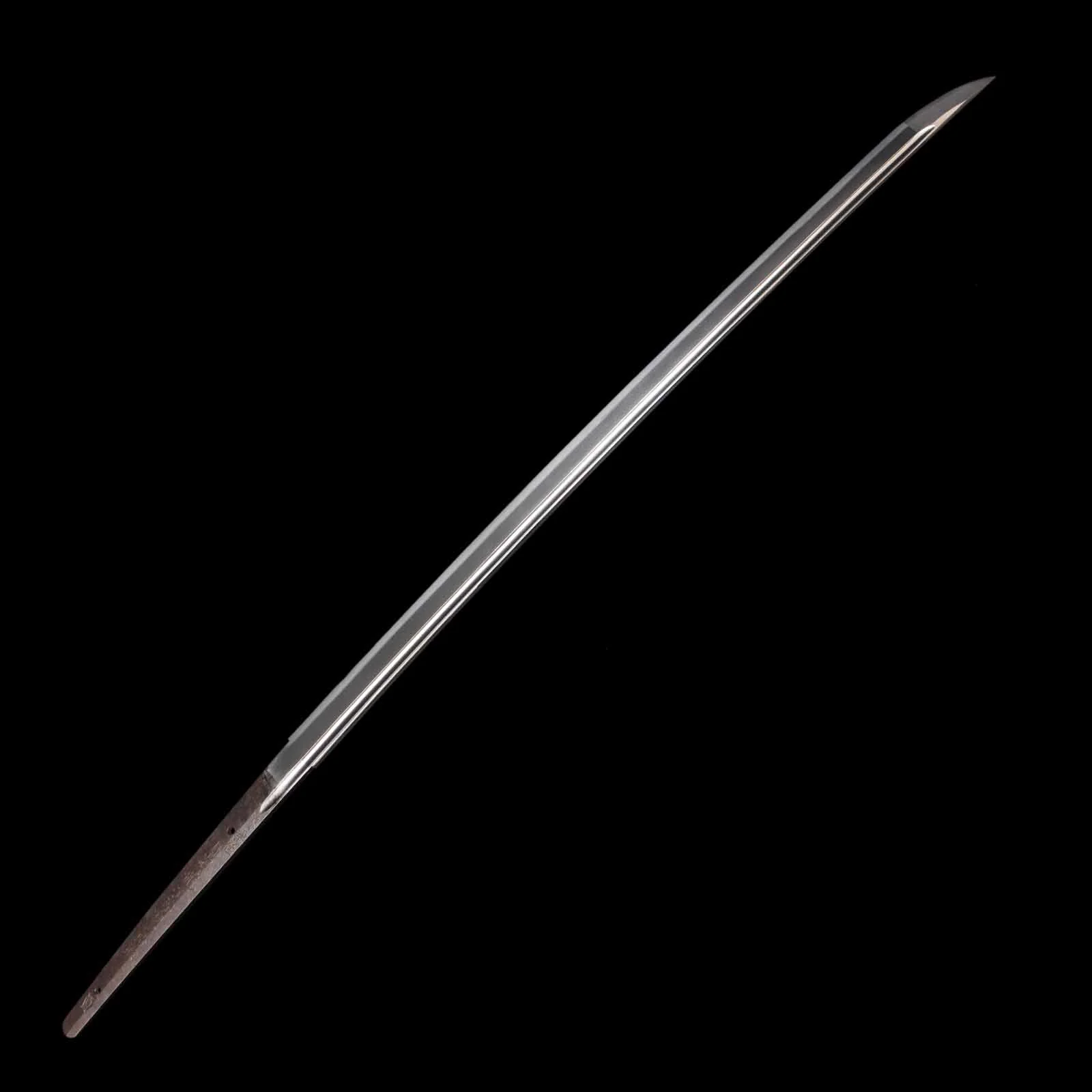
Tanto - Kanemune - Aikuchi/Shirasaya Koshirae - Ubu Nakago - Shinshinto Era - Saitama 44296
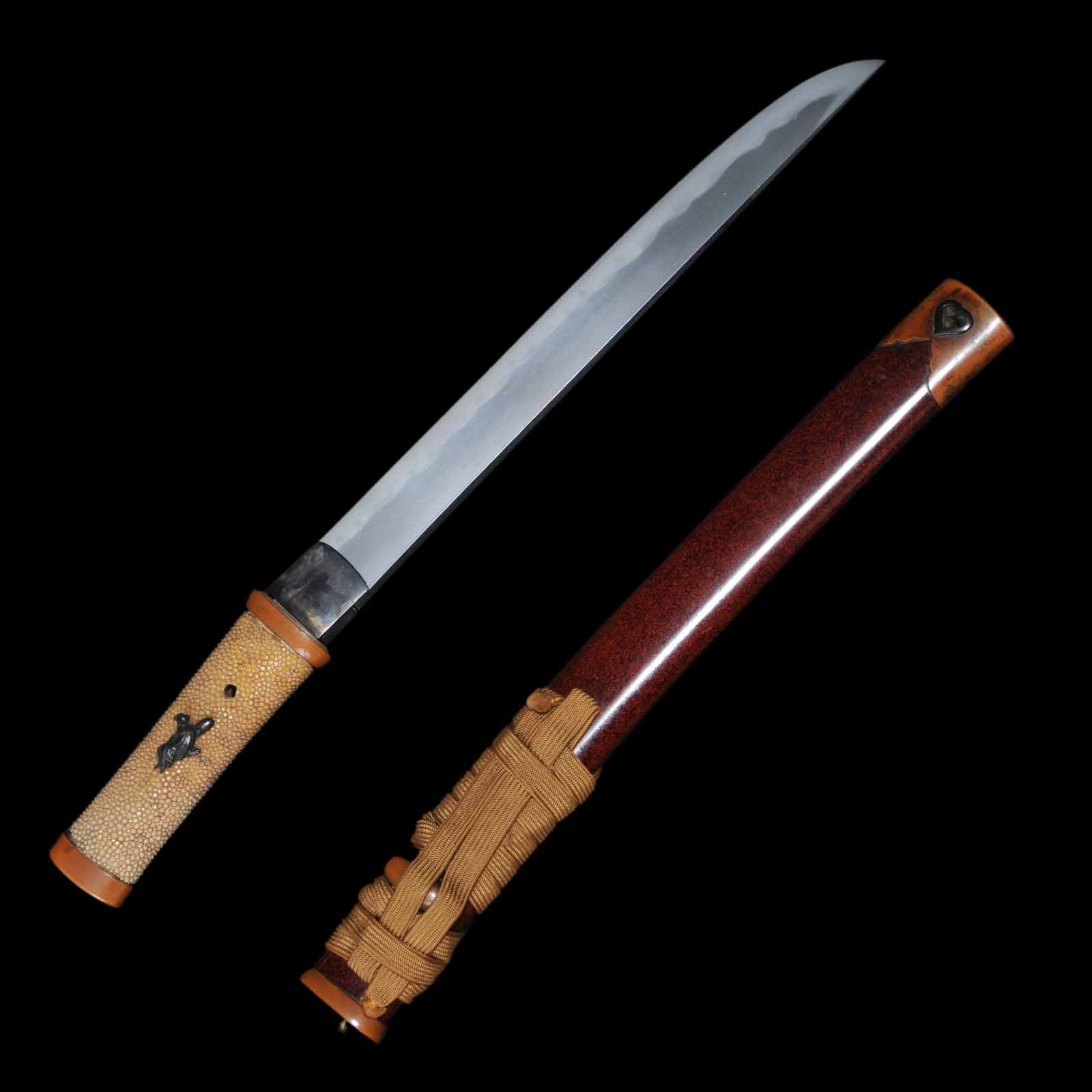
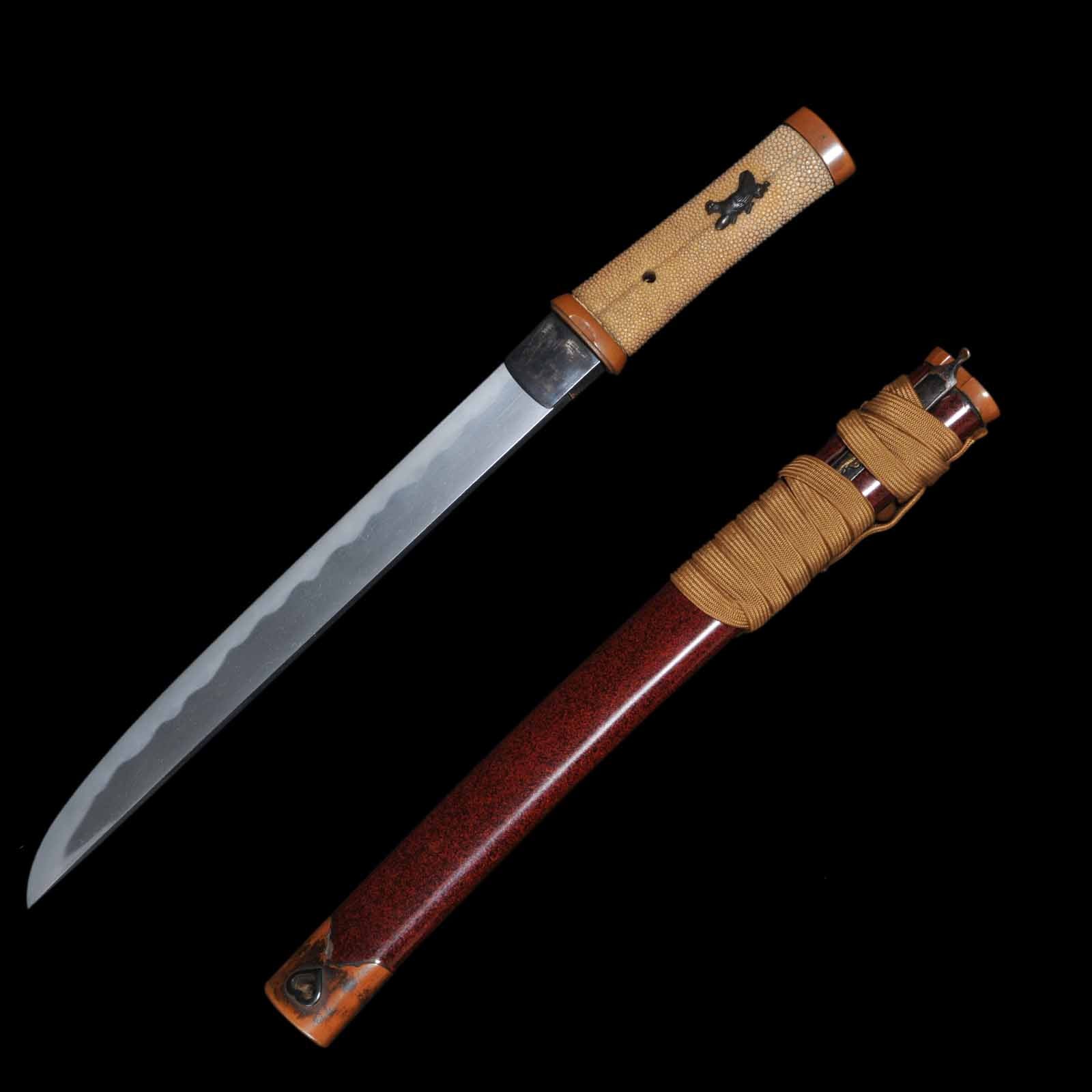
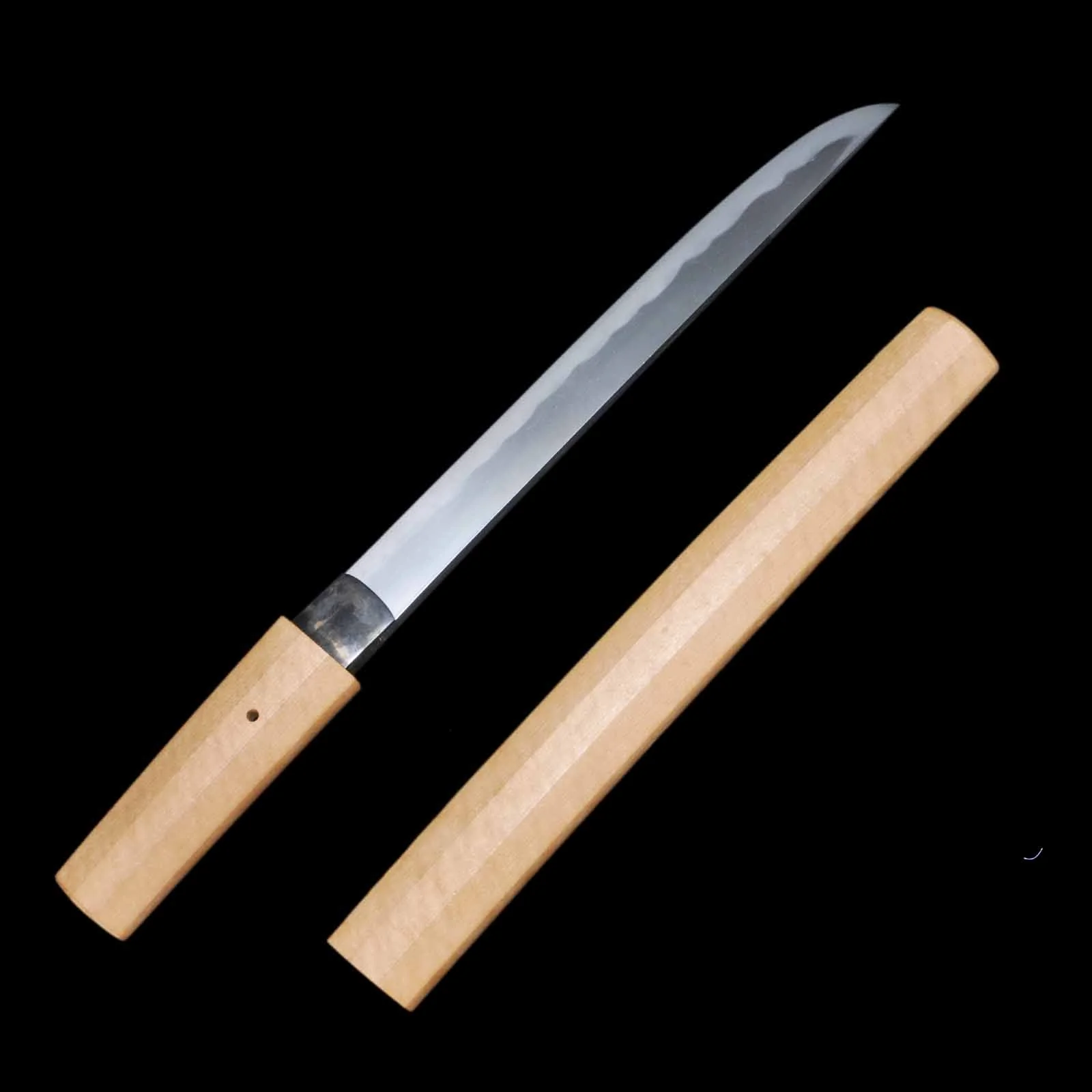
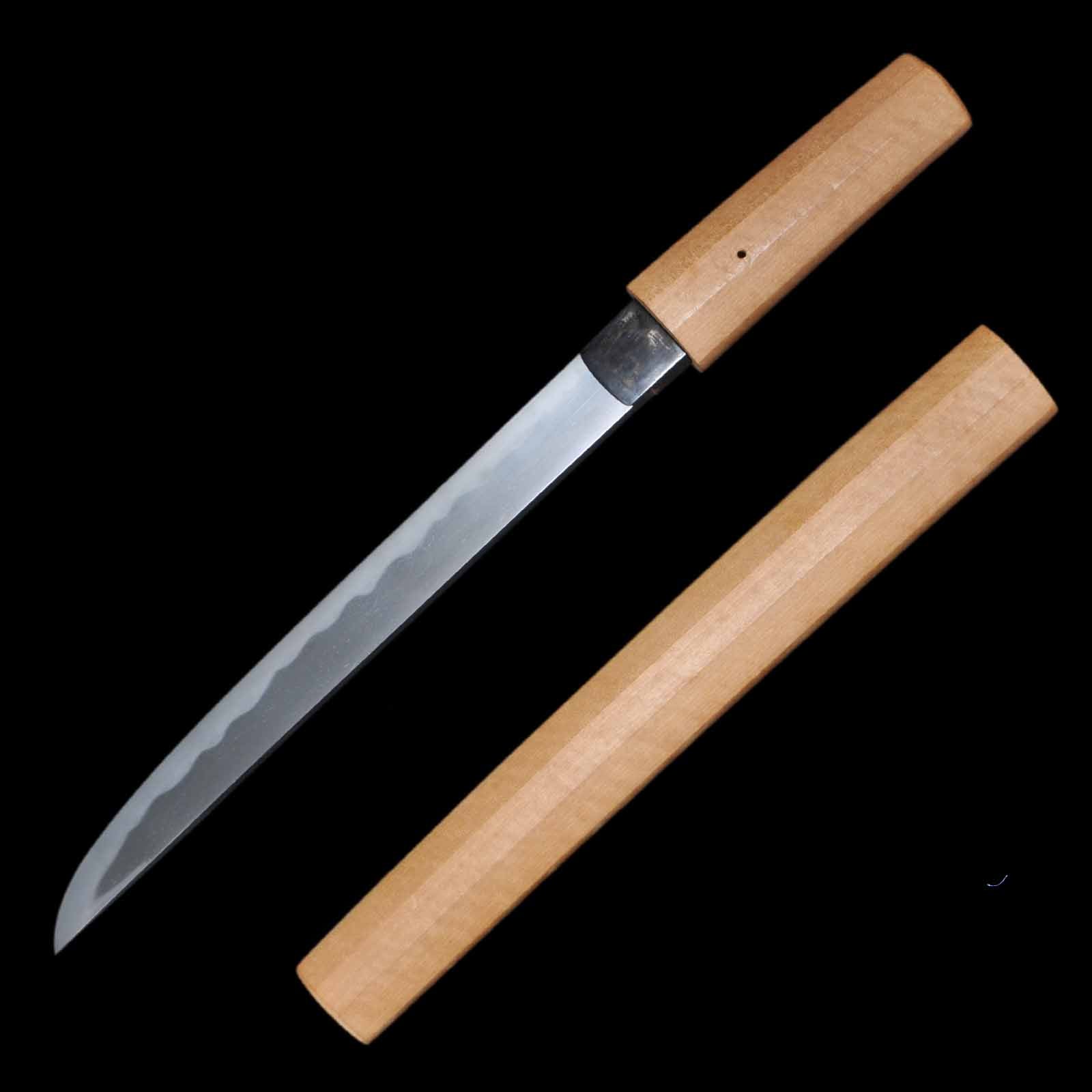
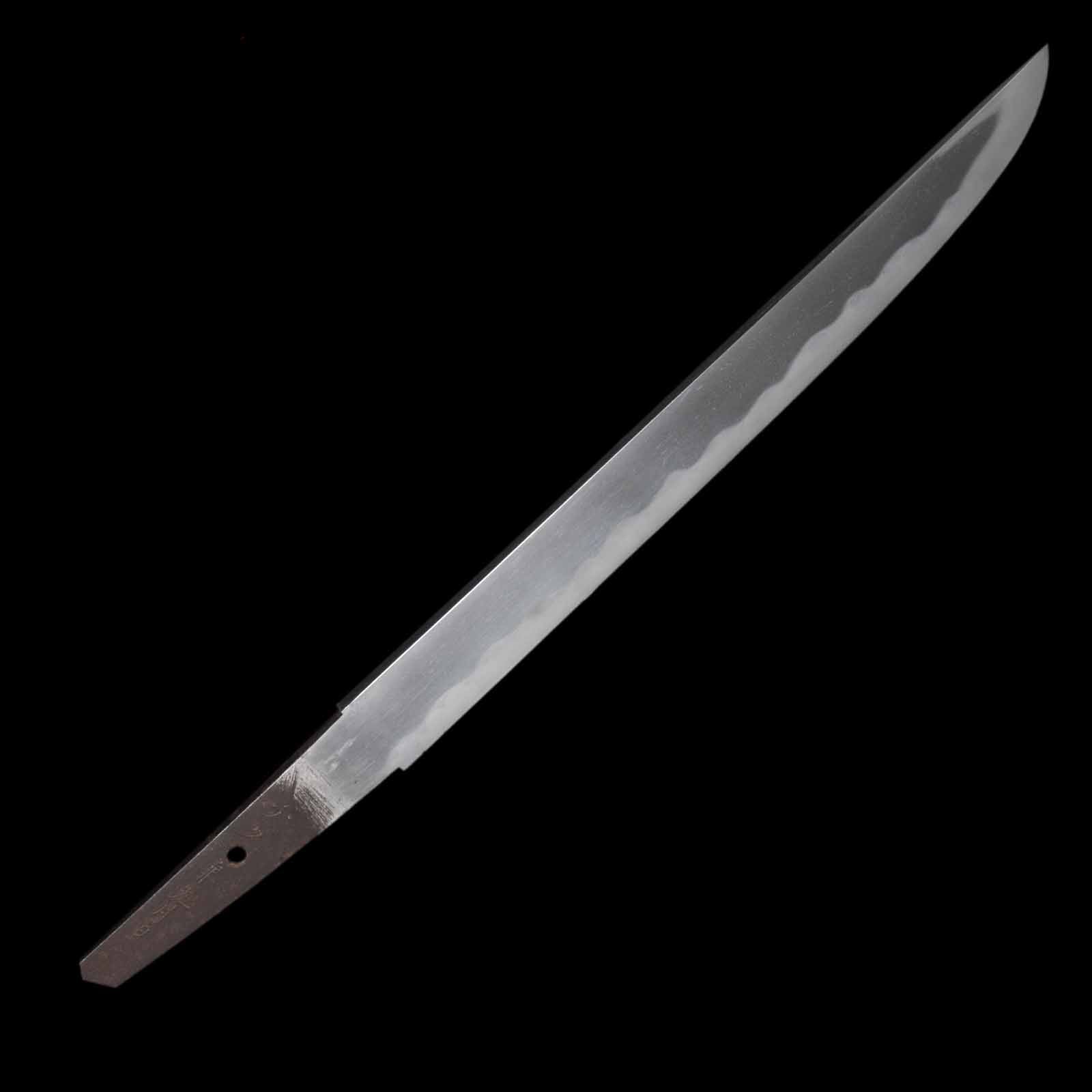
This dagger was equipped with an aikuchi koshirae, and its blade is so beautiful that it could be mistaken for a current piece.
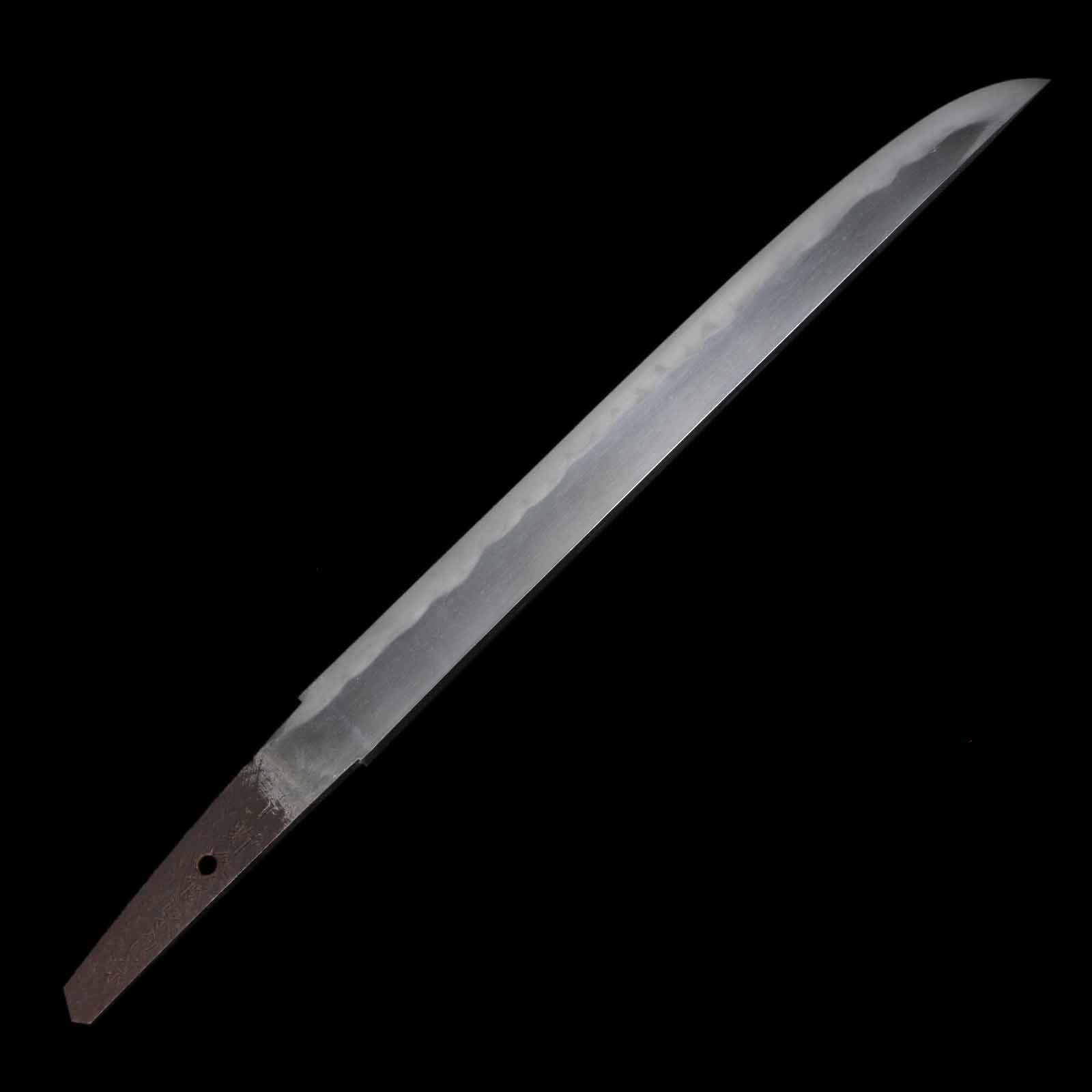
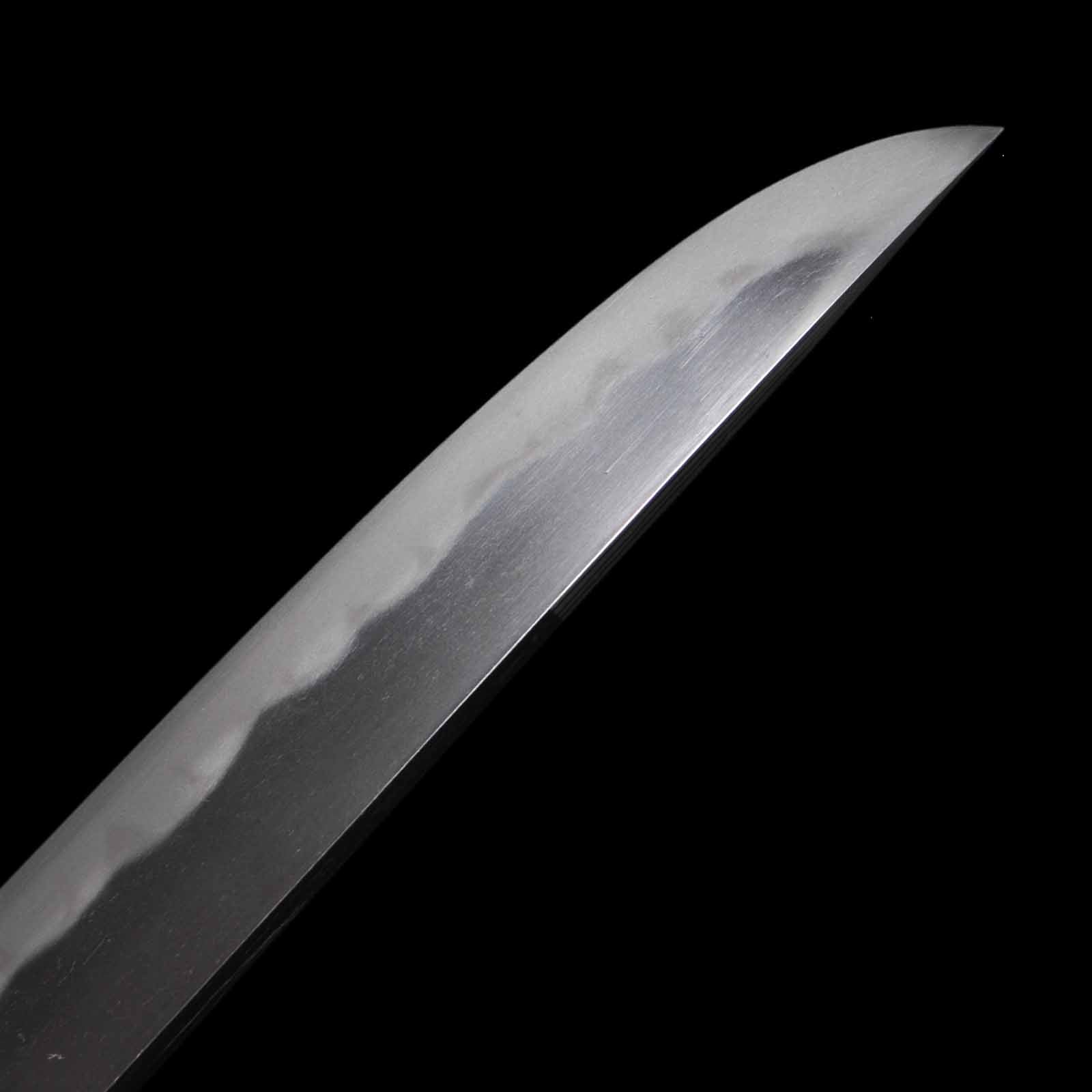
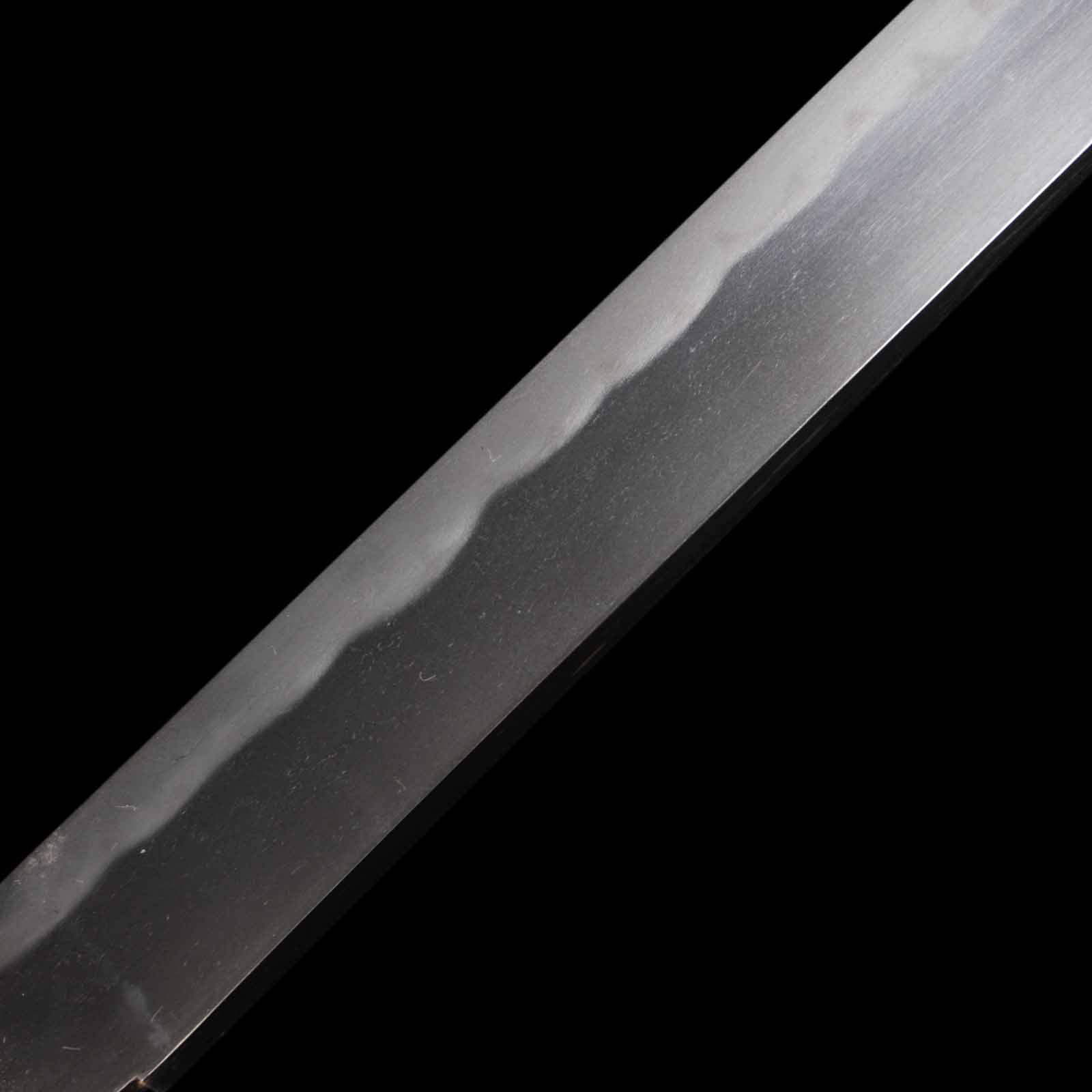
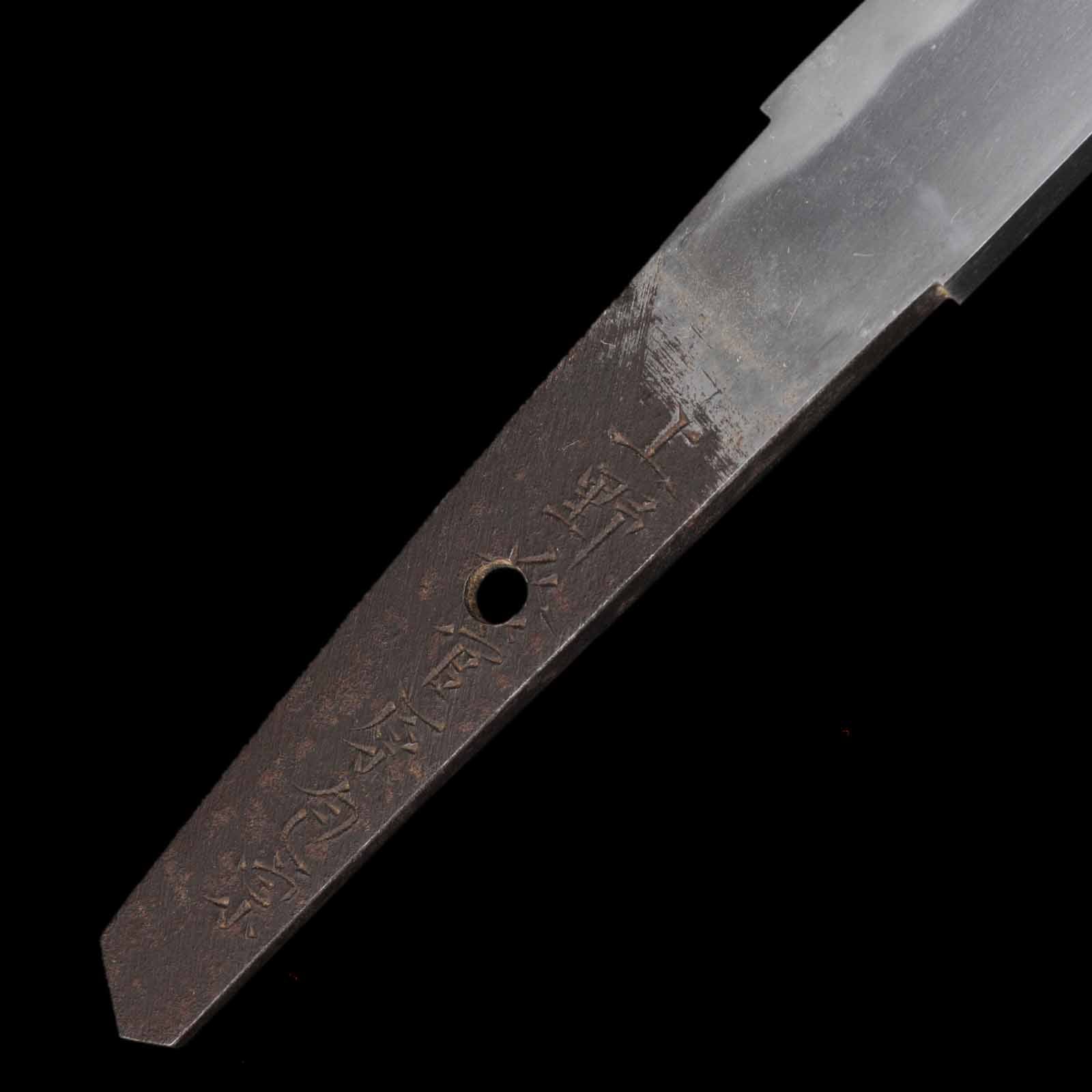
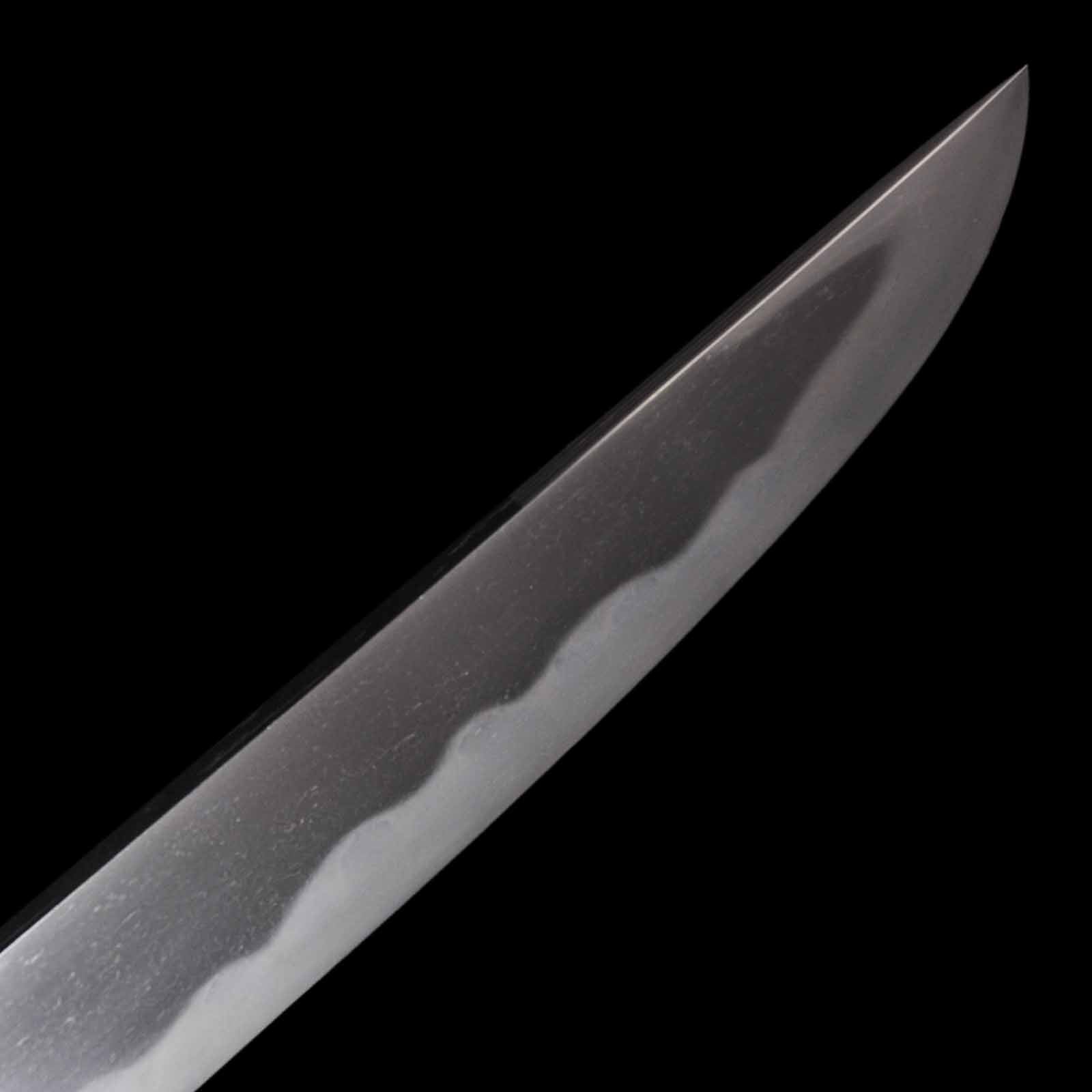
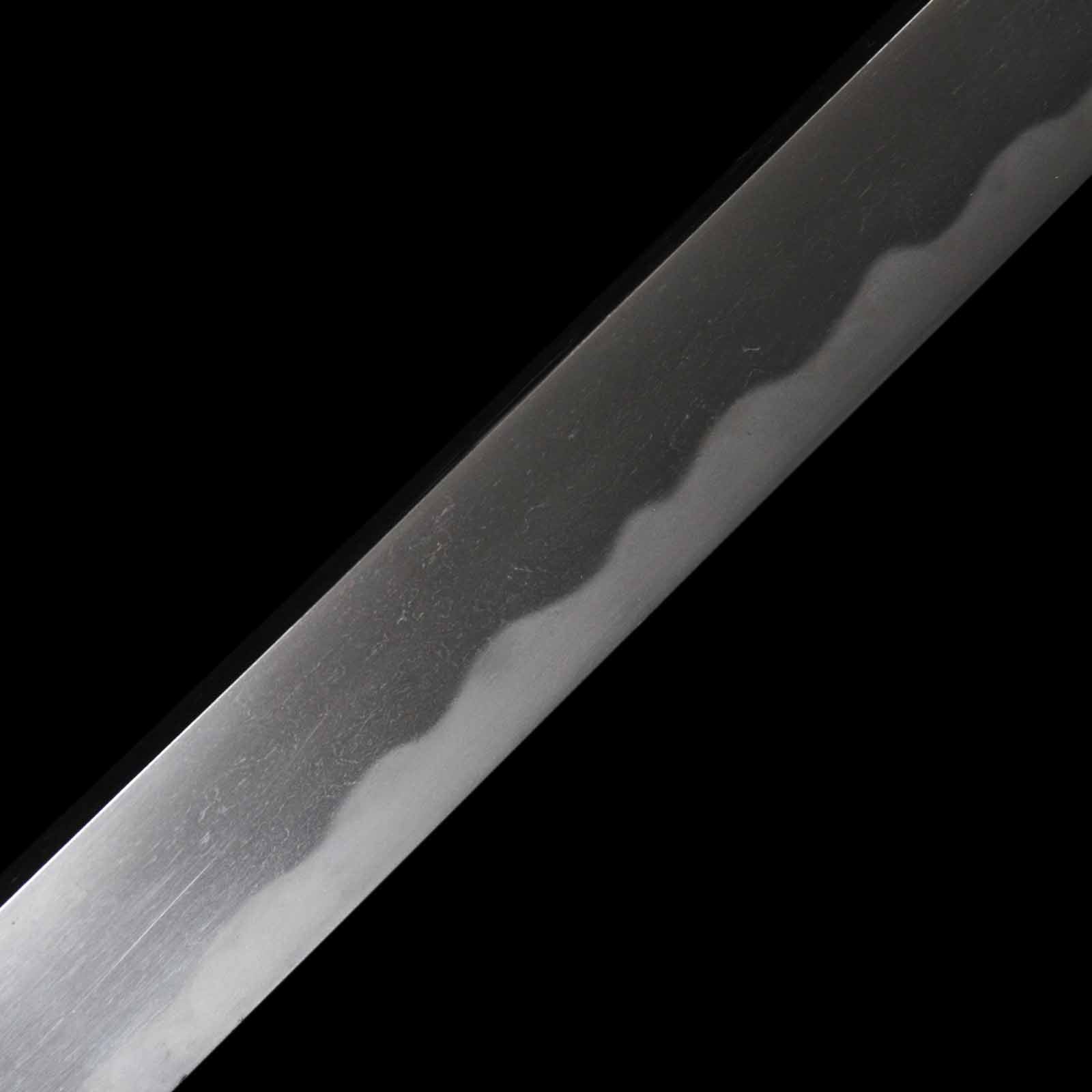
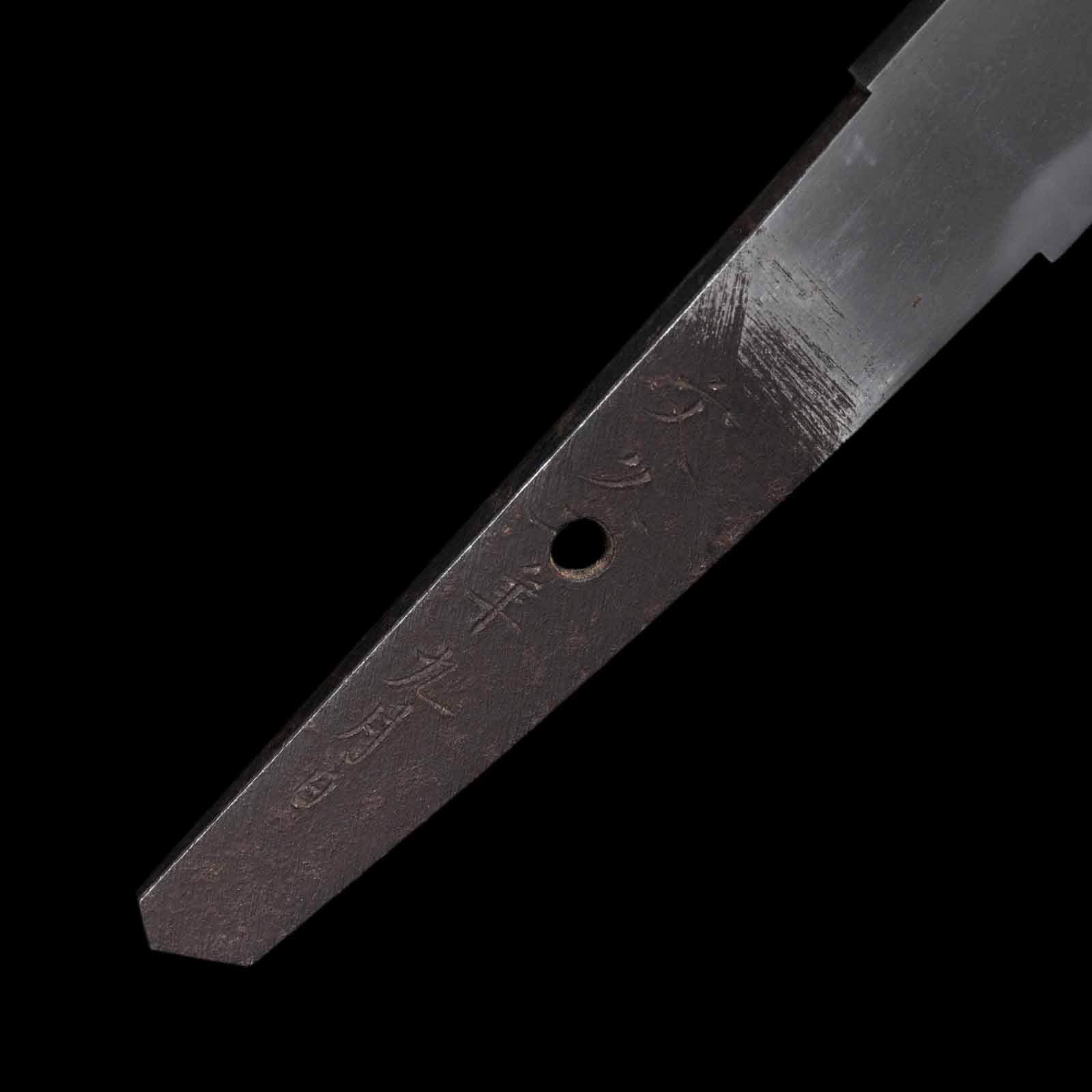
Its preservation is extremely good, with no flaws, chips, rust, or other defects, and the entire sword is very sound. The jigane is well packed with itame hada, and the yubashiri is very active. The hamon is well burnished with niedeki gnome, and the ashi are well attached. The blade is 7.3 mm thick and powerful and heavy. The name Kozuke no suke Sugawara Kanemune is engraved on the front of the Nakago, and the annals of Bunkyu Ninen Kugatsubi are engraved on the back.
Kanemune was a descendant of the Yamato Tegai school of swordsmiths and was active during the Edo period. The inscription on the back is engraved as September of the second year of Bunkyu, so September 1862 is when this tanto was made.
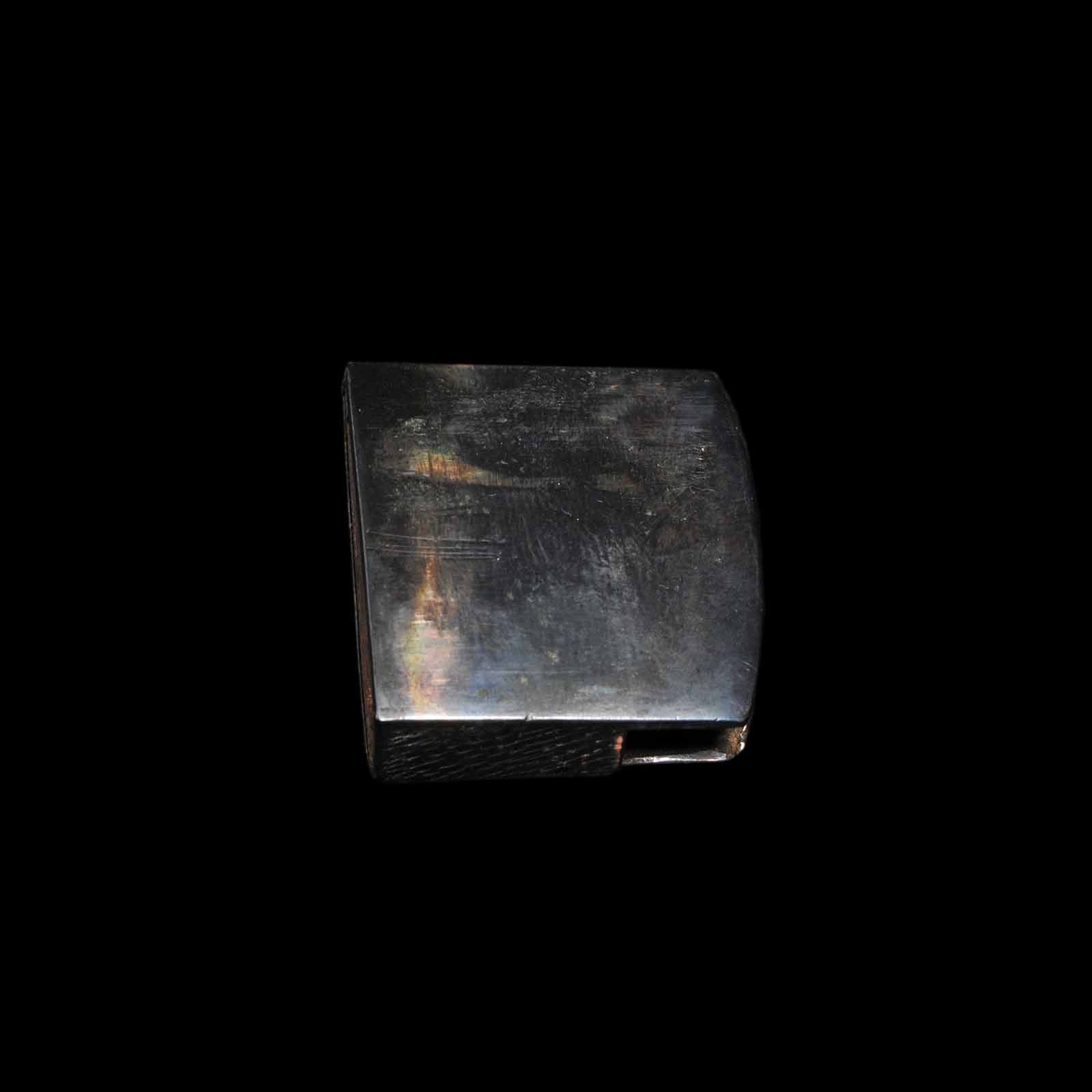
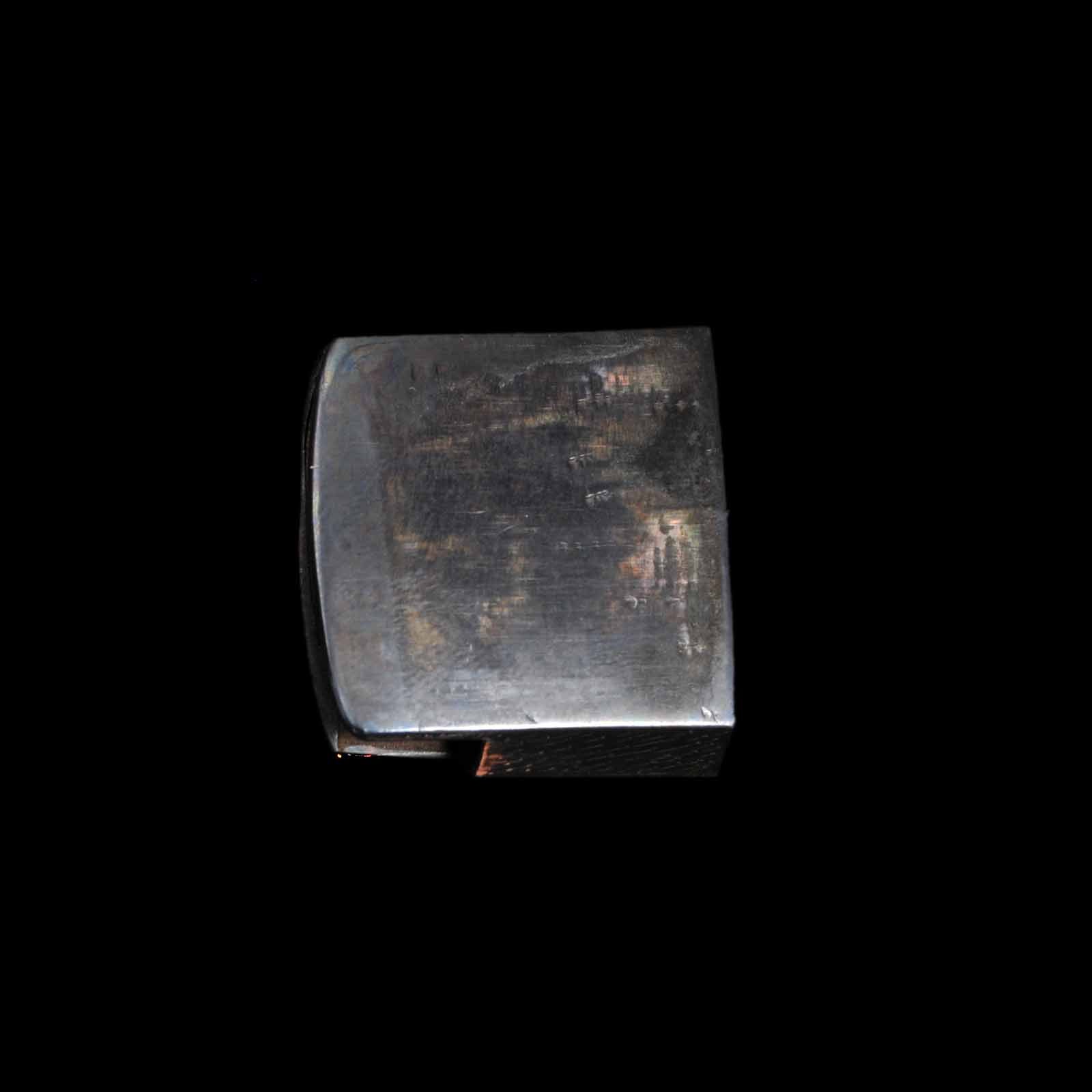
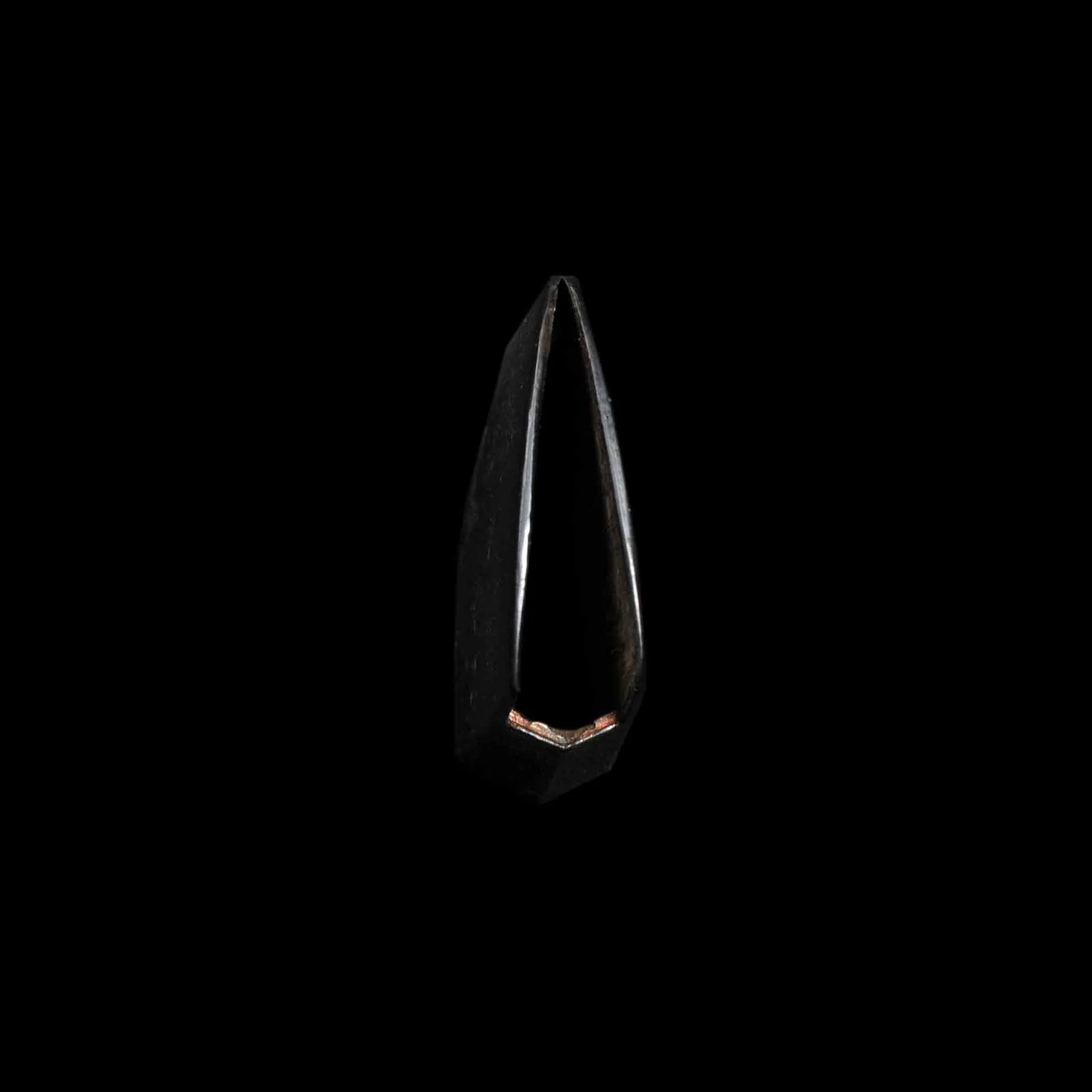
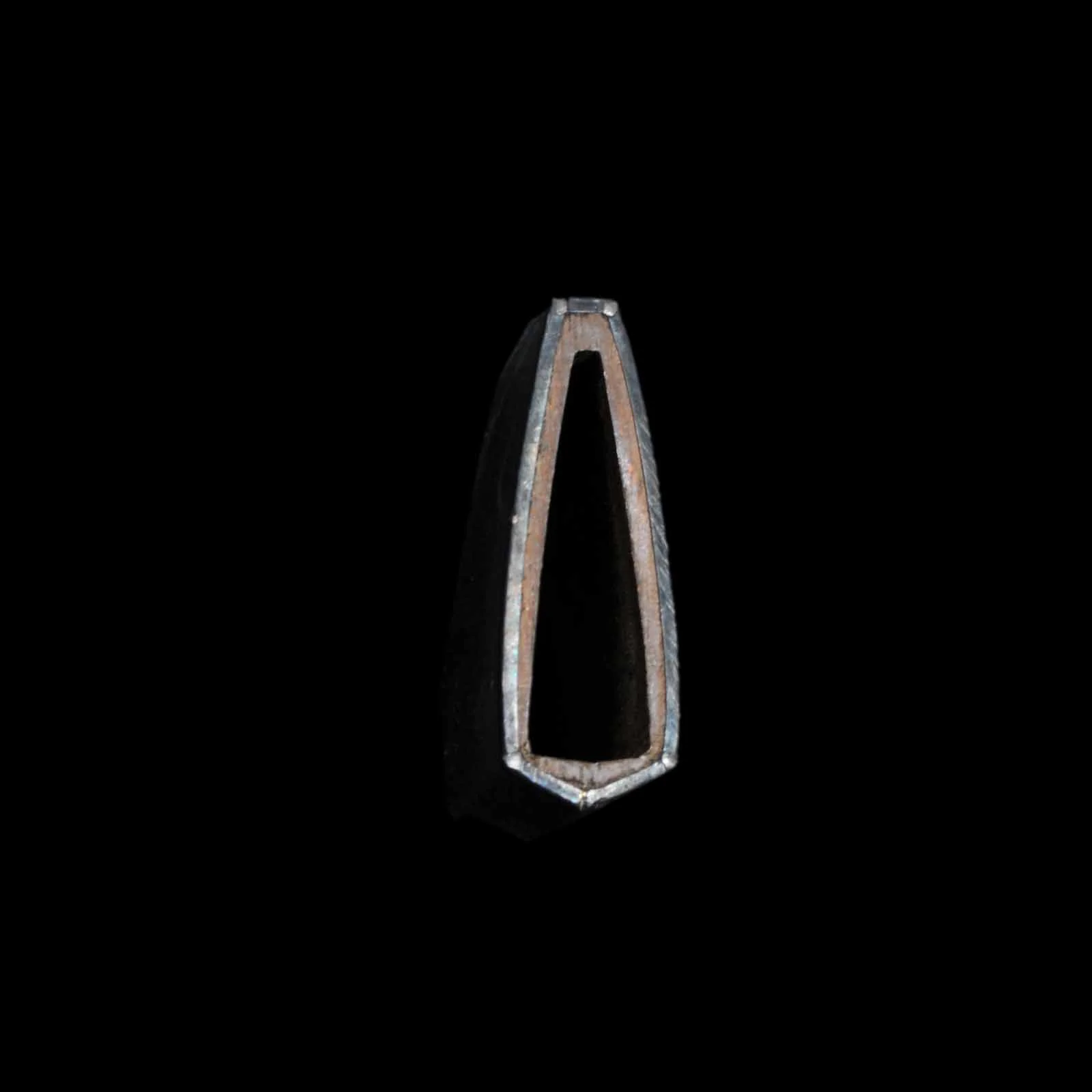
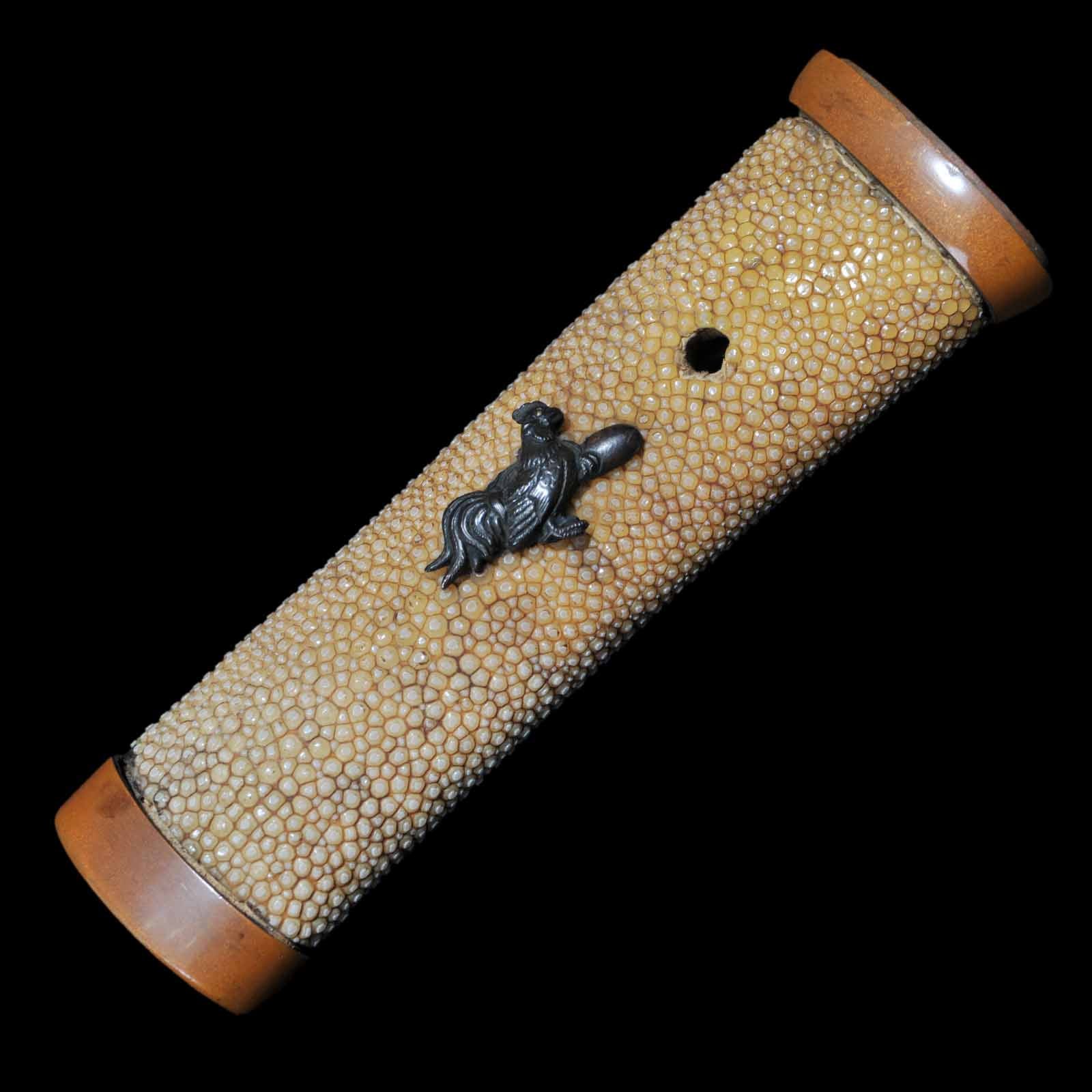
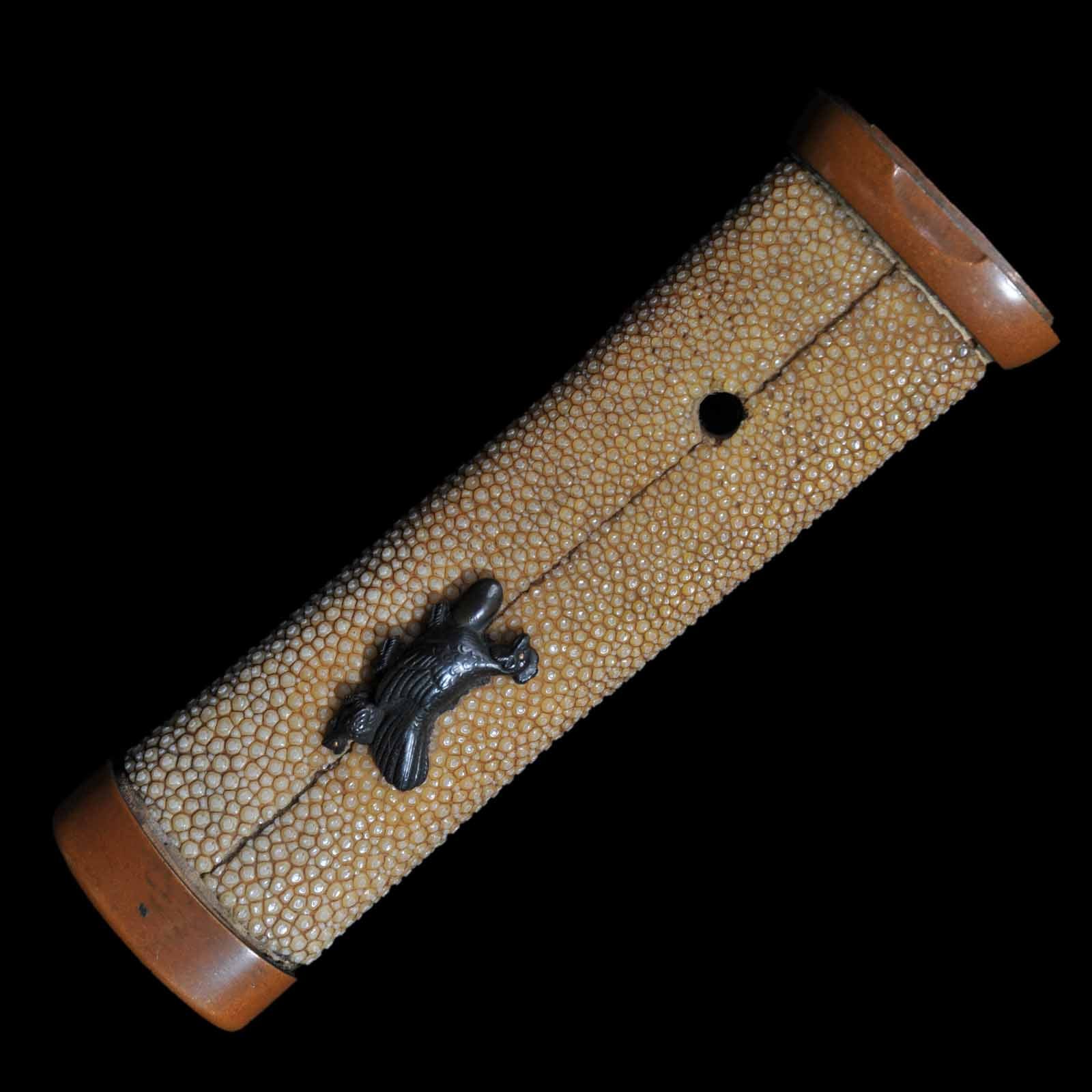
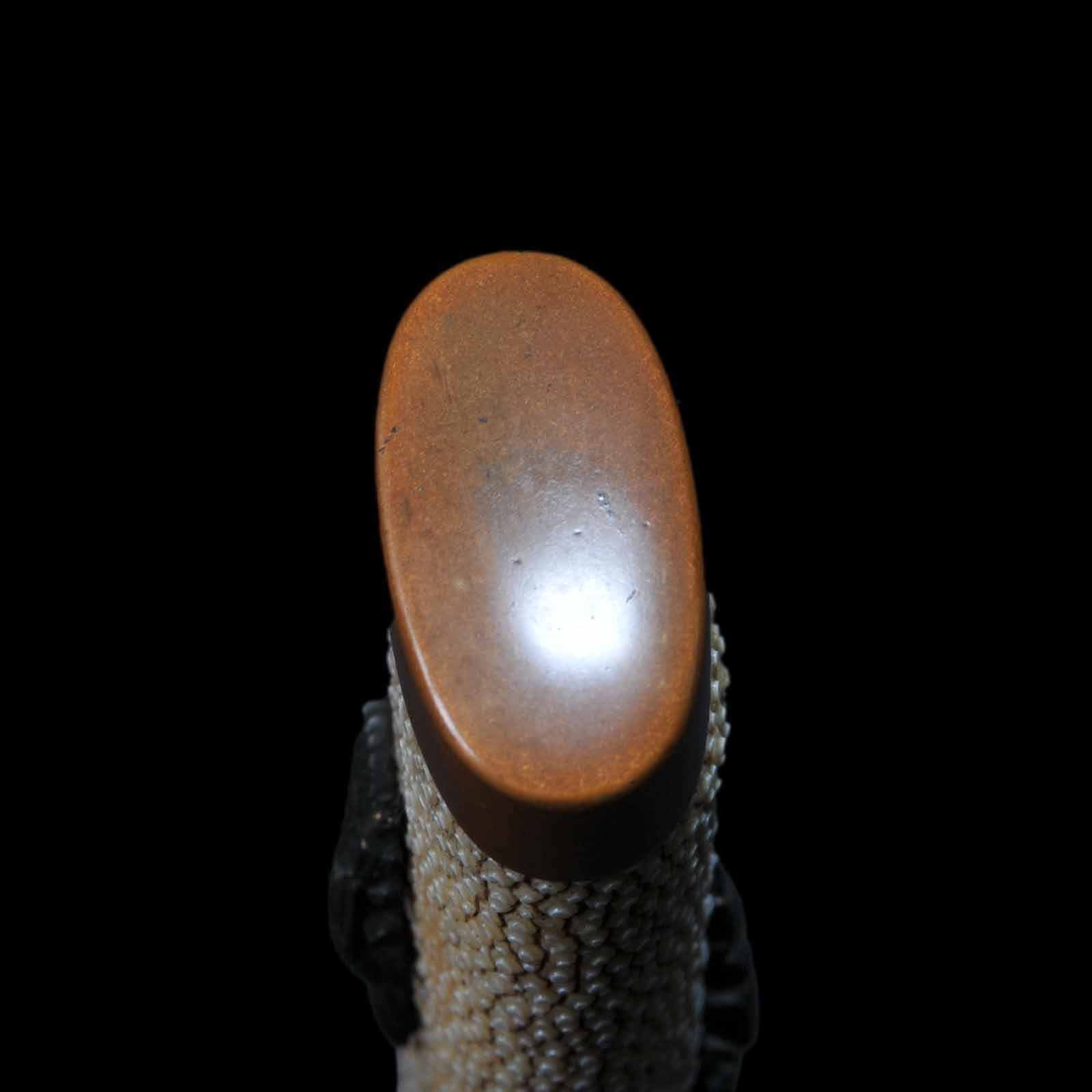
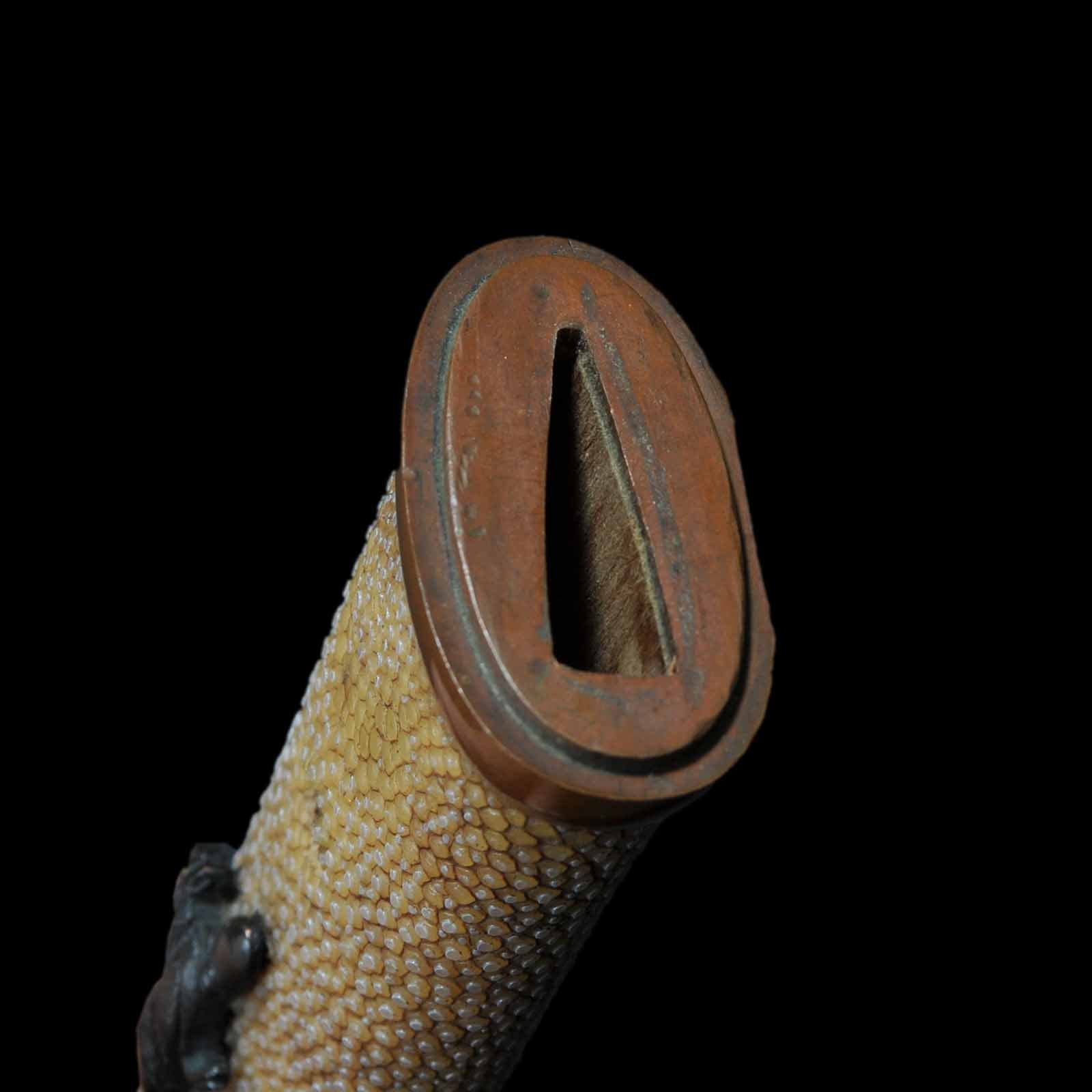
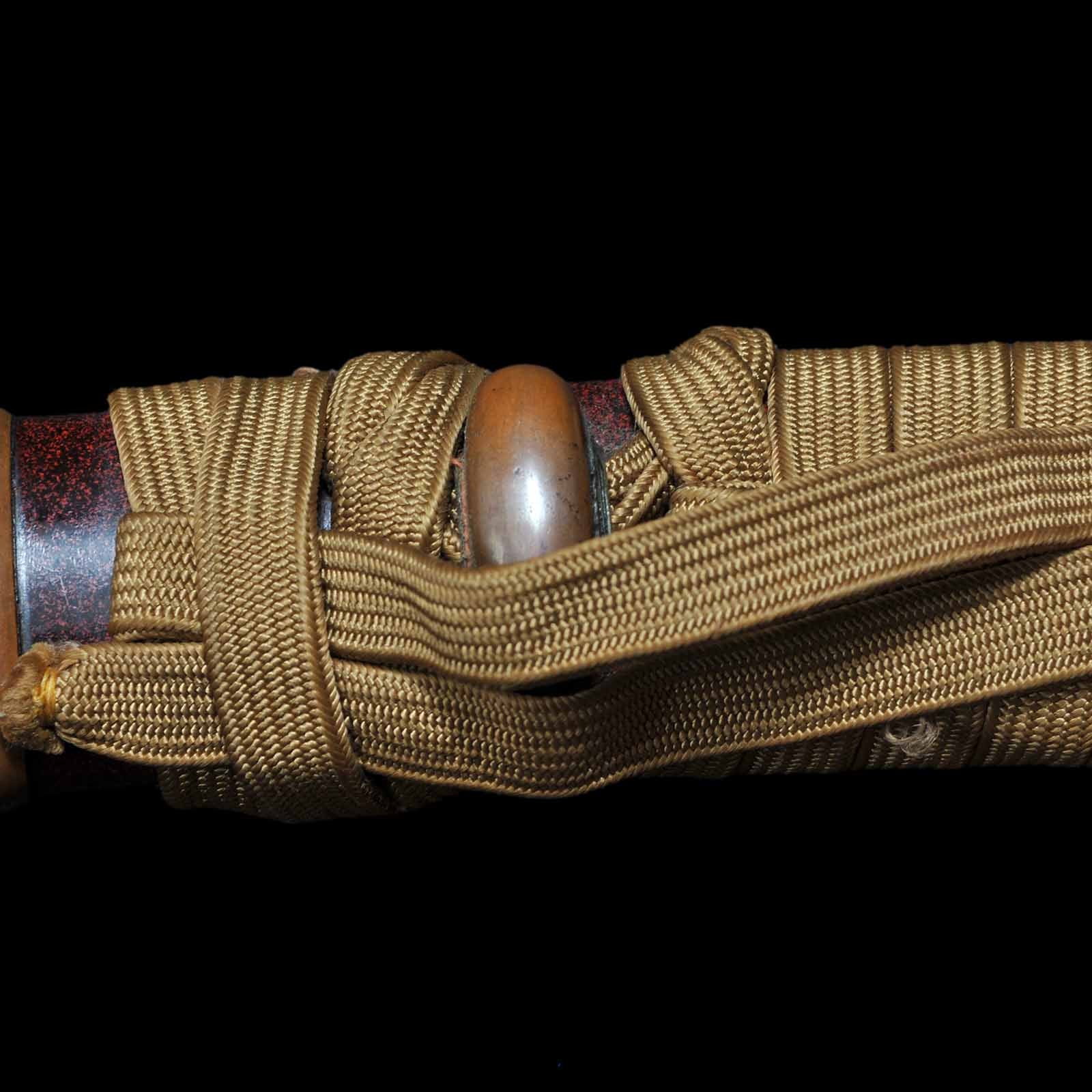
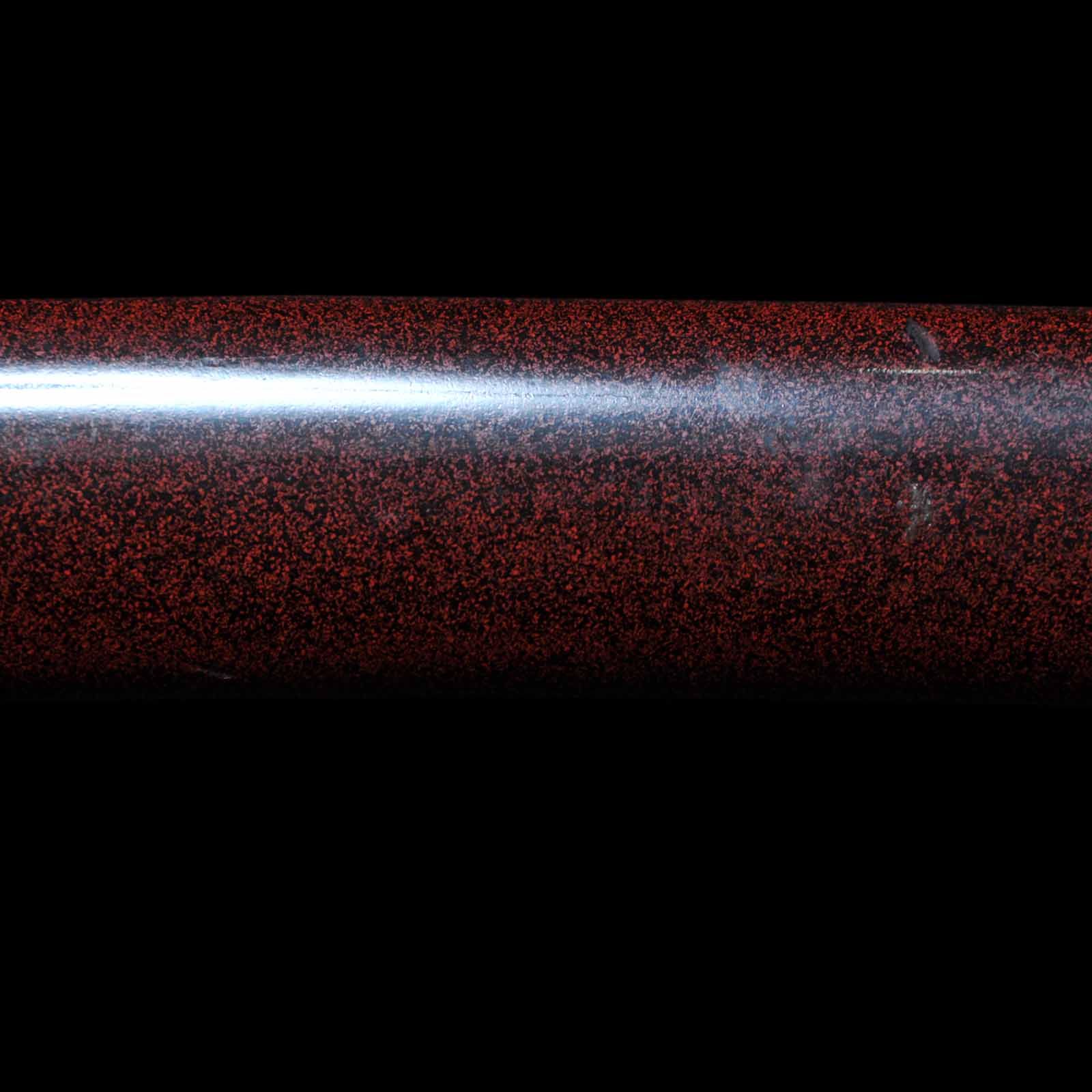
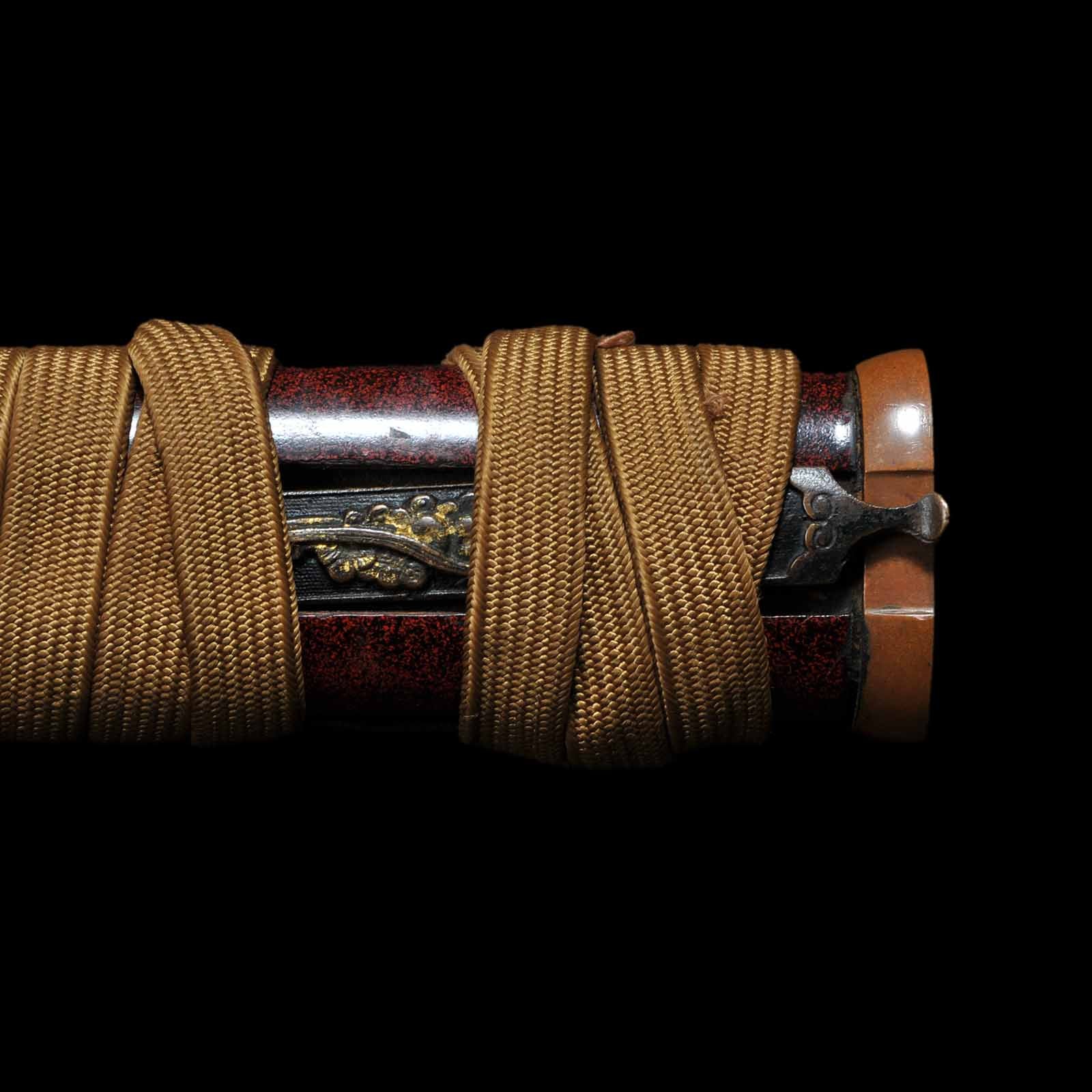
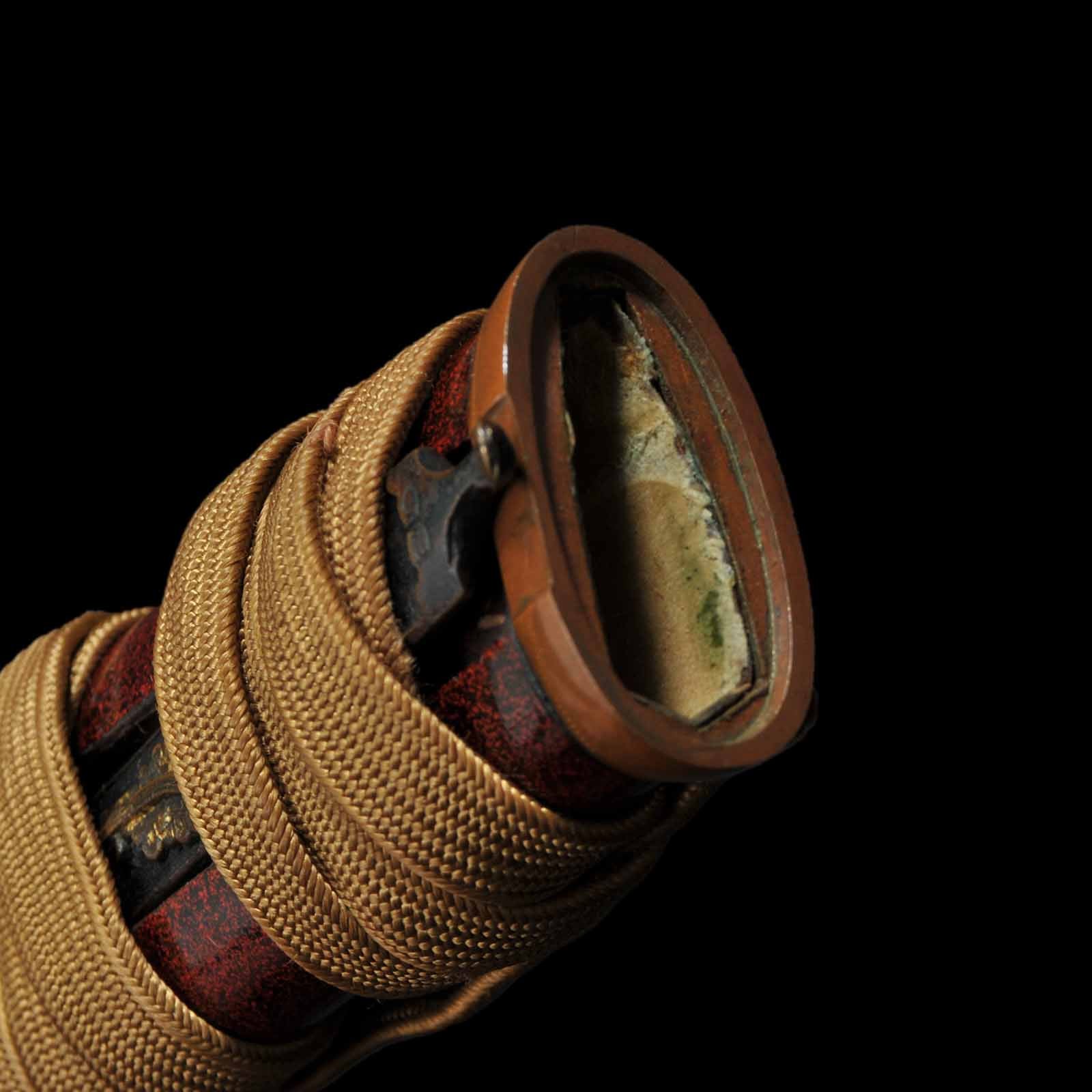
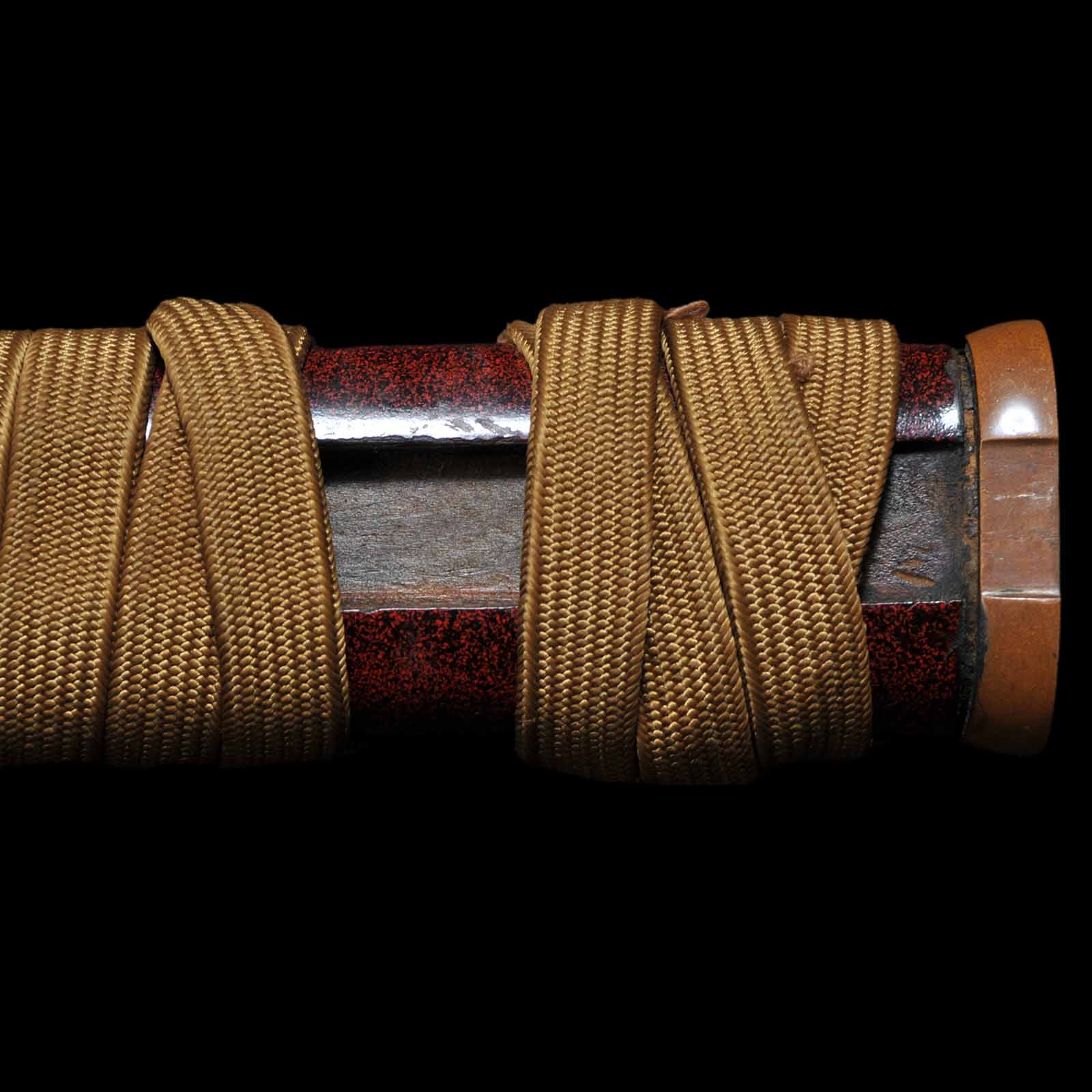
The koshirae is in the aikuchi style, and the tsuka is called dashizame with the tsukasame in its bare state. The metal fittings are suaka, copper made with the smelting technology of the time. The color has become very nice through time.
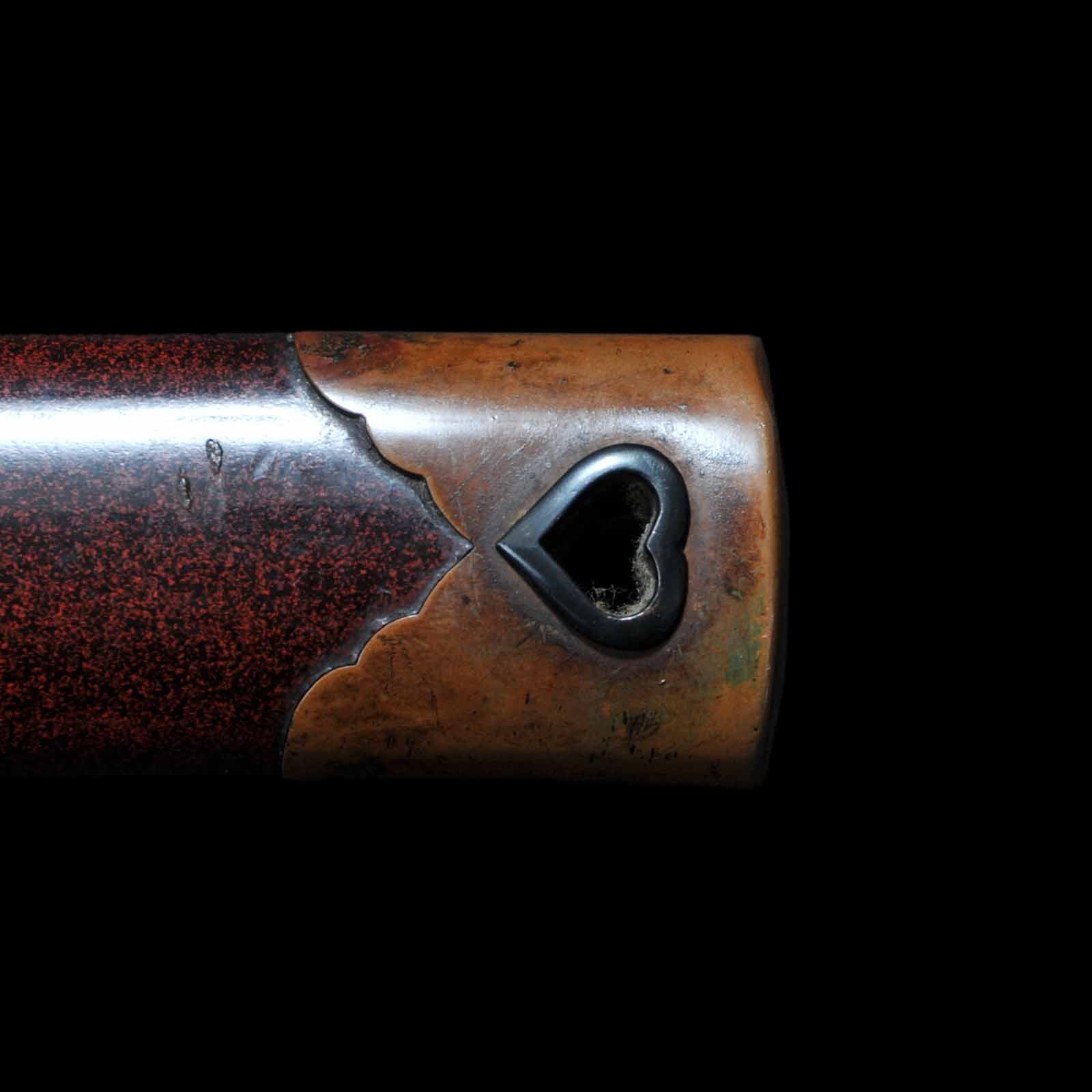
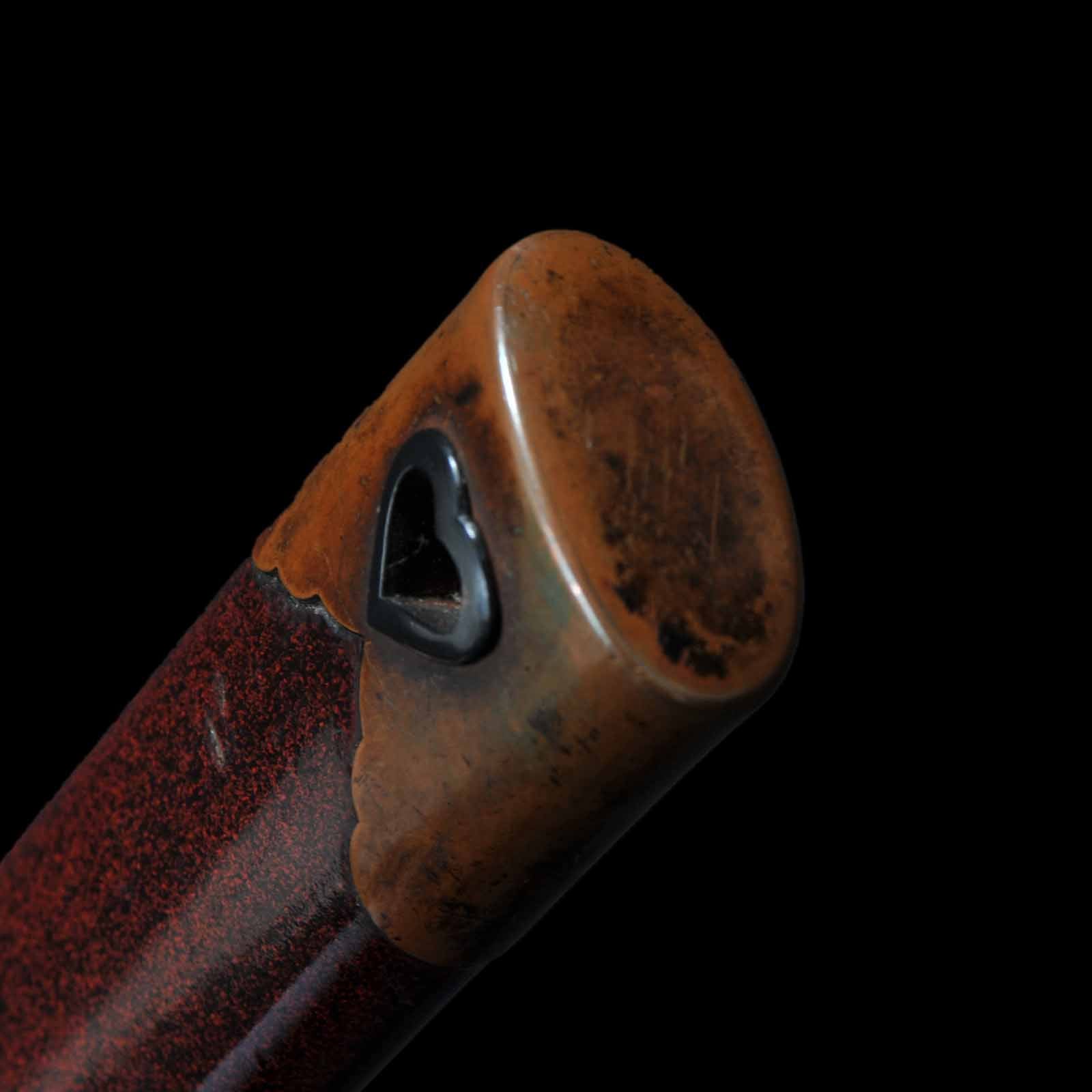
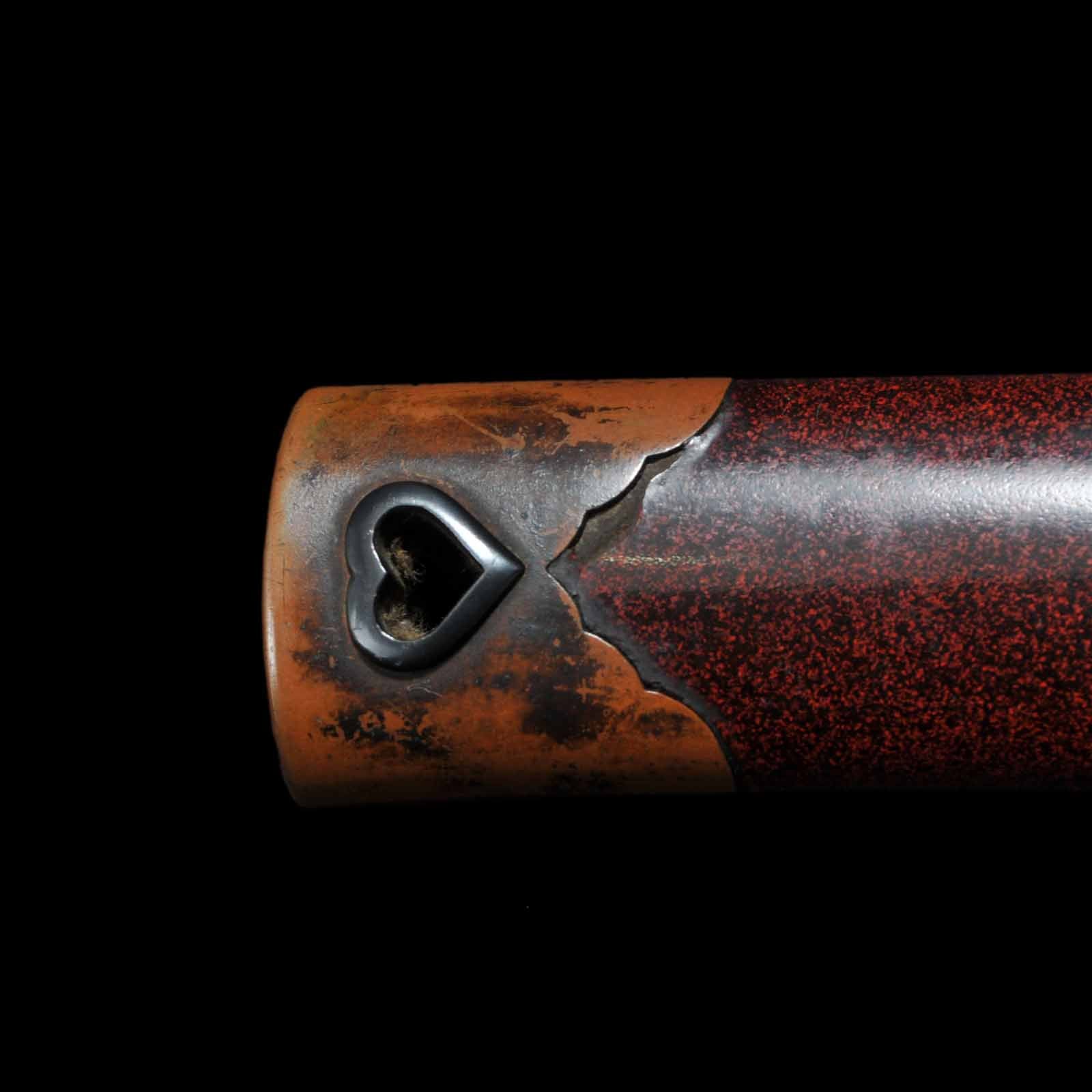
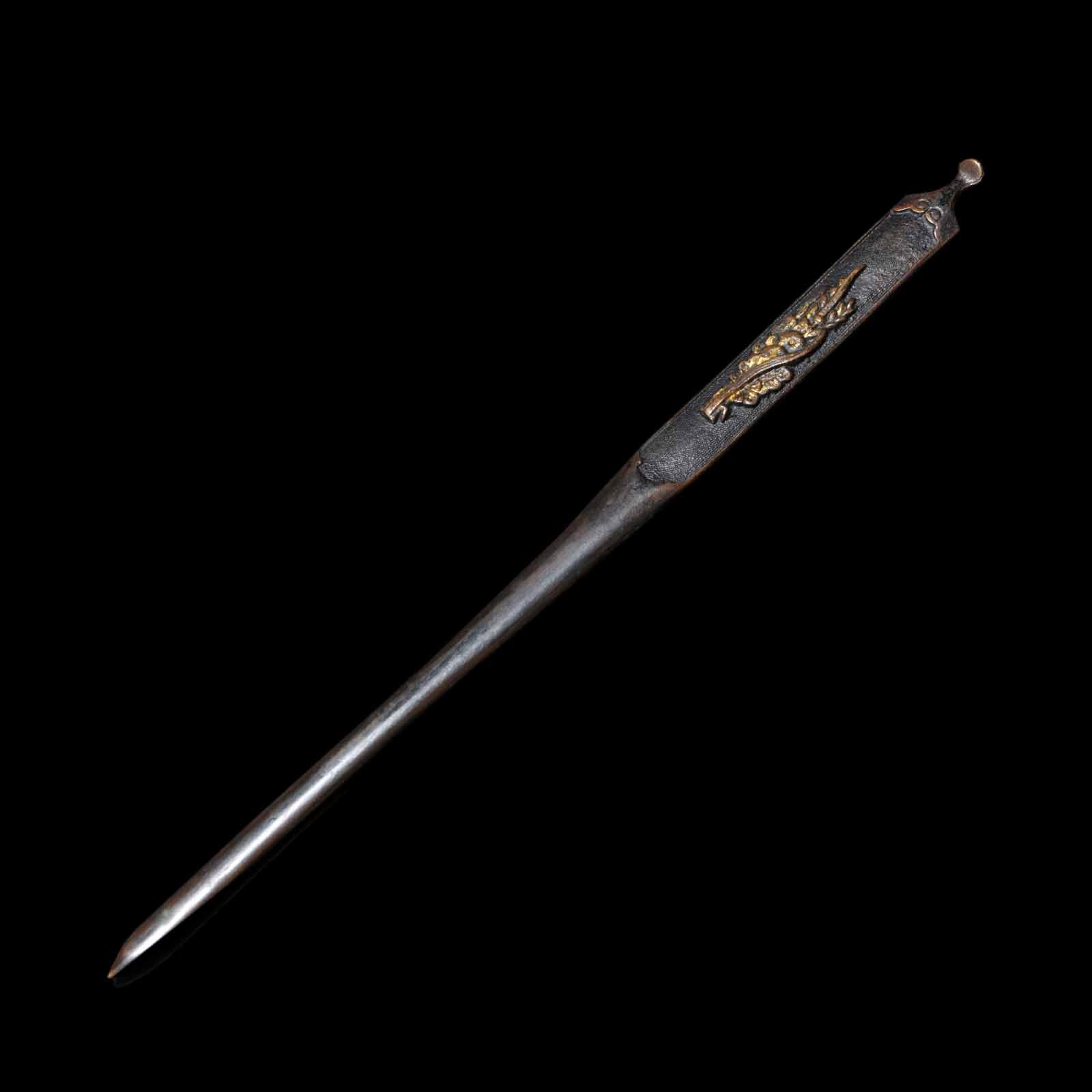
The kojiri is decorated with a heart mark pattern called inome. In Japan, the inome mark represents the eye of a boar and has the meaning of a talisman to ward off evil and bring good fortune. The kogai is also equipped, but it is most likely not original, as it does not match the pocket size of the scabbard.
Still, overall, this aikuchi koshirae is a very good match for the sword's body.
Make this gorgeous tanto your own, with a superbly preserved sword body and a wonderful aikuchi koshirae.
- Blade length: 28.9 cm
- Curvature: 0.0 cm
- Number of Mekugi hole: 1
- Motohaba: 29.9 mm
- Motokasane: 7.3 mm
- Signature: Kozuke no suke Sugawara Kanemune(front), Bunkyu Ninen Kugatsu-bi(back)
- Era: Shinshinto
- Structure: Hira-zukuri, Iori-mune
- Jigane: Itame
- Hamon: Gunome
- Boshi: Midarete Haitte TKomaru ni Kaeru
- Weigh: 290 g(blade only/350 g(without Saya)
- Nakago: Ubu
- Koshirae: Dashizame Aikuchi Suaka Kanagu/Shirasaya
- Original Registration No.: Saitama 44296
Please contact us if the katana you are looking for is not listed here.
Product Information
Product Information
Shipping & Returns
Shipping & Returns
Tanto - Kanemune - Aikuchi/Shirasaya Koshirae - Ubu Nakago - Shinshinto Era - Saitama 44296
Tanto - Kanemune - Aikuchi/Shirasaya Koshirae - Ubu Nakago - Shinshinto Era - Saitama 44296
This dagger was equipped with an aikuchi koshirae, and its blade is so beautiful that it could be mistaken for a current piece.
Its preservation is extremely good, with no flaws, chips, rust, or other defects, and the entire sword is very sound. The jigane is well packed with itame hada, and the yubashiri is very active. The hamon is well burnished with niedeki gnome, and the ashi are well attached. The blade is 7.3 mm thick and powerful and heavy. The name Kozuke no suke Sugawara Kanemune is engraved on the front of the Nakago, and the annals of Bunkyu Ninen Kugatsubi are engraved on the back.
Kanemune was a descendant of the Yamato Tegai school of swordsmiths and was active during the Edo period. The inscription on the back is engraved as September of the second year of Bunkyu, so September 1862 is when this tanto was made.
The koshirae is in the aikuchi style, and the tsuka is called dashizame with the tsukasame in its bare state. The metal fittings are suaka, copper made with the smelting technology of the time. The color has become very nice through time.
The kojiri is decorated with a heart mark pattern called inome. In Japan, the inome mark represents the eye of a boar and has the meaning of a talisman to ward off evil and bring good fortune. The kogai is also equipped, but it is most likely not original, as it does not match the pocket size of the scabbard.
Still, overall, this aikuchi koshirae is a very good match for the sword's body.
Make this gorgeous tanto your own, with a superbly preserved sword body and a wonderful aikuchi koshirae.
- Blade length: 28.9 cm
- Curvature: 0.0 cm
- Number of Mekugi hole: 1
- Motohaba: 29.9 mm
- Motokasane: 7.3 mm
- Signature: Kozuke no suke Sugawara Kanemune(front), Bunkyu Ninen Kugatsu-bi(back)
- Era: Shinshinto
- Structure: Hira-zukuri, Iori-mune
- Jigane: Itame
- Hamon: Gunome
- Boshi: Midarete Haitte TKomaru ni Kaeru
- Weigh: 290 g(blade only/350 g(without Saya)
- Nakago: Ubu
- Koshirae: Dashizame Aikuchi Suaka Kanagu/Shirasaya
- Original Registration No.: Saitama 44296
Please contact us if the katana you are looking for is not listed here.
Original: $2,587.20
-65%$2,587.20
$905.52Product Information
Product Information
Shipping & Returns
Shipping & Returns
Description
This dagger was equipped with an aikuchi koshirae, and its blade is so beautiful that it could be mistaken for a current piece.
Its preservation is extremely good, with no flaws, chips, rust, or other defects, and the entire sword is very sound. The jigane is well packed with itame hada, and the yubashiri is very active. The hamon is well burnished with niedeki gnome, and the ashi are well attached. The blade is 7.3 mm thick and powerful and heavy. The name Kozuke no suke Sugawara Kanemune is engraved on the front of the Nakago, and the annals of Bunkyu Ninen Kugatsubi are engraved on the back.
Kanemune was a descendant of the Yamato Tegai school of swordsmiths and was active during the Edo period. The inscription on the back is engraved as September of the second year of Bunkyu, so September 1862 is when this tanto was made.
The koshirae is in the aikuchi style, and the tsuka is called dashizame with the tsukasame in its bare state. The metal fittings are suaka, copper made with the smelting technology of the time. The color has become very nice through time.
The kojiri is decorated with a heart mark pattern called inome. In Japan, the inome mark represents the eye of a boar and has the meaning of a talisman to ward off evil and bring good fortune. The kogai is also equipped, but it is most likely not original, as it does not match the pocket size of the scabbard.
Still, overall, this aikuchi koshirae is a very good match for the sword's body.
Make this gorgeous tanto your own, with a superbly preserved sword body and a wonderful aikuchi koshirae.
- Blade length: 28.9 cm
- Curvature: 0.0 cm
- Number of Mekugi hole: 1
- Motohaba: 29.9 mm
- Motokasane: 7.3 mm
- Signature: Kozuke no suke Sugawara Kanemune(front), Bunkyu Ninen Kugatsu-bi(back)
- Era: Shinshinto
- Structure: Hira-zukuri, Iori-mune
- Jigane: Itame
- Hamon: Gunome
- Boshi: Midarete Haitte TKomaru ni Kaeru
- Weigh: 290 g(blade only/350 g(without Saya)
- Nakago: Ubu
- Koshirae: Dashizame Aikuchi Suaka Kanagu/Shirasaya
- Original Registration No.: Saitama 44296
Please contact us if the katana you are looking for is not listed here.