Authentic Shinto Era ō-tanto for Sale - Kanetoki - with sayagaki | Tozando
Antique Japanese Ko-wakizashi, signed Kanetoki (兼辰) of Mino — mid-Edo period — ubu, broad hira-zukuri "ō-tanto" form — in shirasaya with sayagaki
Powerful, wide-bodied ubu ko-wakizashi by the Mino Kanetoki line (retained smiths of the Uesugi) · beautifully forged konuka-hada · bright, nie-based gunome-midare · preserved in shirasaya with an appreciative sayagaki
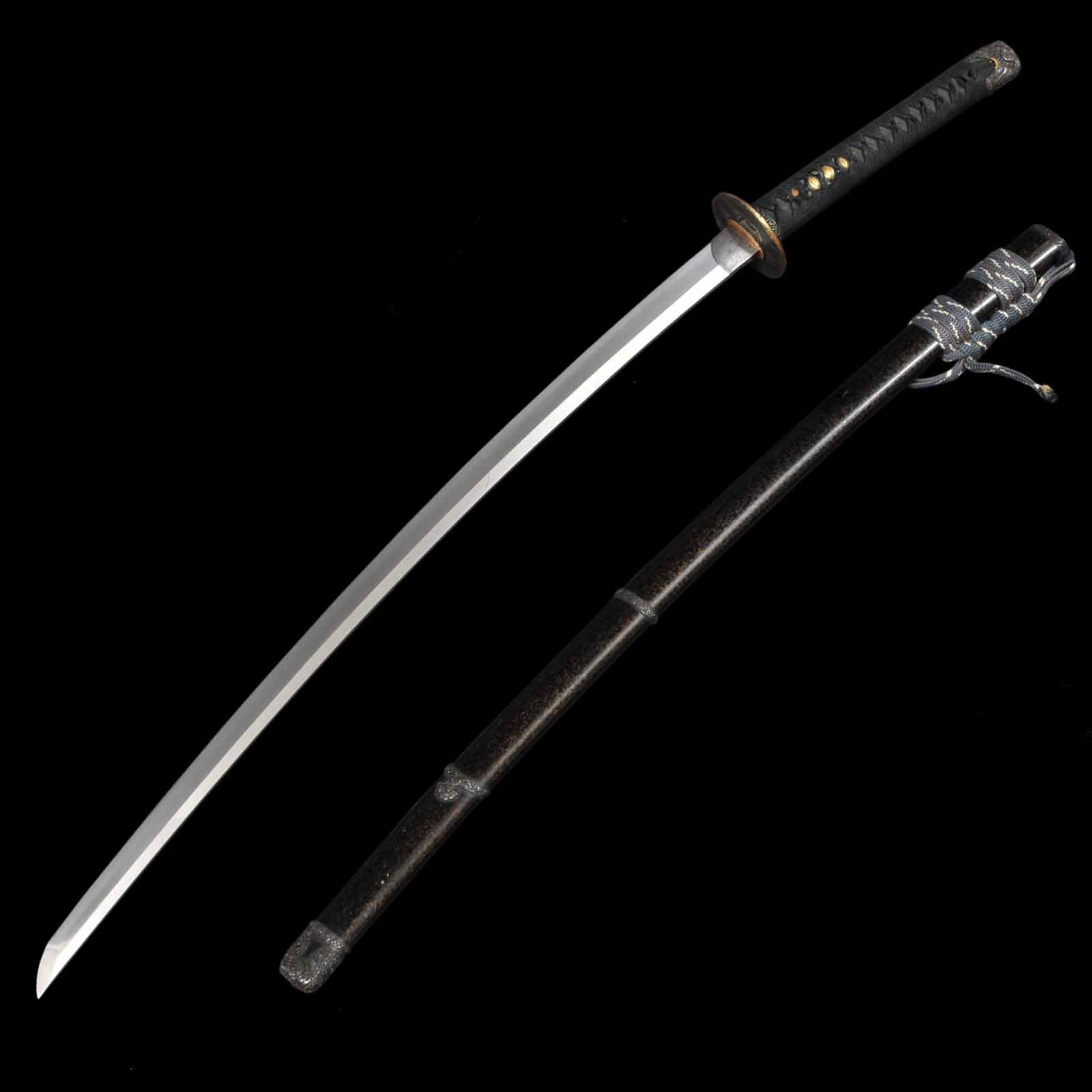
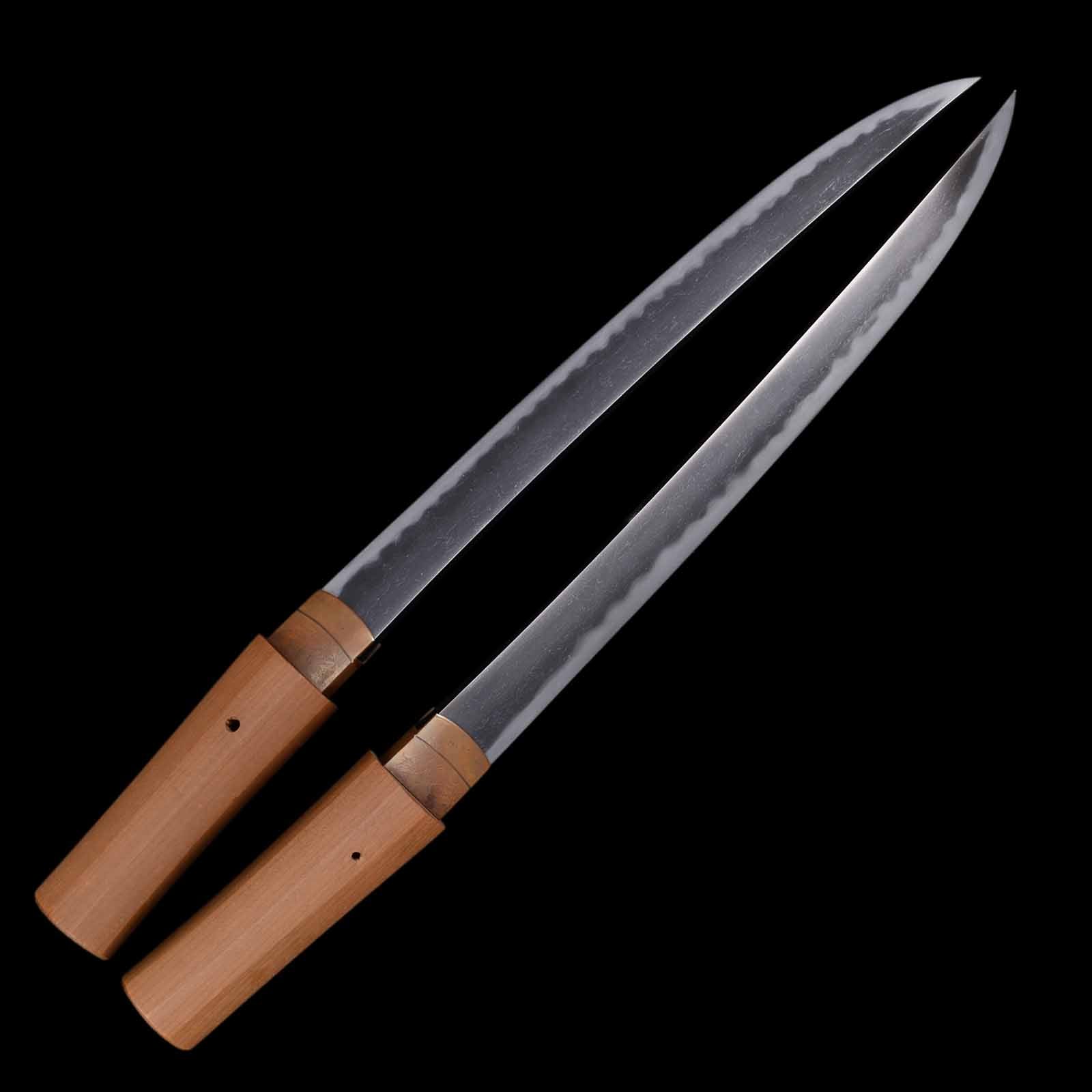
An elegant and unusually powerful original-length (ubu) ko-wakizashi, signed Kanetoki (兼辰) of Mino and dating to around the mid-Edo period. Broad, dynamic, and beautifully preserved, it is the kind of blade that has been prized by generations of collectors for its bold, commanding beauty — a sword with real history and romance, kept in a plain wood shirasaya bearing a flowing sayagaki (scabbard inscription) in its praise.
Workmanship and condition
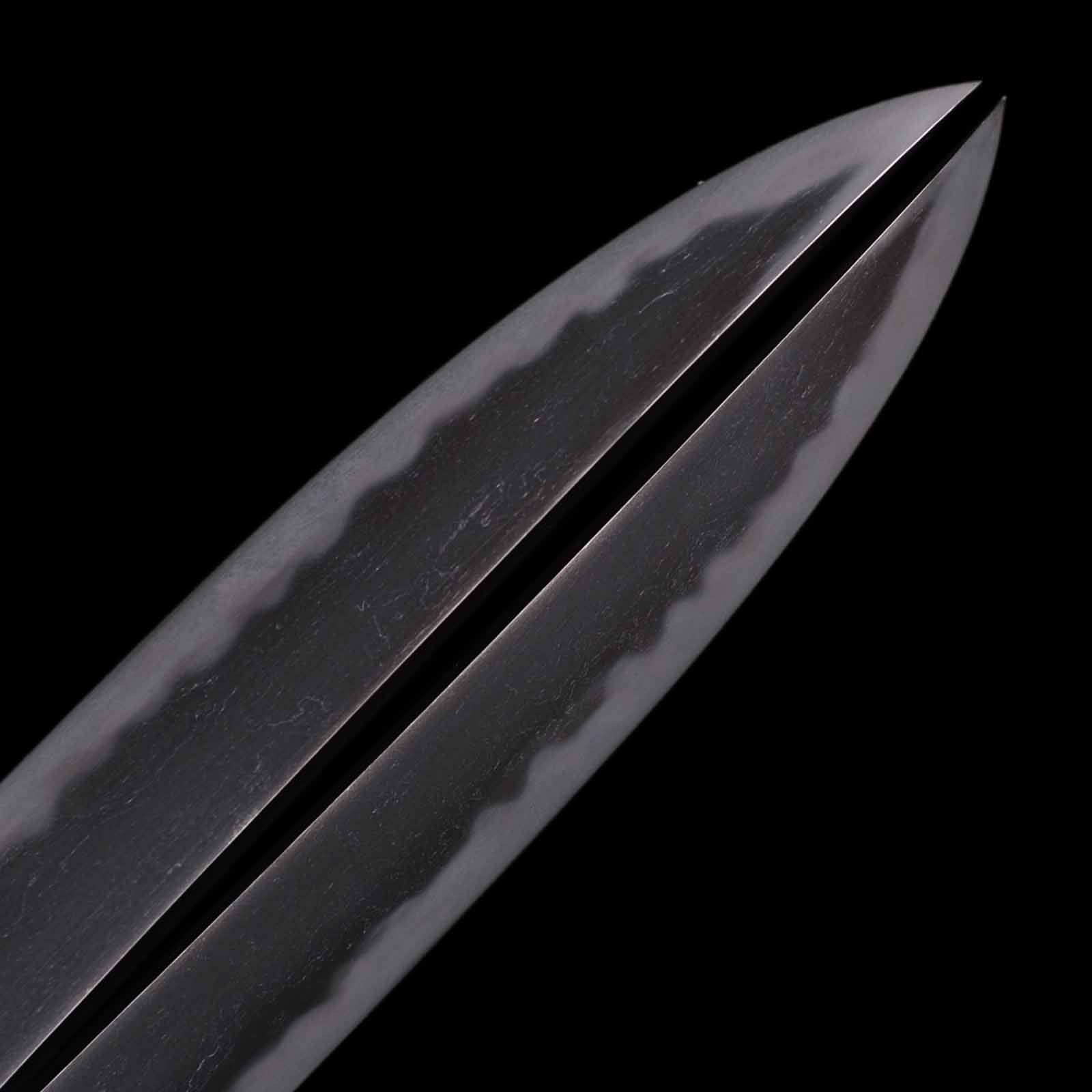
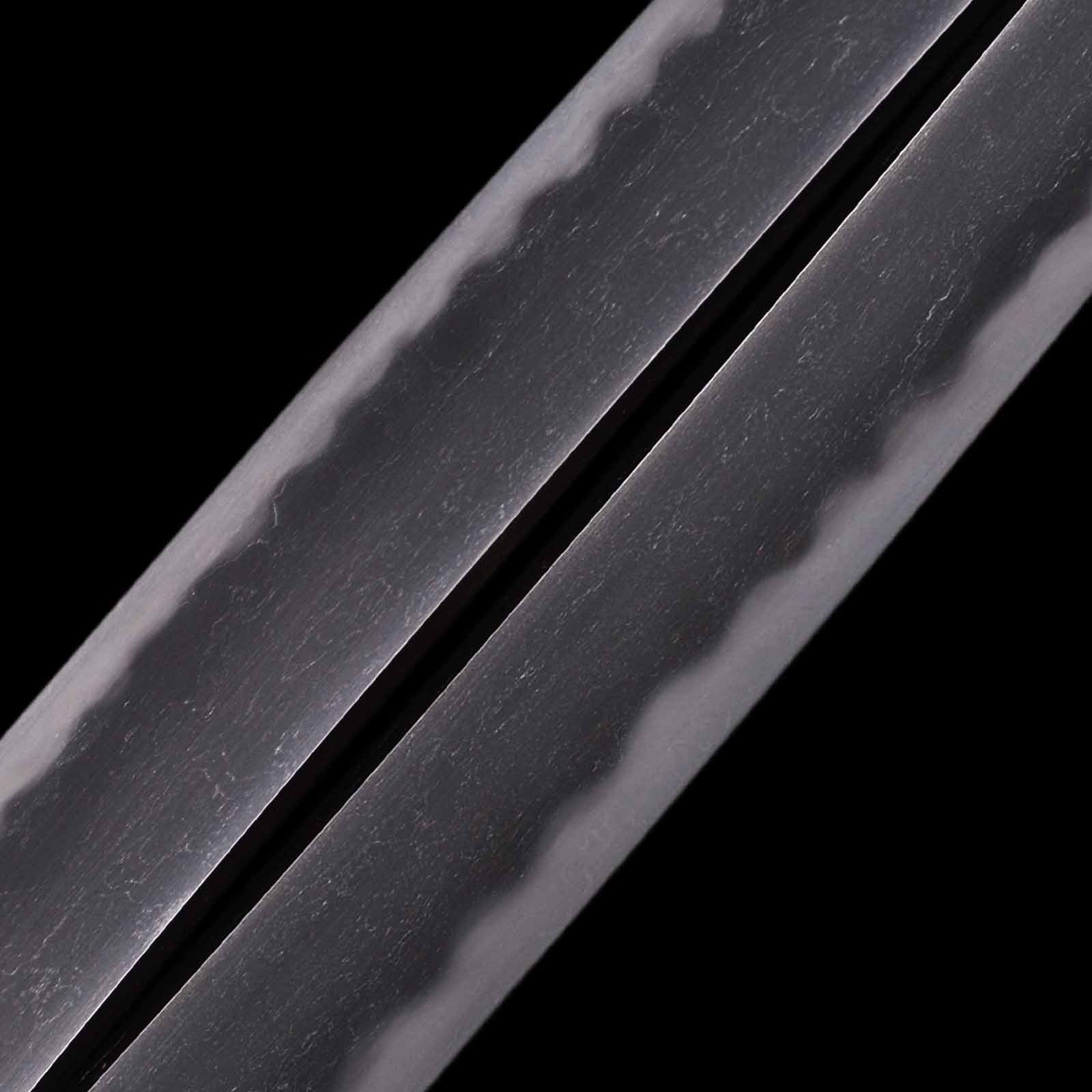
Freshly polished and in superb, essentially flawless condition, this is an exceptionally sound (kenzen) and impressive blade by the mid-Edo master smith Kanetoki. The jigane is a finely worked konuka-hada ("rice-bran skin") — the dense, tightly forged grain characteristic of Mino — beautifully standing and full of the organic, deeply satisfying expression of a true Japanese sword; moist throughout and free of any unwanted roughness, it shows Kanetoki's high forging skill to the full. The hamon is a broad-tempered gunome-midare of round-topped gunome linked in rhythmic succession. It is nie-hon'i (nie-based), with a bright, clear habuchi; fine nie sparkle along the edge with a dreamy, softly luminous quality — like morning mist.
Form
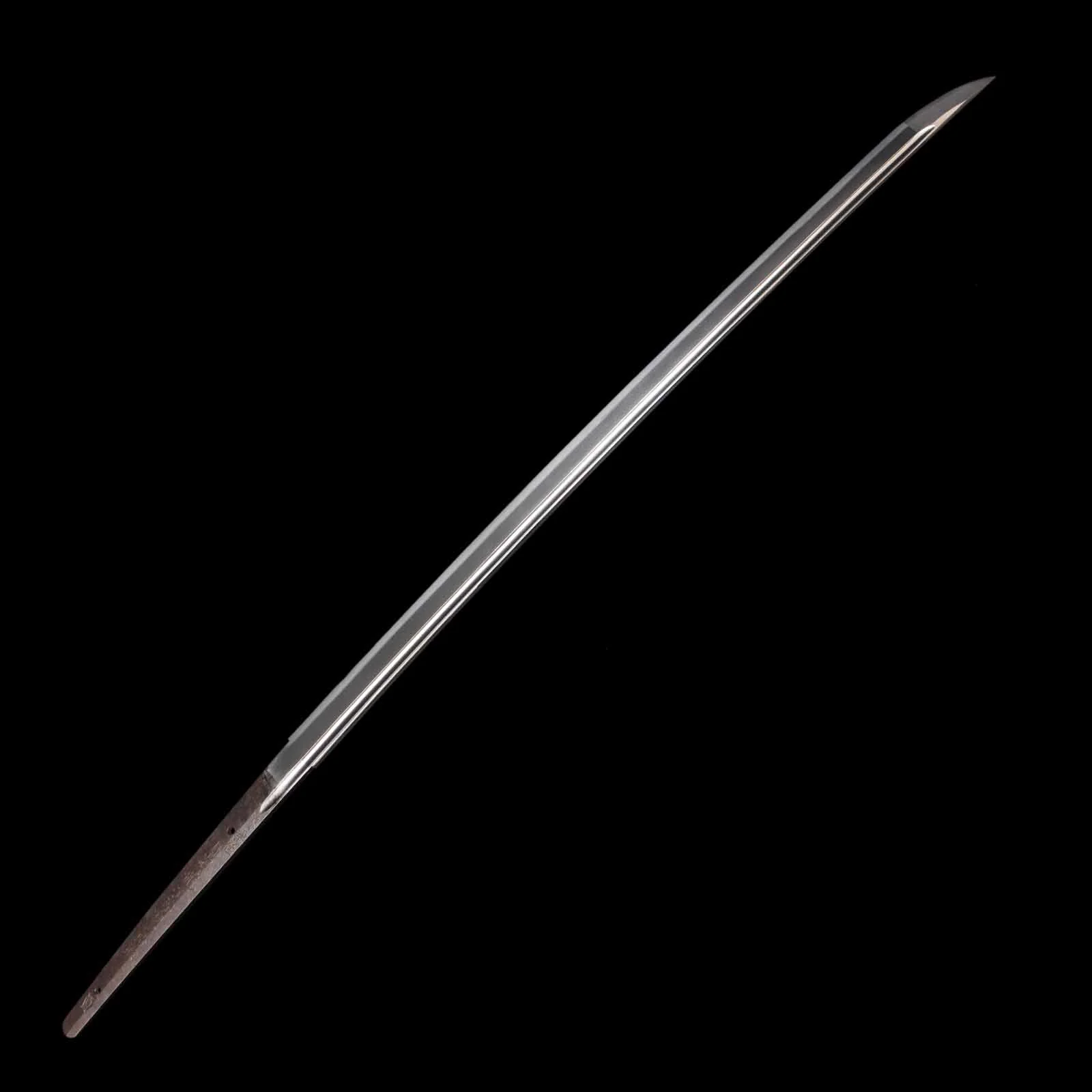
This is a broad hira-zukuri (flat-sided, ridgeless) ko-wakizashi of a scale that might well be called a "large tanto" (ō-tanto). Its defining feature is an exceptionally wide body (mihaba) far broader than a typical wakizashi, which — combined with the clean, elegant line only hira-zukuri can give — produces a powerful, dynamic impression. The kasane (thickness) is generous and well preserved, giving the blade outstanding balance and a satisfying heft in the hand. At a nagasa of 31.8 cm (about 1 shaku 0.5 sun) with 0.4 cm of sori, it has genuine presence.
On the smith Kanetoki
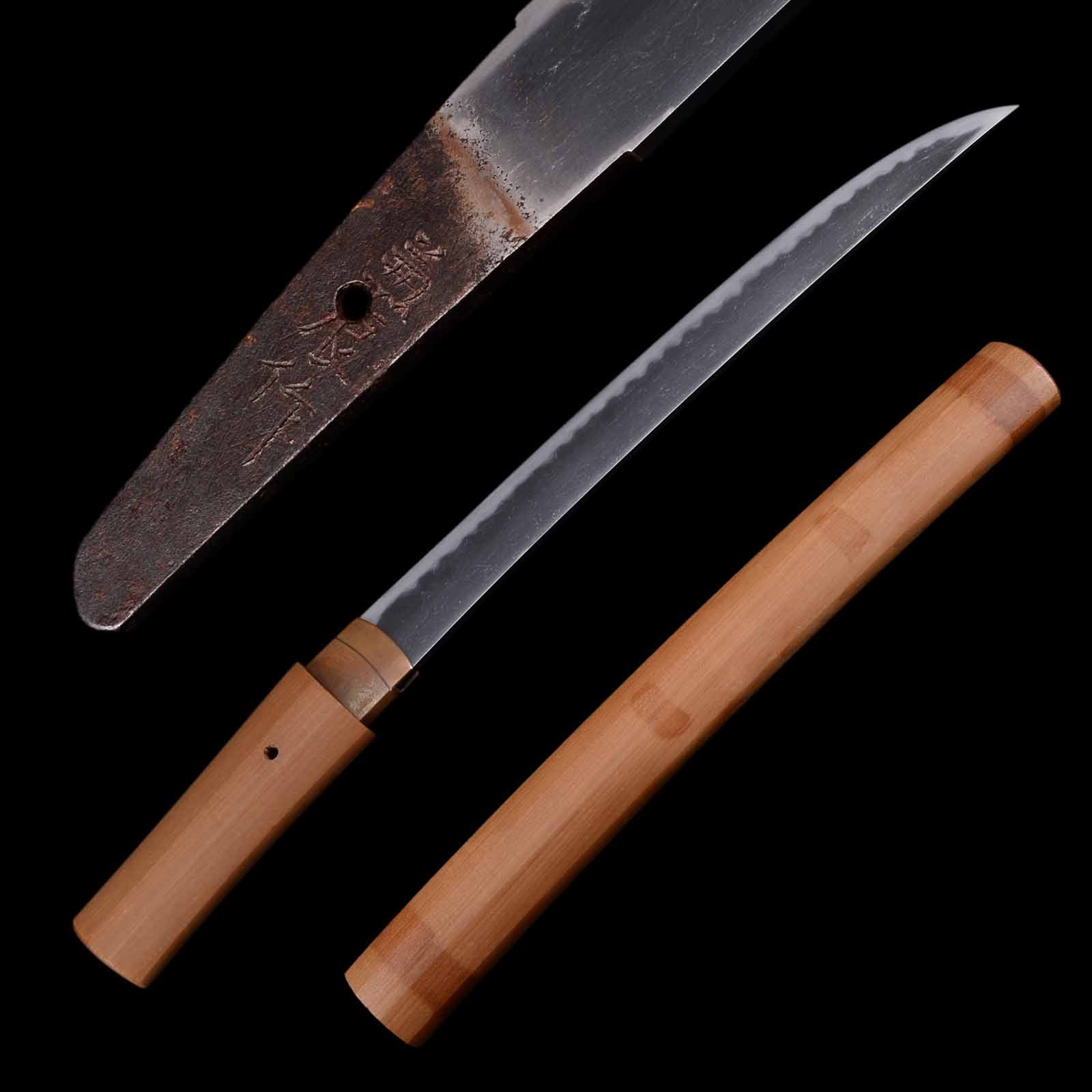
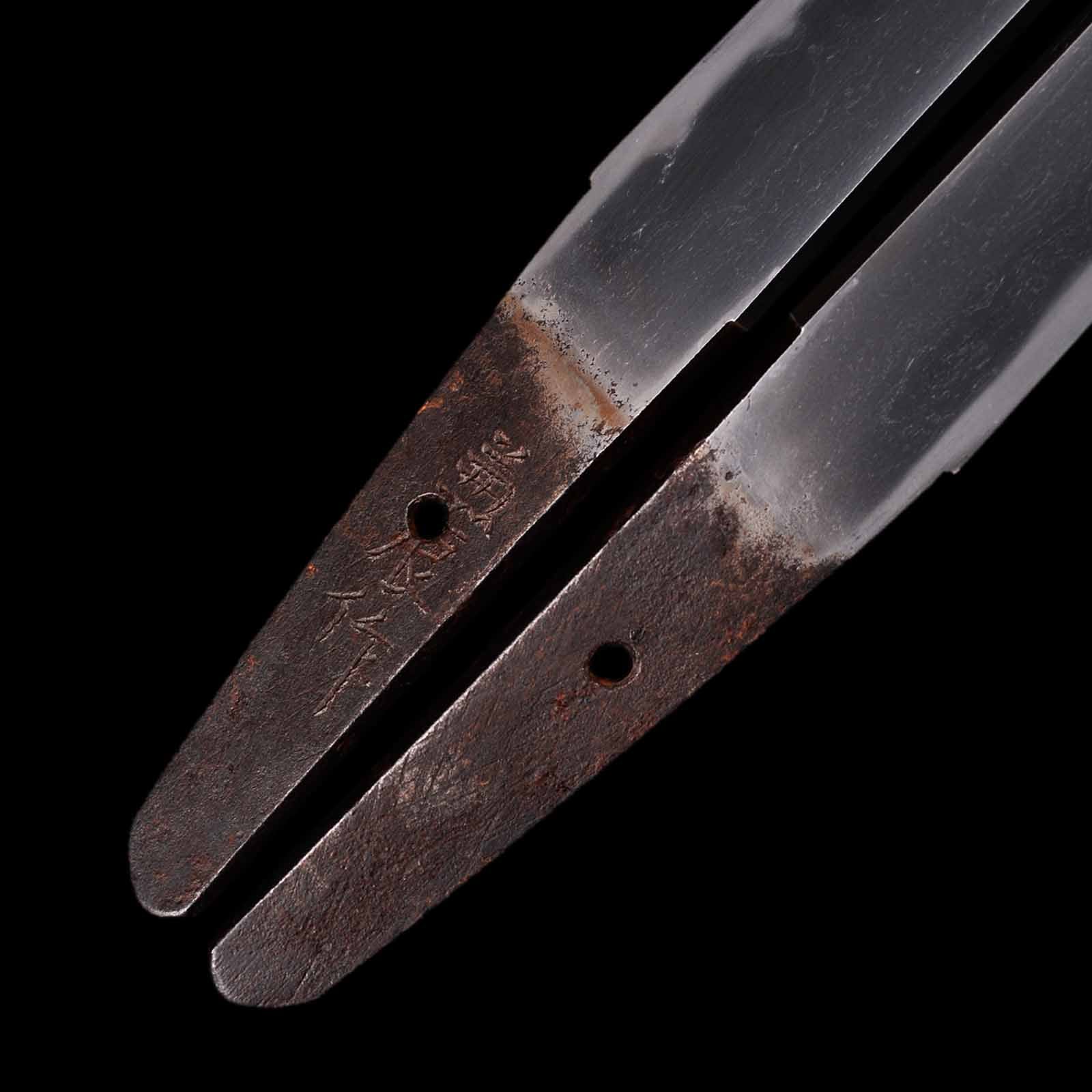
The tang (nakago) bears the signature Kanetoki (兼辰). Kanetoki was a Mino (Seki) line of smiths active from the early Muromachi period down into the Shintō era of the Edo period — a distinguished hereditary house of swordsmiths, also known as retained smiths of the Uesugi family. Kanetoki blades are particularly esteemed for their skill and beauty, and this work is regarded as a piece from around the middle Edo period.
The shirasaya and sayagaki
The blade is preserved in a plain wood shirasaya (resting scabbard) carrying an elegant, flowing sayagaki — an ink inscription praising the sword's origins and beauty. The very presence of this writing speaks to how highly former owners prized and treasured this piece, and it adds a further measure of dignity and provenance to the blade.
A freshly polished, ubu, signed mid-Edo ko-wakizashi by Kanetoki of Mino — its beautifully forged konuka-hada and bright, nie-based gunome-midare housed in a shirasaya with an appreciative sayagaki. A bold, wide-bodied blade full of presence, ready to appreciate exactly as it is.
Specifications
- Type: Wakizashi (ko-wakizashi), broad hira-zukuri ("ō-tanto" proportions)
- Signature (mei): Kanetoki (兼辰); ubu (un-shortened) tang
- Certification: none (preserved in shirasaya with sayagaki)
- Period: Mid-Edo period (attributed)
- Smith / school: Kanetoki — Mino (Seki) line; hereditary smiths, retained by the Uesugi family
- Jigane: konuka-hada, very well forged, standing beautifully
- Hamon: broad gunome-midare (round-topped gunome), nie-hon'i, with a bright, clear habuchi and fine nie
- Blade length (nagasa): 31.8 cm / 12.52 in (about 1 shaku 0.5 sun)
- Curvature (sori): 0.4 cm
- Width at base (motohaba): 31.2 mm (notably broad)
- Thickness at base (motokasane): 6.5 mm
- Weight (blade only): 240 g
- Condition: freshly polished, essentially flawless, very sound
- Mounting: shirasaya (plain wood resting scabbard) with sayagaki
- Torokushō (Japanese registration) No.: Osaka 61755
Product Information
Product Information
Shipping & Returns
Shipping & Returns


Authentic Shinto Era ō-tanto for Sale - Kanetoki - with sayagaki | Tozando
Authentic Shinto Era ō-tanto for Sale - Kanetoki - with sayagaki | Tozando
Antique Japanese Ko-wakizashi, signed Kanetoki (兼辰) of Mino — mid-Edo period — ubu, broad hira-zukuri "ō-tanto" form — in shirasaya with sayagaki
Powerful, wide-bodied ubu ko-wakizashi by the Mino Kanetoki line (retained smiths of the Uesugi) · beautifully forged konuka-hada · bright, nie-based gunome-midare · preserved in shirasaya with an appreciative sayagaki
An elegant and unusually powerful original-length (ubu) ko-wakizashi, signed Kanetoki (兼辰) of Mino and dating to around the mid-Edo period. Broad, dynamic, and beautifully preserved, it is the kind of blade that has been prized by generations of collectors for its bold, commanding beauty — a sword with real history and romance, kept in a plain wood shirasaya bearing a flowing sayagaki (scabbard inscription) in its praise.
Workmanship and condition
Freshly polished and in superb, essentially flawless condition, this is an exceptionally sound (kenzen) and impressive blade by the mid-Edo master smith Kanetoki. The jigane is a finely worked konuka-hada ("rice-bran skin") — the dense, tightly forged grain characteristic of Mino — beautifully standing and full of the organic, deeply satisfying expression of a true Japanese sword; moist throughout and free of any unwanted roughness, it shows Kanetoki's high forging skill to the full. The hamon is a broad-tempered gunome-midare of round-topped gunome linked in rhythmic succession. It is nie-hon'i (nie-based), with a bright, clear habuchi; fine nie sparkle along the edge with a dreamy, softly luminous quality — like morning mist.
Form
This is a broad hira-zukuri (flat-sided, ridgeless) ko-wakizashi of a scale that might well be called a "large tanto" (ō-tanto). Its defining feature is an exceptionally wide body (mihaba) far broader than a typical wakizashi, which — combined with the clean, elegant line only hira-zukuri can give — produces a powerful, dynamic impression. The kasane (thickness) is generous and well preserved, giving the blade outstanding balance and a satisfying heft in the hand. At a nagasa of 31.8 cm (about 1 shaku 0.5 sun) with 0.4 cm of sori, it has genuine presence.
On the smith Kanetoki
The tang (nakago) bears the signature Kanetoki (兼辰). Kanetoki was a Mino (Seki) line of smiths active from the early Muromachi period down into the Shintō era of the Edo period — a distinguished hereditary house of swordsmiths, also known as retained smiths of the Uesugi family. Kanetoki blades are particularly esteemed for their skill and beauty, and this work is regarded as a piece from around the middle Edo period.
The shirasaya and sayagaki
The blade is preserved in a plain wood shirasaya (resting scabbard) carrying an elegant, flowing sayagaki — an ink inscription praising the sword's origins and beauty. The very presence of this writing speaks to how highly former owners prized and treasured this piece, and it adds a further measure of dignity and provenance to the blade.
A freshly polished, ubu, signed mid-Edo ko-wakizashi by Kanetoki of Mino — its beautifully forged konuka-hada and bright, nie-based gunome-midare housed in a shirasaya with an appreciative sayagaki. A bold, wide-bodied blade full of presence, ready to appreciate exactly as it is.
Specifications
- Type: Wakizashi (ko-wakizashi), broad hira-zukuri ("ō-tanto" proportions)
- Signature (mei): Kanetoki (兼辰); ubu (un-shortened) tang
- Certification: none (preserved in shirasaya with sayagaki)
- Period: Mid-Edo period (attributed)
- Smith / school: Kanetoki — Mino (Seki) line; hereditary smiths, retained by the Uesugi family
- Jigane: konuka-hada, very well forged, standing beautifully
- Hamon: broad gunome-midare (round-topped gunome), nie-hon'i, with a bright, clear habuchi and fine nie
- Blade length (nagasa): 31.8 cm / 12.52 in (about 1 shaku 0.5 sun)
- Curvature (sori): 0.4 cm
- Width at base (motohaba): 31.2 mm (notably broad)
- Thickness at base (motokasane): 6.5 mm
- Weight (blade only): 240 g
- Condition: freshly polished, essentially flawless, very sound
- Mounting: shirasaya (plain wood resting scabbard) with sayagaki
- Torokushō (Japanese registration) No.: Osaka 61755
Original: $1,232.00
-65%$1,232.00
$431.20Product Information
Product Information
Shipping & Returns
Shipping & Returns
Description
Antique Japanese Ko-wakizashi, signed Kanetoki (兼辰) of Mino — mid-Edo period — ubu, broad hira-zukuri "ō-tanto" form — in shirasaya with sayagaki
Powerful, wide-bodied ubu ko-wakizashi by the Mino Kanetoki line (retained smiths of the Uesugi) · beautifully forged konuka-hada · bright, nie-based gunome-midare · preserved in shirasaya with an appreciative sayagaki
An elegant and unusually powerful original-length (ubu) ko-wakizashi, signed Kanetoki (兼辰) of Mino and dating to around the mid-Edo period. Broad, dynamic, and beautifully preserved, it is the kind of blade that has been prized by generations of collectors for its bold, commanding beauty — a sword with real history and romance, kept in a plain wood shirasaya bearing a flowing sayagaki (scabbard inscription) in its praise.
Workmanship and condition
Freshly polished and in superb, essentially flawless condition, this is an exceptionally sound (kenzen) and impressive blade by the mid-Edo master smith Kanetoki. The jigane is a finely worked konuka-hada ("rice-bran skin") — the dense, tightly forged grain characteristic of Mino — beautifully standing and full of the organic, deeply satisfying expression of a true Japanese sword; moist throughout and free of any unwanted roughness, it shows Kanetoki's high forging skill to the full. The hamon is a broad-tempered gunome-midare of round-topped gunome linked in rhythmic succession. It is nie-hon'i (nie-based), with a bright, clear habuchi; fine nie sparkle along the edge with a dreamy, softly luminous quality — like morning mist.
Form
This is a broad hira-zukuri (flat-sided, ridgeless) ko-wakizashi of a scale that might well be called a "large tanto" (ō-tanto). Its defining feature is an exceptionally wide body (mihaba) far broader than a typical wakizashi, which — combined with the clean, elegant line only hira-zukuri can give — produces a powerful, dynamic impression. The kasane (thickness) is generous and well preserved, giving the blade outstanding balance and a satisfying heft in the hand. At a nagasa of 31.8 cm (about 1 shaku 0.5 sun) with 0.4 cm of sori, it has genuine presence.
On the smith Kanetoki
The tang (nakago) bears the signature Kanetoki (兼辰). Kanetoki was a Mino (Seki) line of smiths active from the early Muromachi period down into the Shintō era of the Edo period — a distinguished hereditary house of swordsmiths, also known as retained smiths of the Uesugi family. Kanetoki blades are particularly esteemed for their skill and beauty, and this work is regarded as a piece from around the middle Edo period.
The shirasaya and sayagaki
The blade is preserved in a plain wood shirasaya (resting scabbard) carrying an elegant, flowing sayagaki — an ink inscription praising the sword's origins and beauty. The very presence of this writing speaks to how highly former owners prized and treasured this piece, and it adds a further measure of dignity and provenance to the blade.
A freshly polished, ubu, signed mid-Edo ko-wakizashi by Kanetoki of Mino — its beautifully forged konuka-hada and bright, nie-based gunome-midare housed in a shirasaya with an appreciative sayagaki. A bold, wide-bodied blade full of presence, ready to appreciate exactly as it is.
Specifications
- Type: Wakizashi (ko-wakizashi), broad hira-zukuri ("ō-tanto" proportions)
- Signature (mei): Kanetoki (兼辰); ubu (un-shortened) tang
- Certification: none (preserved in shirasaya with sayagaki)
- Period: Mid-Edo period (attributed)
- Smith / school: Kanetoki — Mino (Seki) line; hereditary smiths, retained by the Uesugi family
- Jigane: konuka-hada, very well forged, standing beautifully
- Hamon: broad gunome-midare (round-topped gunome), nie-hon'i, with a bright, clear habuchi and fine nie
- Blade length (nagasa): 31.8 cm / 12.52 in (about 1 shaku 0.5 sun)
- Curvature (sori): 0.4 cm
- Width at base (motohaba): 31.2 mm (notably broad)
- Thickness at base (motokasane): 6.5 mm
- Weight (blade only): 240 g
- Condition: freshly polished, essentially flawless, very sound
- Mounting: shirasaya (plain wood resting scabbard) with sayagaki
- Torokushō (Japanese registration) No.: Osaka 61755