Authentic Shinto Era Katana for Sale - Naomichi, NBTHK Tokubetsu Hozon Certificate | Tozando
A work by Tango No Kami Naomichi of the Mishina school, active in Kyoto in the early Edo period, has just arrived with an NBHTK Tokubetsu Hozon certificate.
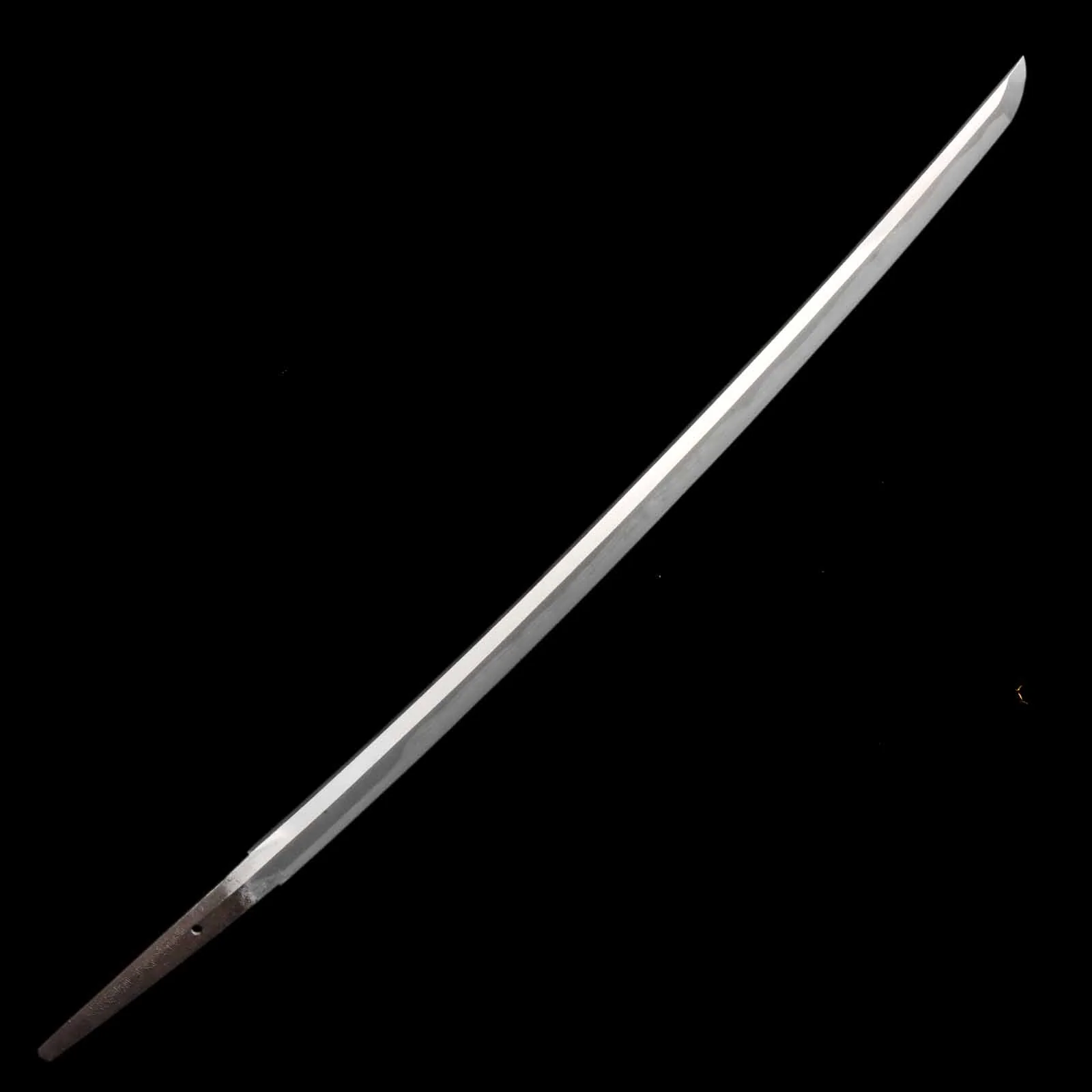
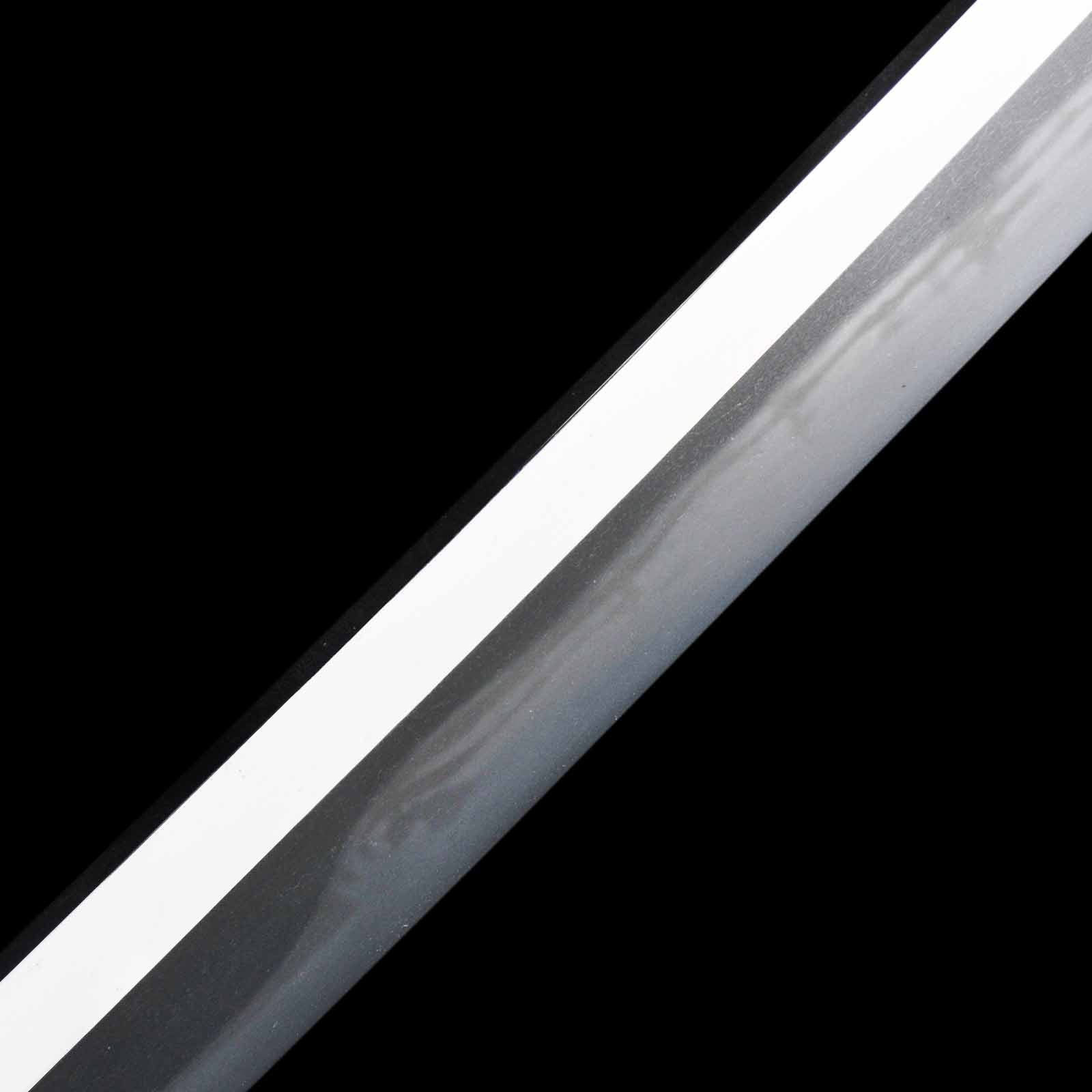
Naomichi was the second son of the legendary first Tamba No Kami Yoshimichi. The sword is very well-preserved and clean. Jigane is well packed with ko-itame and shows yubashiri and chikei. The hamon is Sudareba, Yoshimichi's signature style, with spirals in some places and sunagashi, giving it a very strong presence.
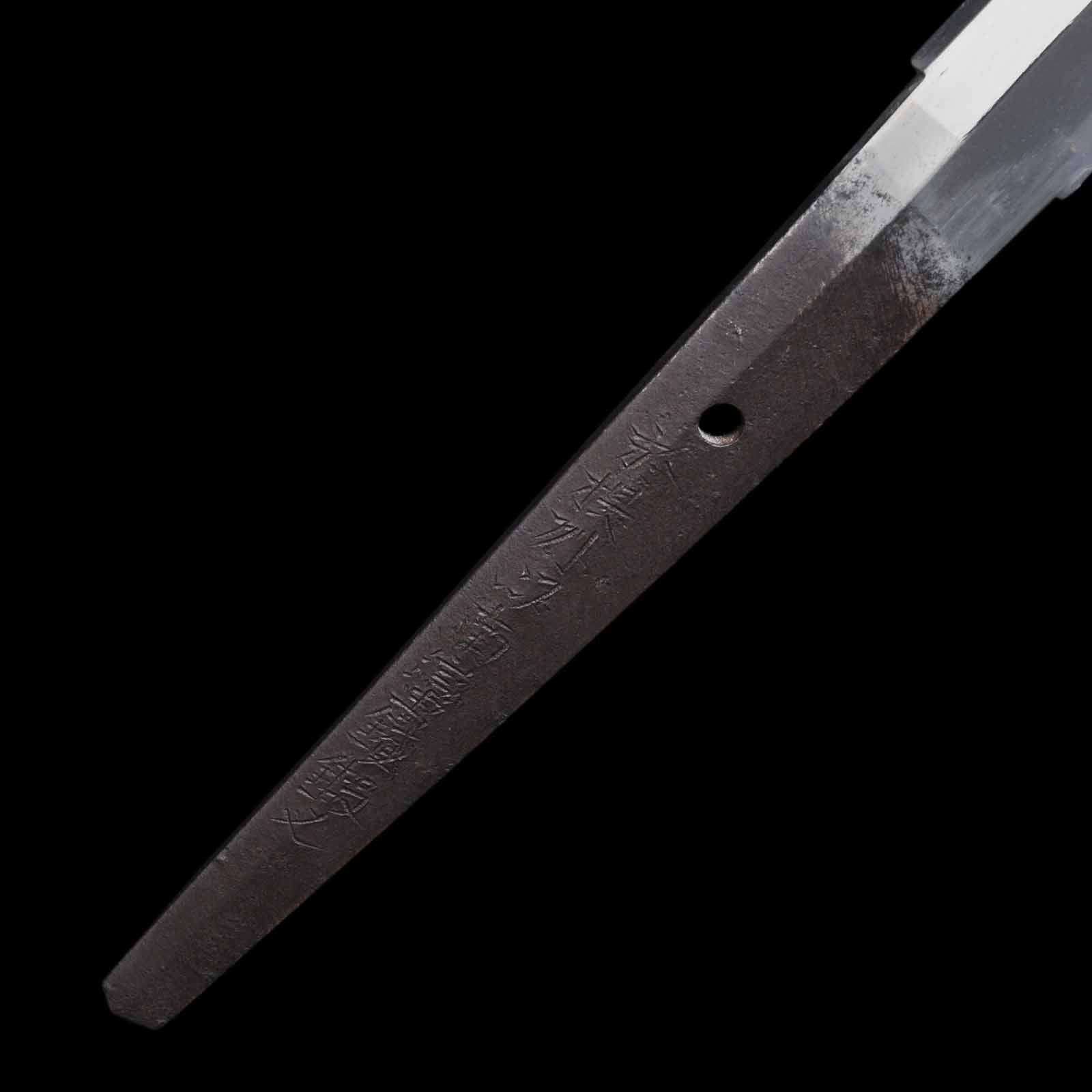
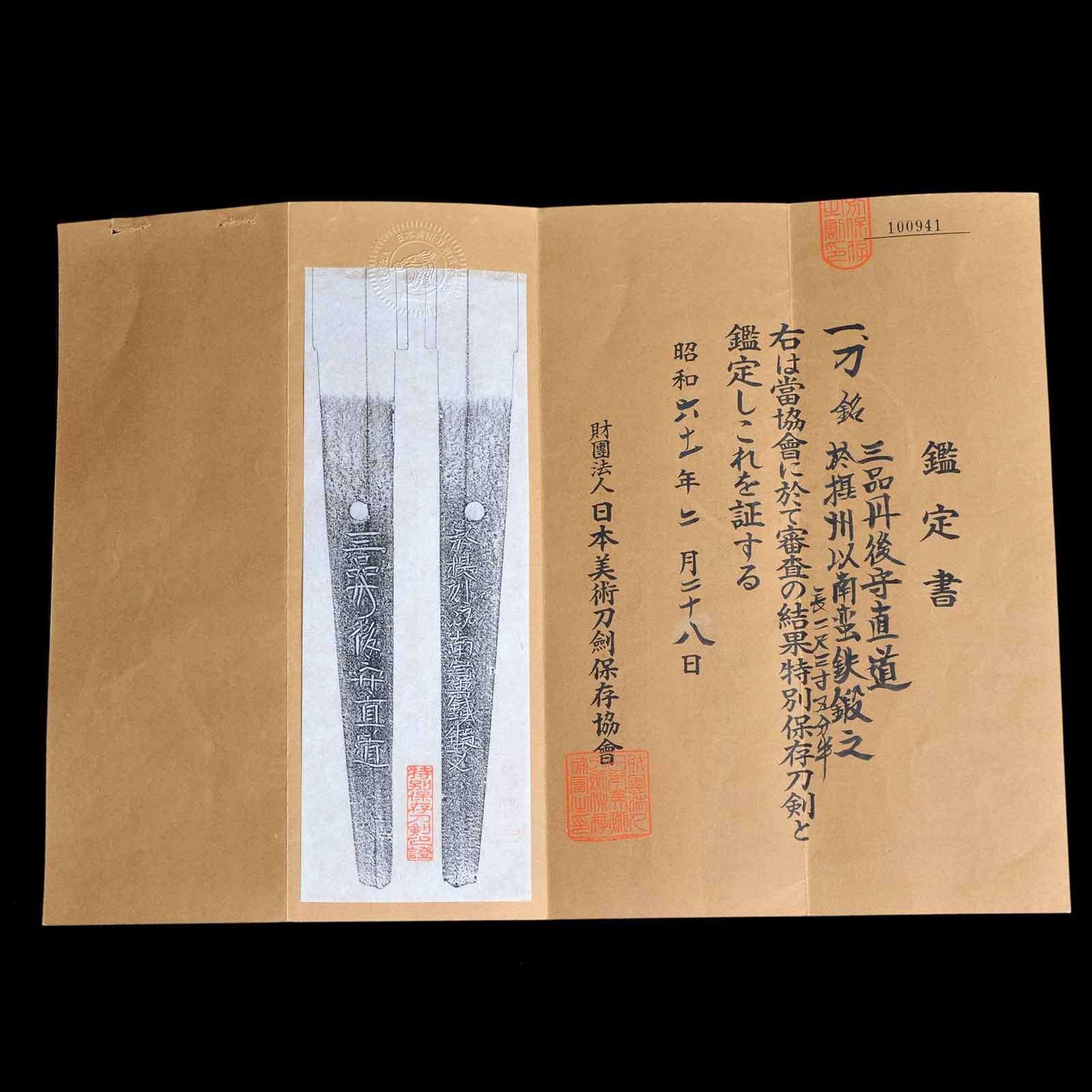
On the nakago, “Mishina Tango no Kami Naomichi” is engraved on the omote side, and “Seshu ni oite Nanbantetsu wo motte Kore wo Tsukuru” is engraved on the ura side, meaning it was made in the country of Settsu using Western-made iron. Nanbantetsu was the iron material imported from Portugal and the Netherlands, the only countries allowed to trade with Japan at that time, and it was much more expensive than the iron collected in Japan. Echizen Yasutsugu and Izumi No Kami Kunisada were famous for their use of these irons.
Naomichi, who later followed in his grandfather's footsteps and changed his name to Kanemichi, was a swordsmith who, along with his father Yoshimichi, vigorously helped expand the power of the Mishina school, receiving the Tango no Kami in 1625. He is truly a representative of the Osaka Shinto movement.
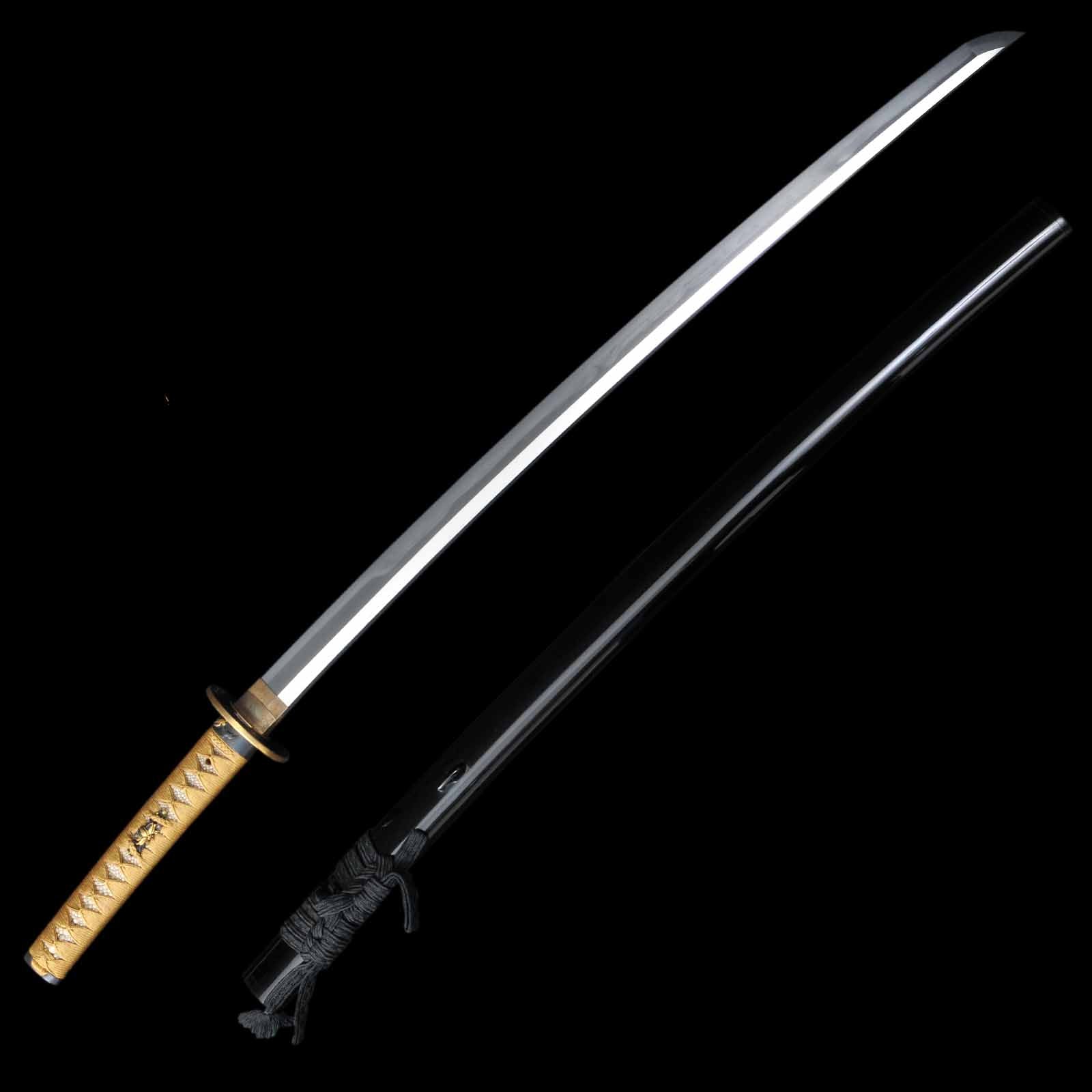
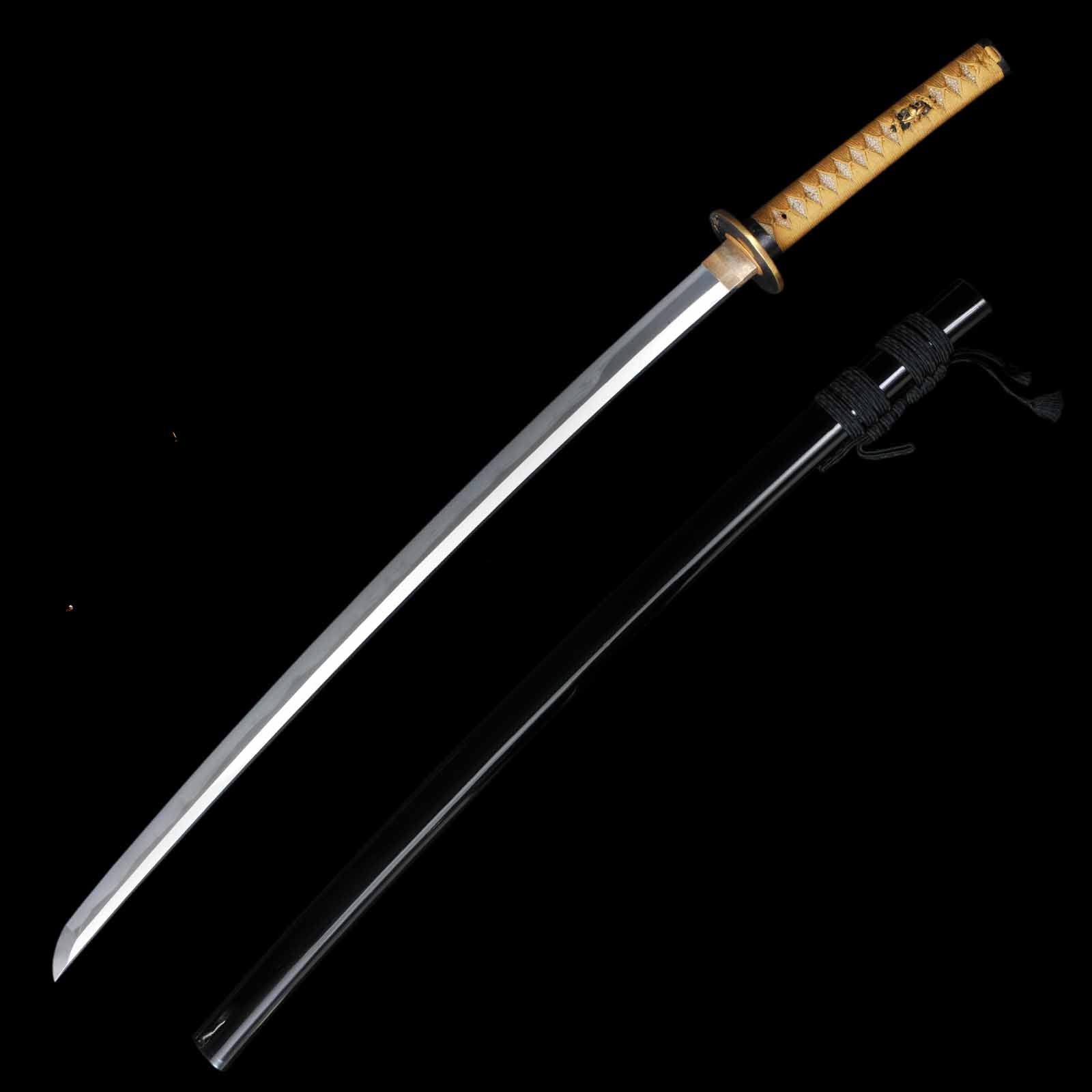
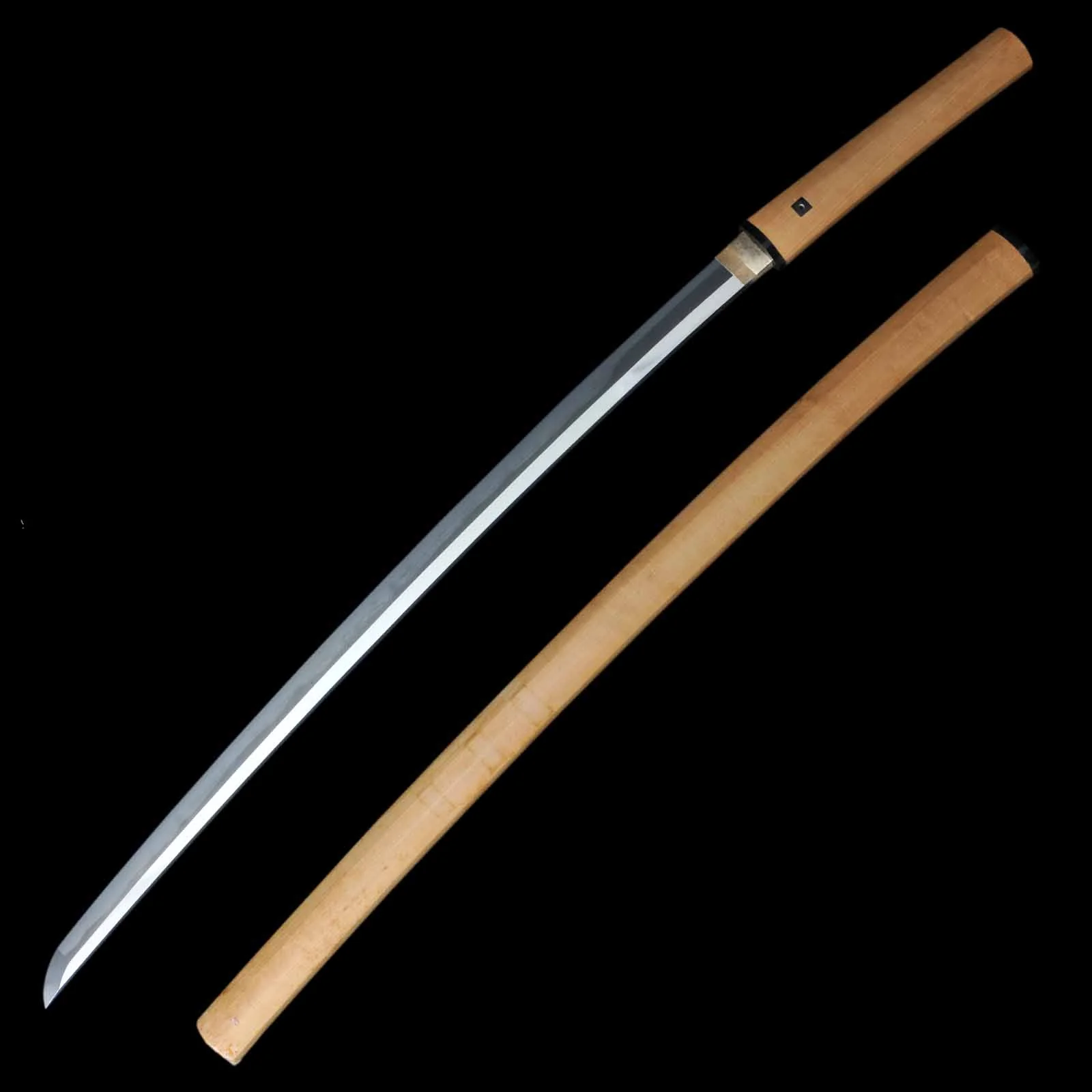
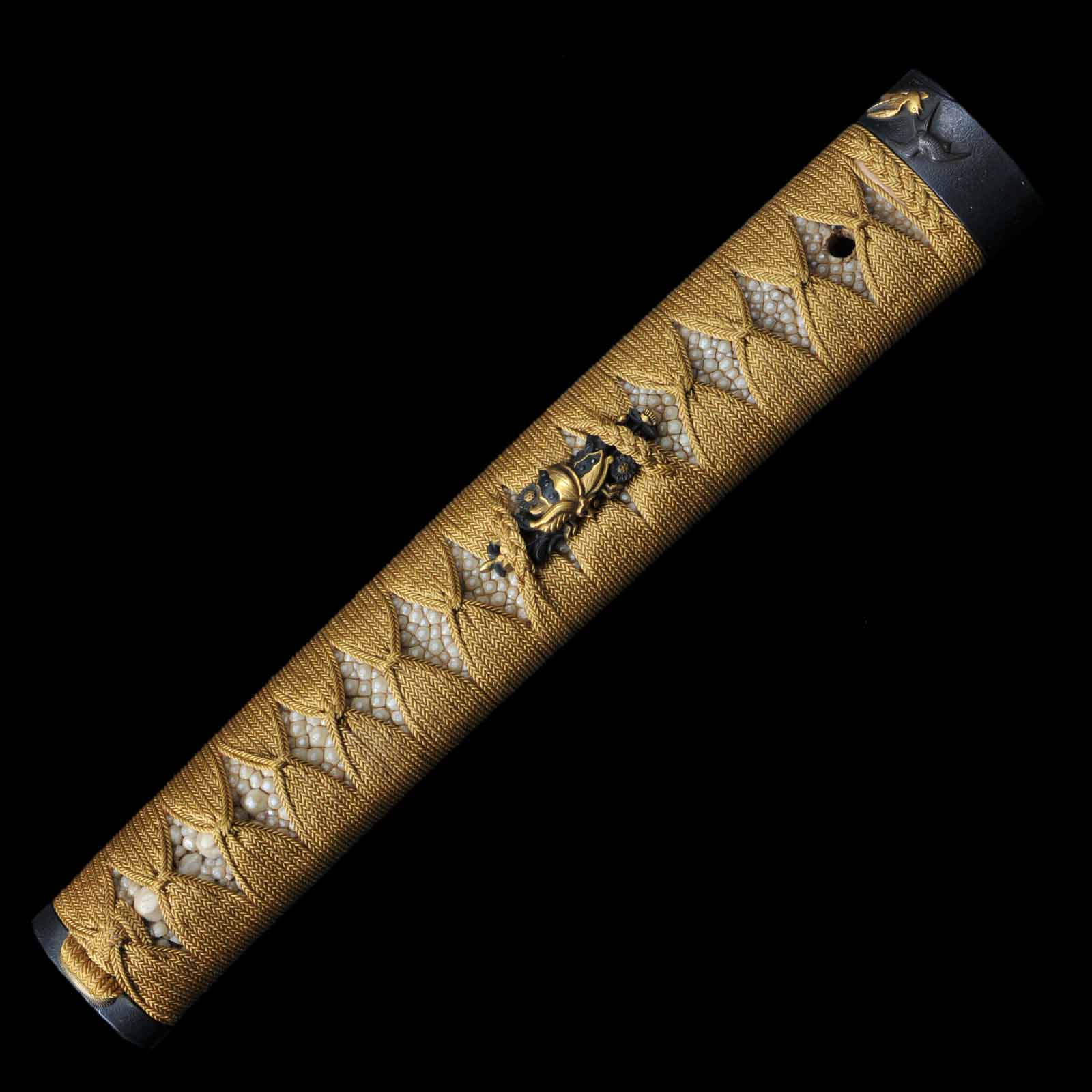
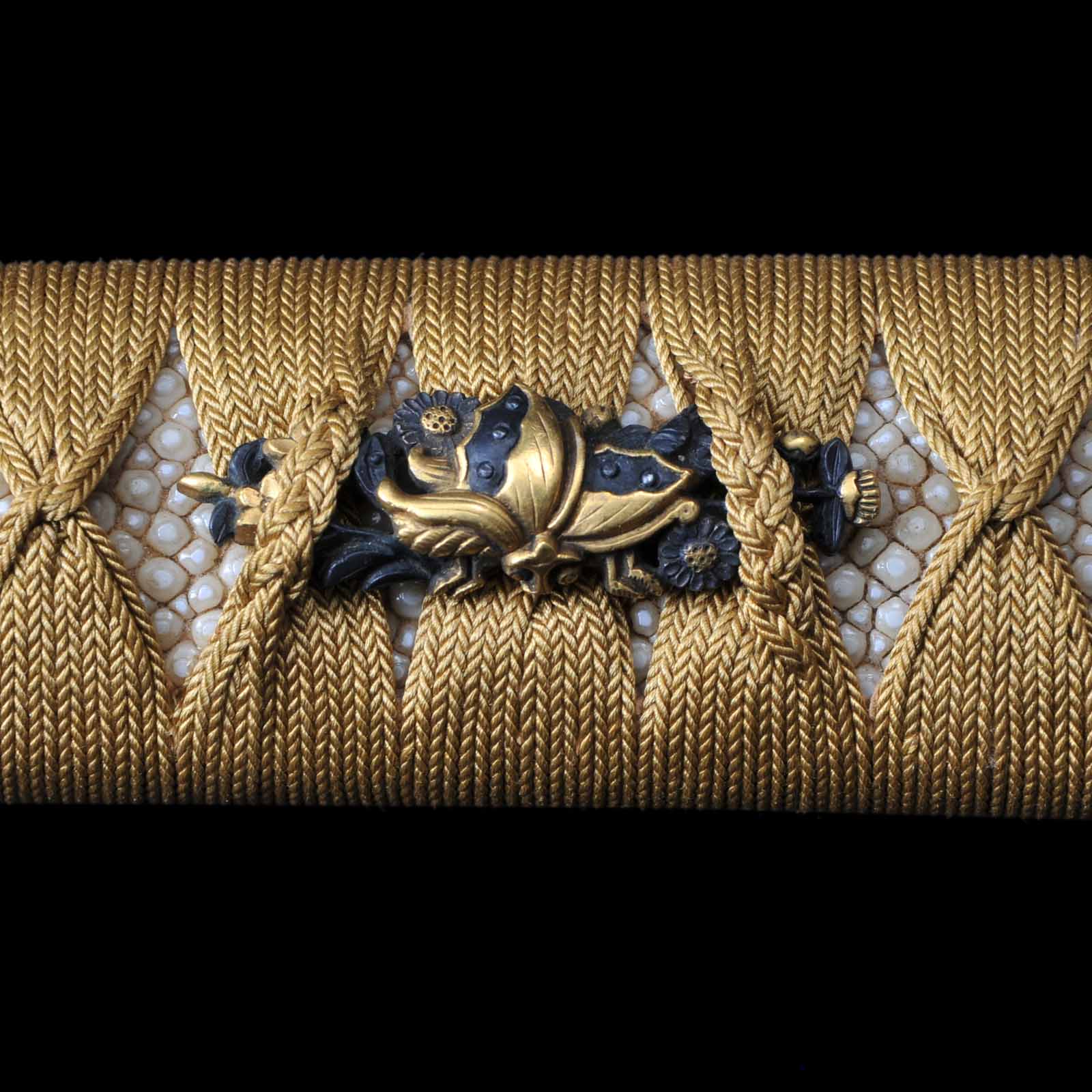
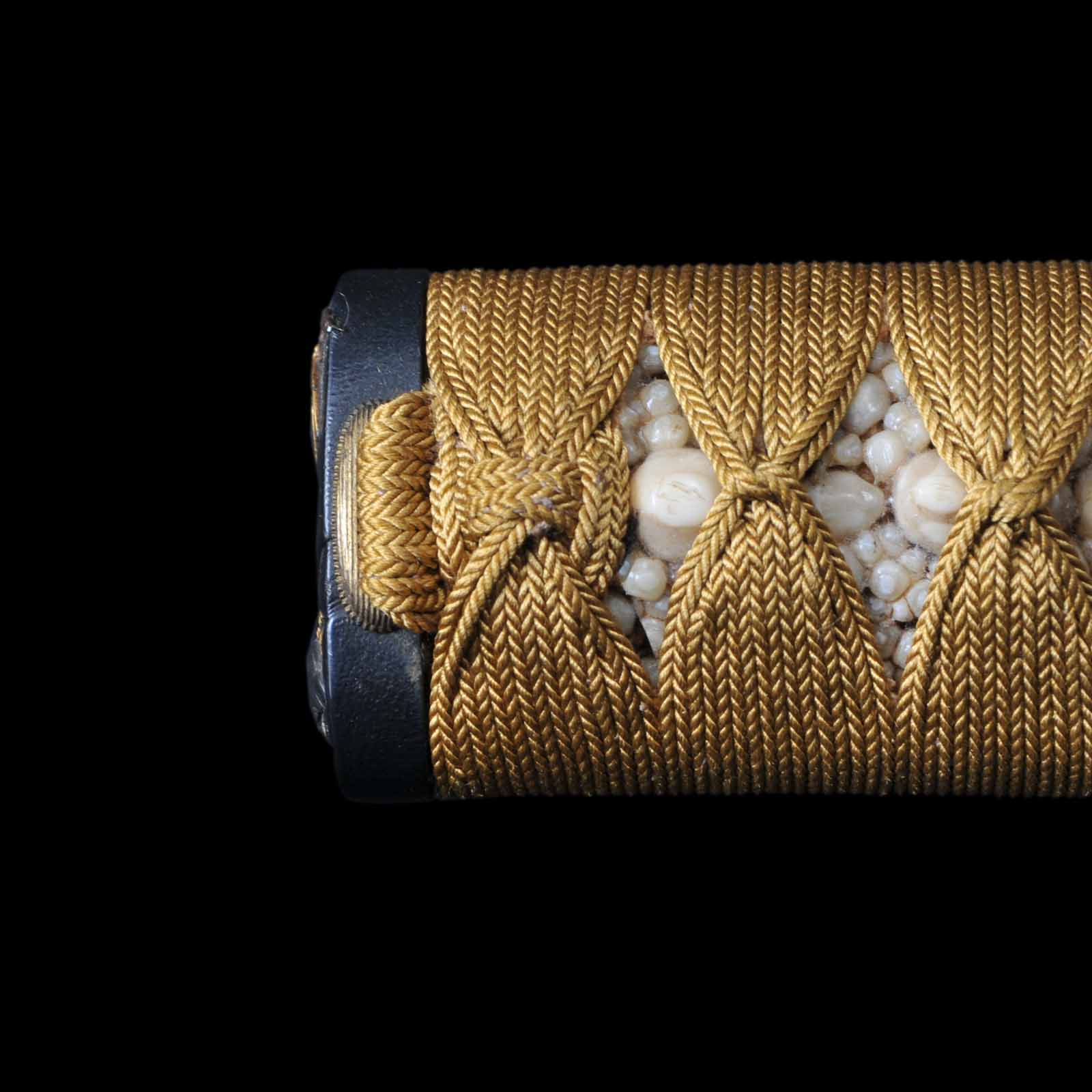
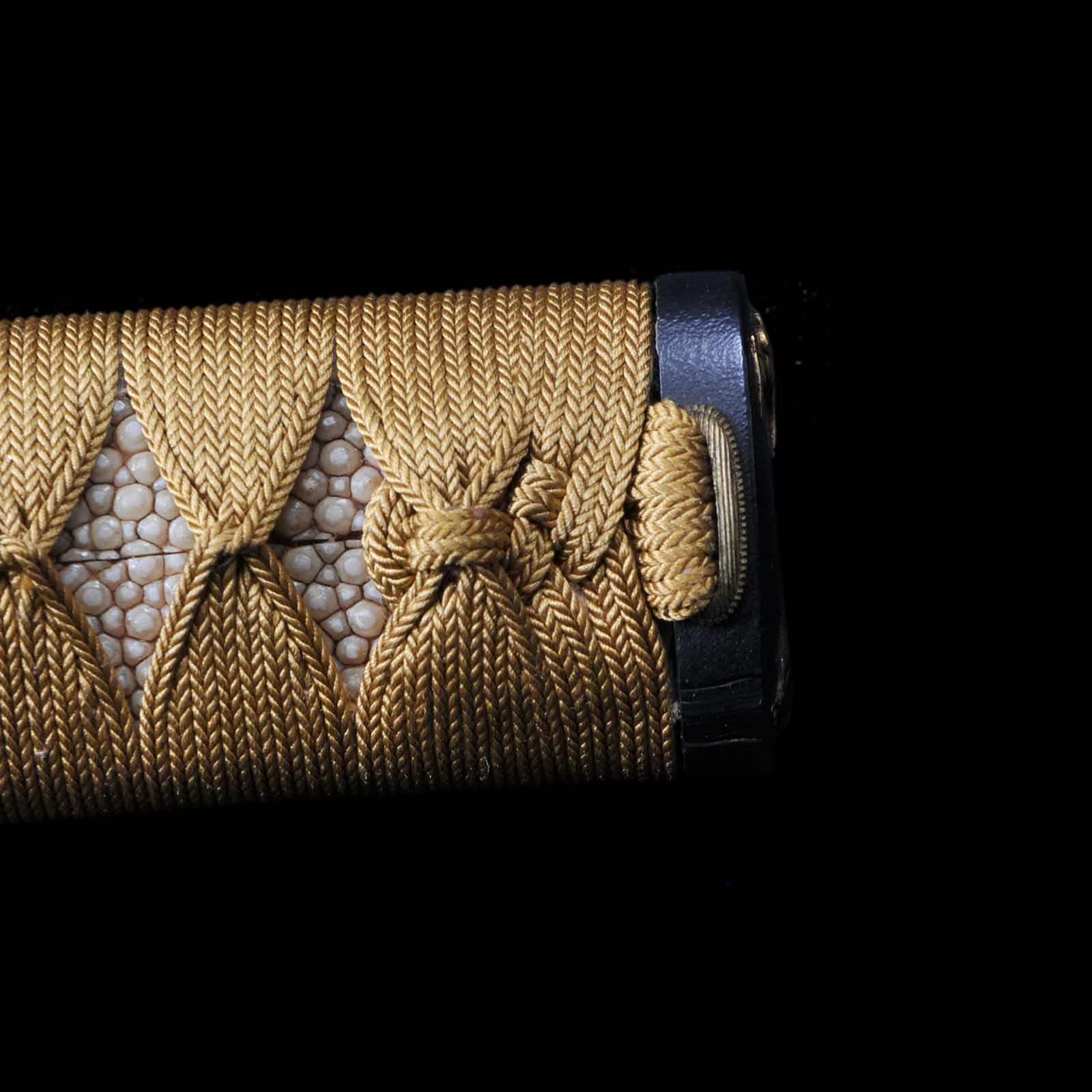
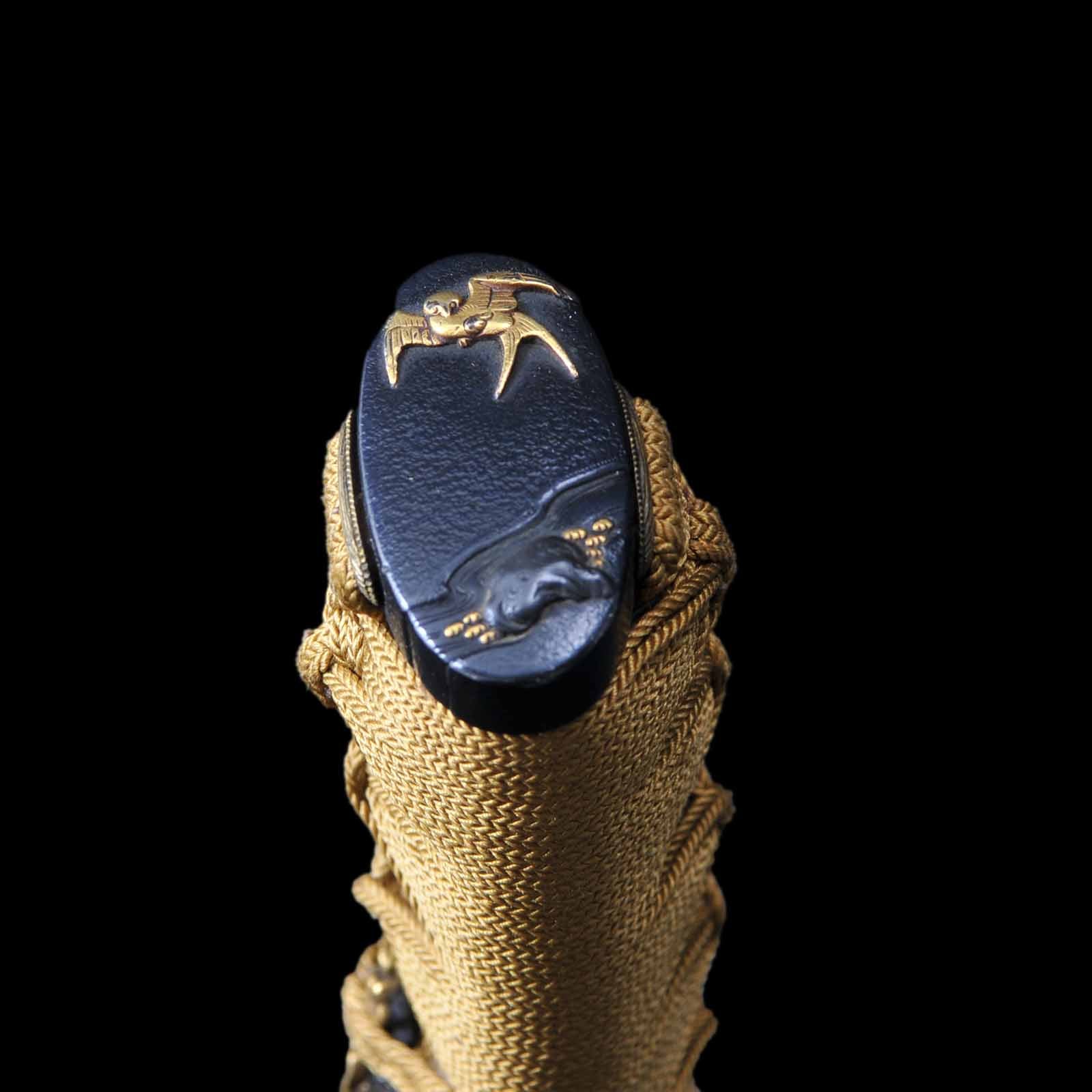
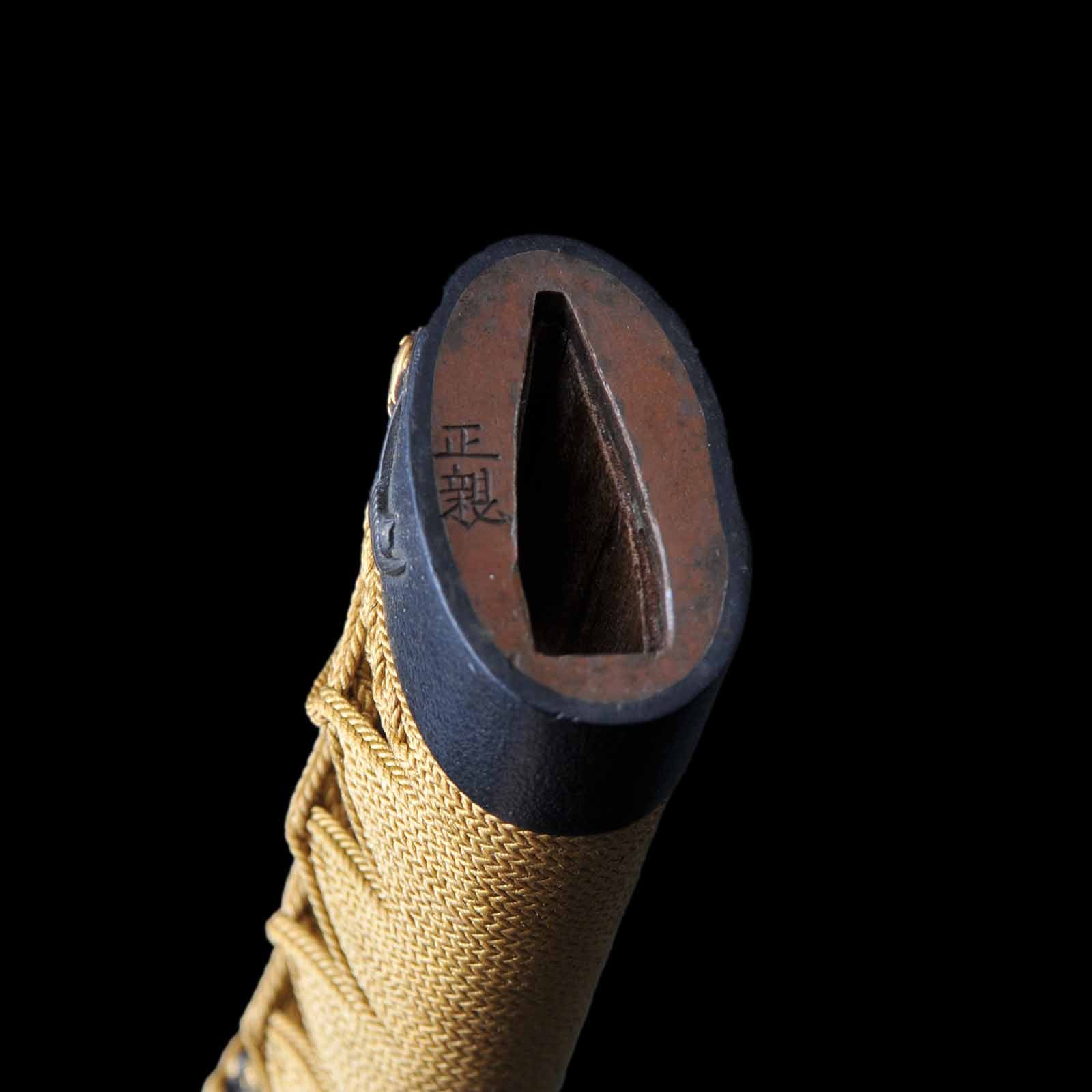
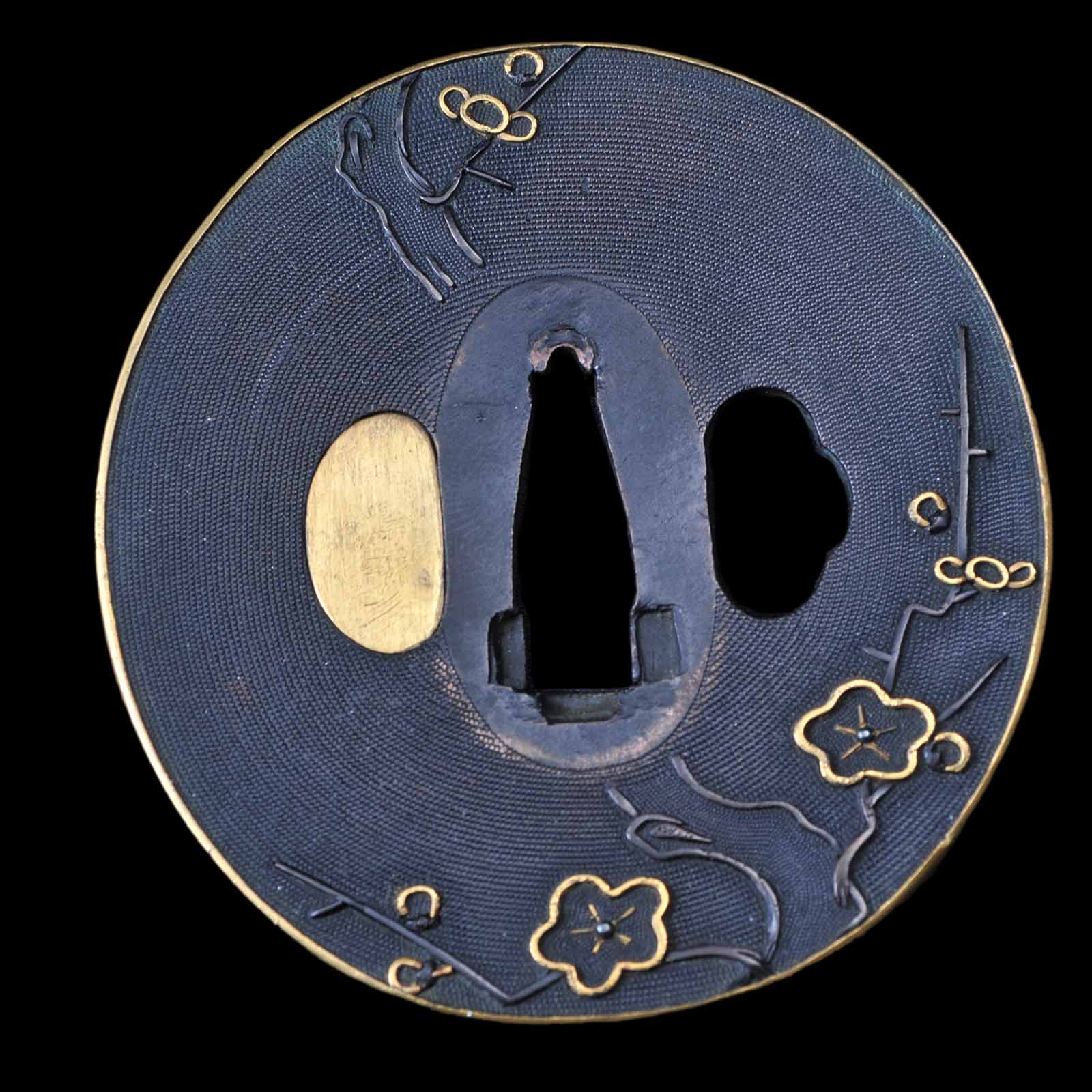
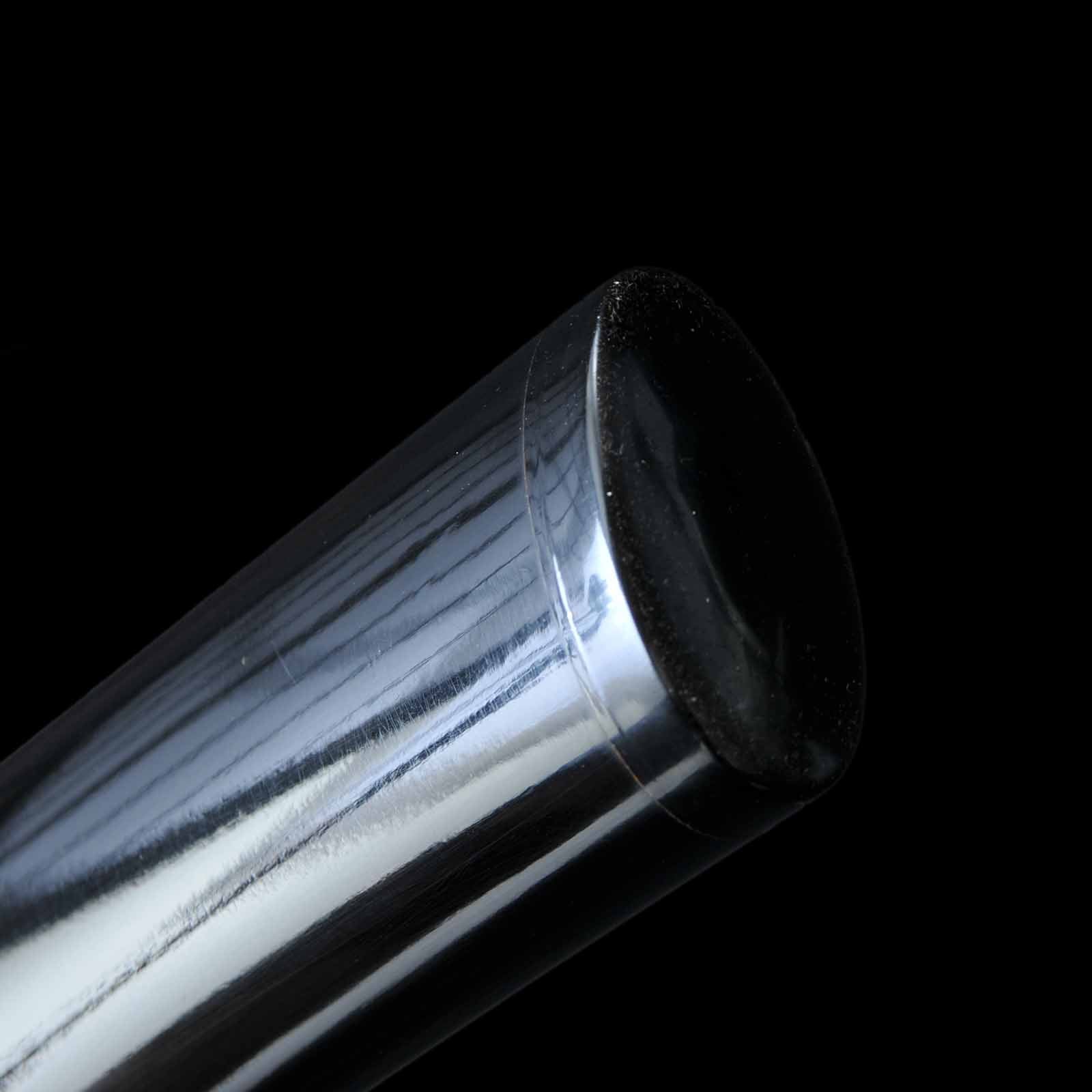
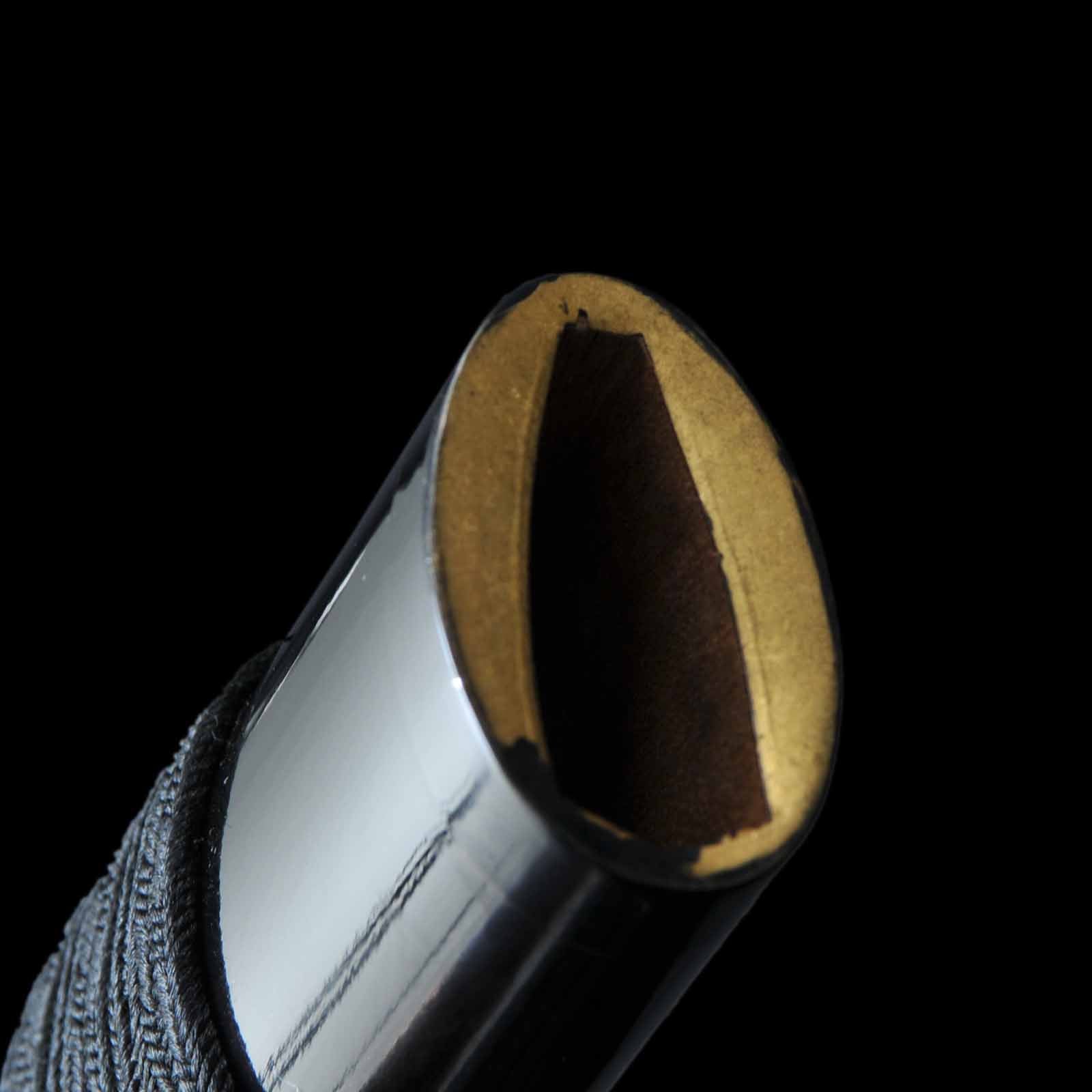
The most striking feature of this work is the breathtakingly beautiful and picturesque Sudare-ba hamon. The koshirae is equipped with uchigatana as well as shirasaya. The koshirae are in excellent condition, and the name Masachika is engraved on the fuchigane.
As a genuine Naomichi piece, and as one that is very worthy of special preservation for posterity, the NBTHK certified it as a Tokubetsu Hozon and issued a certificate of authenticity in February 1986.
Make it yours right away without hesitation.
- Blade length: 71.4 cm
- Curvature: 1.2 cm
- Number of Mekugi hole: 1
- Sakihaba: 22.4 mm
- Sakikasane: 4.6 mm
- Motohaba: 31.6 mm
- Motokasane: 6.5 mm
- Signature: Mishina Tango no Kami Naomichi(front), Sesshu ni oite Nanbantetsu wo motte Kore wo Tsukuru(back)
- Era: Shinto
- Structure: Shinogi-zukuri, Iori-mune
- Jigane: Ko-itame
- Hamon: Sudare-ba
- Boshi: Notarete Haitte Komaru ni Kaeru
- Weight: 790 g(blade only)/1,100 g(without Saya)
- Nakago: Ubu
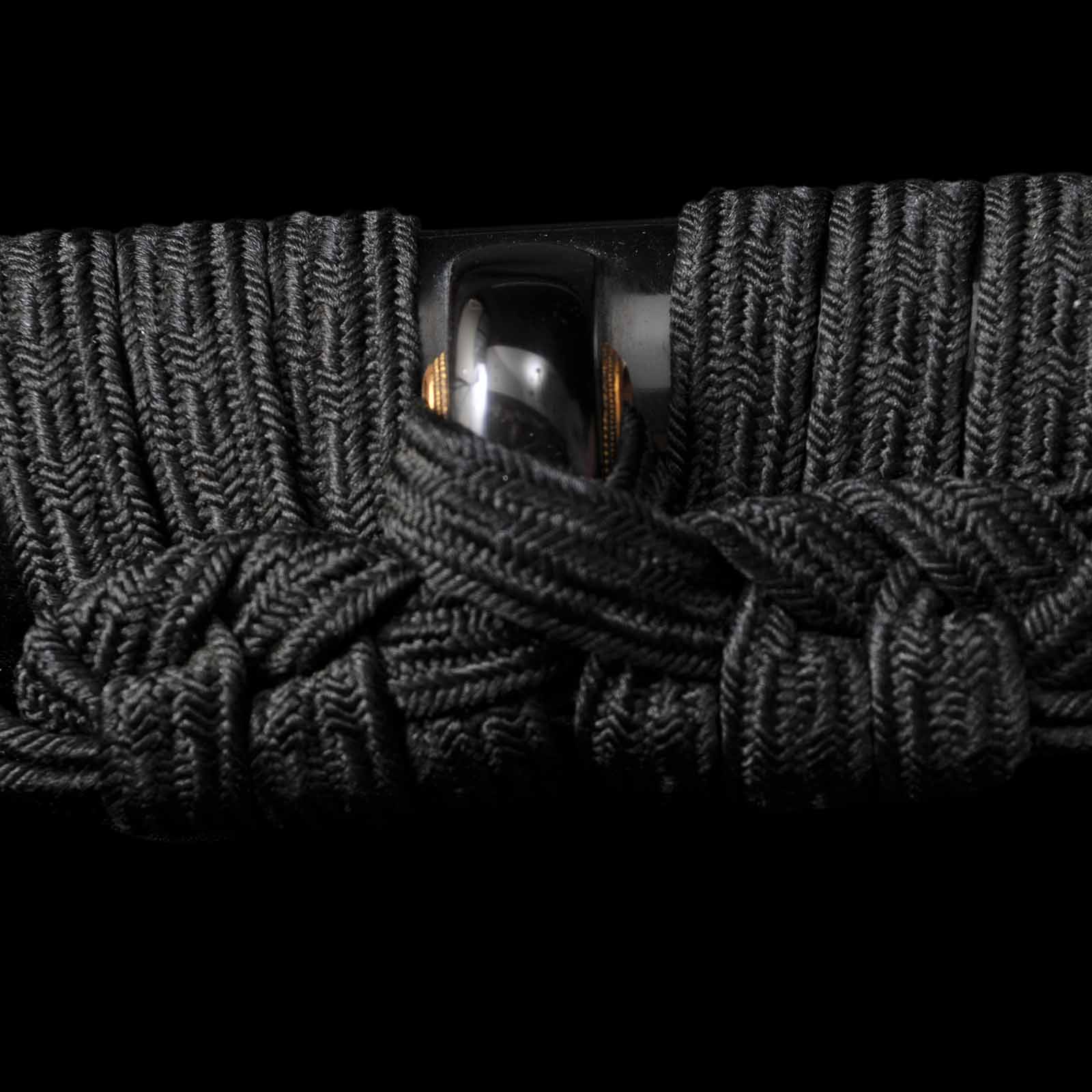
- Koshirae: Golden silk wrapped Tsuka with Kuro-ro lacquered Saya, Shirasaya
- Original Registration No.: Tokyo 158334
Please contact us if the katana you are looking for is not listed here.
Product Information
Product Information
Shipping & Returns
Shipping & Returns












Authentic Shinto Era Katana for Sale - Naomichi, NBTHK Tokubetsu Hozon Certificate | Tozando
Authentic Shinto Era Katana for Sale - Naomichi, NBTHK Tokubetsu Hozon Certificate | Tozando
A work by Tango No Kami Naomichi of the Mishina school, active in Kyoto in the early Edo period, has just arrived with an NBHTK Tokubetsu Hozon certificate.
Naomichi was the second son of the legendary first Tamba No Kami Yoshimichi. The sword is very well-preserved and clean. Jigane is well packed with ko-itame and shows yubashiri and chikei. The hamon is Sudareba, Yoshimichi's signature style, with spirals in some places and sunagashi, giving it a very strong presence.
On the nakago, “Mishina Tango no Kami Naomichi” is engraved on the omote side, and “Seshu ni oite Nanbantetsu wo motte Kore wo Tsukuru” is engraved on the ura side, meaning it was made in the country of Settsu using Western-made iron. Nanbantetsu was the iron material imported from Portugal and the Netherlands, the only countries allowed to trade with Japan at that time, and it was much more expensive than the iron collected in Japan. Echizen Yasutsugu and Izumi No Kami Kunisada were famous for their use of these irons.
Naomichi, who later followed in his grandfather's footsteps and changed his name to Kanemichi, was a swordsmith who, along with his father Yoshimichi, vigorously helped expand the power of the Mishina school, receiving the Tango no Kami in 1625. He is truly a representative of the Osaka Shinto movement.
The most striking feature of this work is the breathtakingly beautiful and picturesque Sudare-ba hamon. The koshirae is equipped with uchigatana as well as shirasaya. The koshirae are in excellent condition, and the name Masachika is engraved on the fuchigane.
As a genuine Naomichi piece, and as one that is very worthy of special preservation for posterity, the NBTHK certified it as a Tokubetsu Hozon and issued a certificate of authenticity in February 1986.
Make it yours right away without hesitation.
- Blade length: 71.4 cm
- Curvature: 1.2 cm
- Number of Mekugi hole: 1
- Sakihaba: 22.4 mm
- Sakikasane: 4.6 mm
- Motohaba: 31.6 mm
- Motokasane: 6.5 mm
- Signature: Mishina Tango no Kami Naomichi(front), Sesshu ni oite Nanbantetsu wo motte Kore wo Tsukuru(back)
- Era: Shinto
- Structure: Shinogi-zukuri, Iori-mune
- Jigane: Ko-itame
- Hamon: Sudare-ba
- Boshi: Notarete Haitte Komaru ni Kaeru
- Weight: 790 g(blade only)/1,100 g(without Saya)
- Nakago: Ubu
- Koshirae: Golden silk wrapped Tsuka with Kuro-ro lacquered Saya, Shirasaya
- Original Registration No.: Tokyo 158334
Please contact us if the katana you are looking for is not listed here.
Original: $16,940.00
-65%$16,940.00
$5,929.00Product Information
Product Information
Shipping & Returns
Shipping & Returns
Description
A work by Tango No Kami Naomichi of the Mishina school, active in Kyoto in the early Edo period, has just arrived with an NBHTK Tokubetsu Hozon certificate.
Naomichi was the second son of the legendary first Tamba No Kami Yoshimichi. The sword is very well-preserved and clean. Jigane is well packed with ko-itame and shows yubashiri and chikei. The hamon is Sudareba, Yoshimichi's signature style, with spirals in some places and sunagashi, giving it a very strong presence.
On the nakago, “Mishina Tango no Kami Naomichi” is engraved on the omote side, and “Seshu ni oite Nanbantetsu wo motte Kore wo Tsukuru” is engraved on the ura side, meaning it was made in the country of Settsu using Western-made iron. Nanbantetsu was the iron material imported from Portugal and the Netherlands, the only countries allowed to trade with Japan at that time, and it was much more expensive than the iron collected in Japan. Echizen Yasutsugu and Izumi No Kami Kunisada were famous for their use of these irons.
Naomichi, who later followed in his grandfather's footsteps and changed his name to Kanemichi, was a swordsmith who, along with his father Yoshimichi, vigorously helped expand the power of the Mishina school, receiving the Tango no Kami in 1625. He is truly a representative of the Osaka Shinto movement.
The most striking feature of this work is the breathtakingly beautiful and picturesque Sudare-ba hamon. The koshirae is equipped with uchigatana as well as shirasaya. The koshirae are in excellent condition, and the name Masachika is engraved on the fuchigane.
As a genuine Naomichi piece, and as one that is very worthy of special preservation for posterity, the NBTHK certified it as a Tokubetsu Hozon and issued a certificate of authenticity in February 1986.
Make it yours right away without hesitation.
- Blade length: 71.4 cm
- Curvature: 1.2 cm
- Number of Mekugi hole: 1
- Sakihaba: 22.4 mm
- Sakikasane: 4.6 mm
- Motohaba: 31.6 mm
- Motokasane: 6.5 mm
- Signature: Mishina Tango no Kami Naomichi(front), Sesshu ni oite Nanbantetsu wo motte Kore wo Tsukuru(back)
- Era: Shinto
- Structure: Shinogi-zukuri, Iori-mune
- Jigane: Ko-itame
- Hamon: Sudare-ba
- Boshi: Notarete Haitte Komaru ni Kaeru
- Weight: 790 g(blade only)/1,100 g(without Saya)
- Nakago: Ubu
- Koshirae: Golden silk wrapped Tsuka with Kuro-ro lacquered Saya, Shirasaya
- Original Registration No.: Tokyo 158334
Please contact us if the katana you are looking for is not listed here.


